
社区太阳能热潮将考验Xcel及其他公用事业计划与开发商和客户需求的匹配度:分析师
分析师指出,社区太阳能项目(通常2-10 MW)在联邦和州级新激励下将快速增长,但公用事业如Xcel Energy Colorado担心其并网位置和时机可能影响系统可靠性。开发商则认为社区太阳能是公用事业发挥专长的领域,双方需合作简化计费和并网流程。
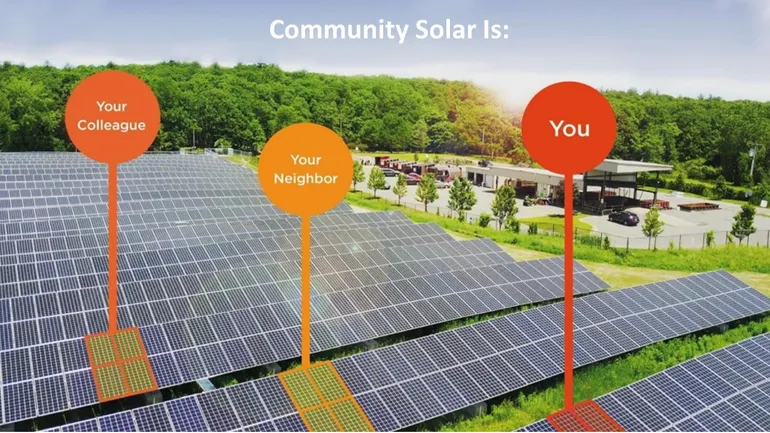
Analysts report that new federal and state support for community solar, along with new collaborative efforts between utilities and community solar developers, could enhance affordability, system reliability, and clean energy access for all electricity customers.
According to the 2022 National Renewable Energy Laboratory (NREL) community solar report, community solar projects typically range from 2 MW to 10 MW in size and interconnect at the distribution system level, with "subscribers" signing up to purchase a portion of the generation and receiving credits on their electricity bills. The NREL report notes that both project owners and subscribers can benefit from the clean, low-cost generation of solar power.
Community solar, owned and operated by utilities or third-party developers, supports the Biden administration's goal of reducing power sector carbon emissions by 50% to 52% below 2005 levels by 2030, according to an April 2022 White House fact sheet.
But utilities like Xcel Energy Colorado, which projects an 80% clean energy portfolio by 2030, have concerns. Customers should have the right to choose community solar subscriptions, but "the time and place where it enhances system reliability and reduces system costs need to be better defined," said Jack Ihle, Xcel's regional vice president of regulatory policy.
Advocates respond that these concerns should not lead state policymakers to overlook community solar's potential to rapidly deliver low-cost clean energy.
Because community solar interconnects at the distribution system level, it is "right in the sweet spot of utility expertise," said Tom Hunt, CEO of national community solar developer Pivot Energy. By providing "full utility visibility and control," community solar may be the "simplest way" for utilities to protect reliability, meet policy requirements, and address customer demand for partial solar ownership, he added.
With new federal and state incentives, community solar is expected to grow rapidly and bring equitable clean energy access to electricity users without such access, including those with the highest energy burdens, analysts report. But stakeholders agree that to achieve system benefits, utilities and developers must find ways to collaborate to streamline billing and overcome project interconnection complexities.
IRA Acceleration Effect
Analysts generally agree that the benefits of the 2022 Inflation Reduction Act (IRA) will drive acceleration across all areas of the energy transition, including community solar.
The IRA is "a goldmine of opportunities," said Keith Martin, co-head of U.S. projects at Norton Rose Fulbright, at the June 22, 2023, Wood Mackenzie Solar & Storage Summit. Tax credits can cover "up to 70%" of the cost of new clean energy projects, and with depreciation, "84 cents of every dollar invested can be covered," he said. The credits will remain available until U.S. power sector emissions fall 75% from 2022 levels, which could occur in the 2040s, Martin added.
Eligible community solar projects will receive a 30% base tax credit, an additional 10% if the project uses sufficient domestic content, and another 10% if located in an eligible energy community, Martin said. Projects serving low-income electricity customers and communities, including community solar, can receive up to an additional 20% in tax credits, he added.
Community solar is well positioned to leverage the IRA because it can be sited to serve energy communities and low-income customers, added Caitlin Connelly, research analyst at Wood Mackenzie (WoodMac).
But based on IRS guidance to date, "overall tax credit benefits are more likely to be below 40%," said Jason Spreyer, executive vice president of business development at community solar developer Summit Ridge Energy.
Tax credits are now also available as upfront payments to non-taxable public power utilities and electric cooperatives, entities that "typically partnered with third-party developers" before the IRA, said Paul Zummo, director of research and development at the American Public Power Association. Some may now want to participate more directly in community solar projects, he added.
The IRA-created $27 billion EPA Greenhouse Gas Reduction Fund will also lead to the expansion or creation of community solar projects targeting low-income customers, said Jeff Cramer, president and CEO of the Coalition for Community Solar Access (CCSA).
The IRA will attract investment capital and accelerate community solar growth, said David Schieren, CEO of EmPower Solar, a New York distributed generation developer. But it remains uncertain whether utilities, third-party developers, or both will dominate the resulting community solar boom.

Utility-Led Community Solar
Electricity providers own and operate utility-led community solar projects, with project designs and rates approved by state regulators or governing bodies, CCSA said. Third-party-led community solar projects are typically authorized by state legislation, implemented through regulatory processes, and developed and owned by private-sector developers, CCSA said.
Without enabling legislation, third parties often face challenges and costs in customer acquisition and are restricted in enrolling low-income customers, CCSA said.
U.S. cumulative community solar capacity will exceed 6 GWdc this year, and IRA financial support and new state enabling legislation are expected to add another 8.6 GWdc by 2028, WoodMac reported.
The largest single community solar projects in the U.S. are utility-led projects in Florida, according to the 2022 NREL report. The state lacks legislation enabling third-party development of community solar, which severely limits its activity. State regulators approved Florida Power & Light Company's (FPL) 1.5 GWac community solar project and Duke Energy Florida's 750 MW project. Both are investor-owned utilities.
Duke's project provides 26 MW for income-qualified subscribers, FPL's project provides 37.5 MW, and FPL plans to add another 45 MW by 2025, these utilities reported. The two income-qualified customer allocations are a small share of overall growth but were seen as significant progress during the regulatory approval process, solar advocates said.
Florida's utilities "showed leadership and designed innovative policies" under regulatory oversight, wrote Bryan Jacob, solar program director at the Southern Alliance for Clean Energy, in reference to these projects. But clean energy advocates secured these low-income subscriber provisions through regulatory processes.
And utilities in other states that restrict third-party developer access have not matched Florida's utility projects, Jacob, Jill Kysor, senior attorney at the Southern Environmental Law Center, and other analysts reported.
The Biden administration's multiple community solar initiatives include targets for low-income and disadvantaged communities, the White House announced in April. A key focus will be developing and piloting a digital platform for managing low-income subscribers to help utilities and developers alleviate "high energy burdens," the announcement added.
Austin Energy found that "the first logical step in any community solar project is community engagement, which is labor-intensive but critical," said Timothy Harvey, its manager of customer renewable solutions.
Its two fully subscribed utility-led projects require no upfront costs or exit fees and guarantee bill discounts for 50% of capacity reserved for qualified low-income subscribers, Harvey said. The other half of project capacity is available to residential and commercial subscribers, who have stronger obligations and may pay above retail rates for solar, he added.
Utility-led community solar provides the highest value when designed to meet specific utility goals, whether serving low-income customers or meeting distribution system needs, added Kerry Klemm, manager of renewable energy options at Xcel Colorado.
Other utilities are learning this lesson.

Community Solar Serving Utilities
Policymakers have ways to drive community solar development, said Brad Klein, senior attorney at the Environmental Law & Policy Center.
A key step is incorporating community solar into distribution planning, as this directs community solar to its "highest value time and place," Klein added. Policymakers in Illinois, Michigan, and Minnesota are developing initiatives to incorporate distributed energy resources into their planning frameworks, he said.
New state policy efforts enabling third-party developers to participate in community solar should also emphasize increasing service to low-income customers, who currently account for an estimated 1% to 2% of subscribers, added Steph Speirs, CEO and co-founder of national third-party developer Solstice. Hunt and other community solar advocates agree.
Pairing energy storage with community solar is another way to increase utility benefits by supporting system reliability, said WoodMac's Connelly. And pending IRA benefits "could further open up this opportunity," she added.
A key way to reduce community solar costs is through well-designed competitive community solar project solicitations, as Xcel has done for its community solar programs in Colorado and Minnesota, said Xcel's Klemm.
These programs were among the first in the nation and continue to evolve, she added. The competitive solicitation in the Colorado program "worked well," but the larger, less competitive Minnesota program "had high bill impacts on non-participating customers," Klemm said.
Recent legislative updates address this concern by moderately increasing residential subscribers and underserved communities and by linking compensation to system value, responded Logan O'Grady, executive director of the Minnesota Solar Energy Industries Association.
"Utilities face challenges from fossil fuel price volatility and decarbonization demands, increasing energy equity, and using distribution system resources to address reliability and resilience issues," said CCSA's Cramer. Community solar "can be developed quickly to address these challenges," he added.
In states like New York, improved collaboration between utilities and developers has proven to accelerate community solar growth through streamlined billing processes, faster interconnection, and initiatives more focused on energy equity, community solar developers said.

Utilities and Developers Working Together
New York's regulatory and legislative guidance requires utilities to work with third parties to advance community solar, analysts and advocates said.
Although some issues "could be disruptive to both developer and utility business models," New York's policies have produced a "transformative" state community solar program, said Empower Solar's Schieren.
New York installed a record 532 MWdc of community solar in 2022 and boosted its leading U.S. capacity of third-party developer installations to over 1 GW, WoodMac's Connelly reported.
At least 20 other states and the District of Columbia have passed third-party enabling legislation, including at least eight bipartisan or Republican-sponsored bills, CCSA reported. With IRA incentives and transmission constraints, portfolios of smaller-scale distribution-level community solar projects are now cost-competitive and could achieve average annual growth of up to 7% by 2027, CCSA added.
Interconnection complexity is one of the two most common challenges, Hansen said. Developers and analysts agree. The other is automating the integration of community solar bill credits with monthly electricity bills so subscribers do not receive two bills, they also said.
Colorado developers report that Xcel's distribution system inadequacies are hindering community solar growth, said Democratic Colorado State Senator Chris Hansen, who sponsored this year's enacted HB23-1137 to revise and expand the state's community solar enabling legislation.
It is unclear whether the bill's changes will resolve Xcel Colorado's interconnection issues, Hansen added. But "grid modernization is the next legislative focus to enable interconnection and utilization of clean energy in the transition to greater electrification of buildings and transportation," he said.
Slow interconnection and bill credit processing are more complex in community solar projects because they involve utilities, third-party developers, and customer acquisition processes, stakeholders agree. In states with the best community solar policies, significant work is underway to streamline these processes, they added.
"New York has the most proactive interconnection policies, though no one has fully solved it, and in many states it remains a barrier," said Pivot Energy's Hunt.
Community solar "interconnection is complex and multifaceted," said Empower Solar's Schieren. But New York's utilities and other stakeholders are working together to find ways to "increase distribution system hosting capacity and fairly allocate infrastructure upgrade costs between utility ratepayers and developers," he added.
Consolidated billing for community solar is mandated in New York's enabling legislation and is being developed in several other states, CCSA said. In areas where it is not mandated, "few utilities offer it, though this is changing as some utilities move in this direction to maintain customer relationships," said Summit Ridge's Spreyer.
New York also has "the most robust consolidated billing for community solar," said Pivot Energy's Hunt. It uses the state's value of distributed energy resources tariff to compensate subscribers for solar delivered at its most valuable "time and place," he added.
Utilities and other stakeholders in vastly different service territories, such as Pepco in Maryland and PNM in New Mexico, also report developing enabling legislation requiring improved interconnection, bill integration, and low-income customer provisions.
California's September 2022 AB 2316 could serve as a template for other states, said CCSA's Cramer.
The legislation revises the 2013 community solar law and includes "all the most innovative program design ideas, including third-party participation and a compensation framework similar to New York's," said Pivot Energy's Hunt. It also requires paired storage, avoids cost shifts to non-participants, bill integration, and "a strong focus on low-income subscribers," he added.
Final regulatory approval of the enabling law is expected in the third quarter of this year and could lead to 1.5 GWdc of community solar paired with storage by 2028, WoodMac reported. "Developer interest is enormous," said WoodMac's Connelly.
"California seems likely to become the template for the next generation of community solar," said Solstice's Speirs. By requiring at least 51% of capacity to serve low-income customers, California recognizes "the true importance of community solar, which is that it is the most affordable and accessible clean energy product for ordinary people," she added.
Correction:We have updated this story to correct the bill number of the Colorado legislation enacted this year that revises and expands the state's community solar enabling law.