
Real-time electricity usage data should be a basic consumer right
As U.S. electricity demand grows rapidly and electricity price increases outpace inflation, households are being asked to adjust their electricity usage behavior but lack the tools to view real-time usage data. The author argues that real-time electricity usage data should be a basic consumer right and recommends that regulators mandate utilities to provide visualization tools, standardized data sharing, and direct device connectivity.
Joel Hicks is a visiting assistant professor in the University of Oregon's School of Planning, Public Policy and Management.

U.S. electricity demand is growing at the fastest sustained pace in decades, and utilities are seeking billions of dollars for grid upgrades, while households are being asked to charge electric vehicles differently, adjust appliance usage times, and respond to dynamic electricity prices.
However, most consumers still cannot easily view their electricity usage in real time. This is no longer just a transparency issue; it is a failure of consumer protection and grid governance.
As electricity prices become increasingly unaffordable, Americans are being asked to absorb rising costs without basic management tools. In recent years, electricity price increases have outpaced inflation in more than half of U.S. states, making electricity bills part of a broader cost-of-living crisis.
Meanwhile, American households are accelerating electrification: heat pump sales surpassed gas furnaces in 2025; electric vehicles still hold a significant share of new car sales; and about half or more of U.S. households own at least one smart home device.
Yet most Americans still cannot view their electricity usage in real time. This is a problem.
Real-time electricity data should be a basic consumer right. In almost every other area of the economy, people can track their usage and react immediately. Drivers can see fuel levels and prices before filling up; bank customers receive instant alerts when funds leave their accounts; mobile phone users can monitor data usage in real time.
Electricity remains one of the few major household expenses where consumption is not visible until weeks later. Utilities have the data; customers do not. Smart meters measure electricity usage every few minutes, but most households only see a monthly bill summarizing past behavior.
Behavioral science consistently shows that people respond to visible information. When feedback is immediate, people adjust their behavior. Energy use is no exception.
When households can see how much electricity they are using, they can connect daily behaviors—such as charging an electric vehicle, adjusting the thermostat, or running appliances—to actual costs.
Even small changes matter. Research on feedback programs often finds that household electricity use can be reduced by about 2% to 5% without any external incentives. While this is modest for a single household, it adds up significantly across millions of customers.
This is why real-time energy data should be the basic information consumers need to manage one of their largest and fastest-growing expenses.
The infrastructure is already in place. Over the past two decades, regulators approved the widespread deployment of smart meters, which frequently record electricity usage and transmit the information to utilities. Currently, about three-quarters of U.S. households have smart meters installed, giving utilities detailed insights into home energy use, faster outage detection, automatic meter reading, and more efficient grid management.
These are all positive developments, with one exception. Millions of households now generate detailed energy data but cannot easily access it. In many states, utilities are not required to provide customers with simple tools to view their electricity usage. Instead, access to information often depends on utility policy rather than consumer rights.
This is a policy choice. Regulators approved systems that collect detailed household energy data without requiring that customers be able to view that data in a timely manner.
Fortunately, solving this problem does not require new technology; the infrastructure already exists. What is needed now is a three-part effort:
First, require utilities to provide visualization tools
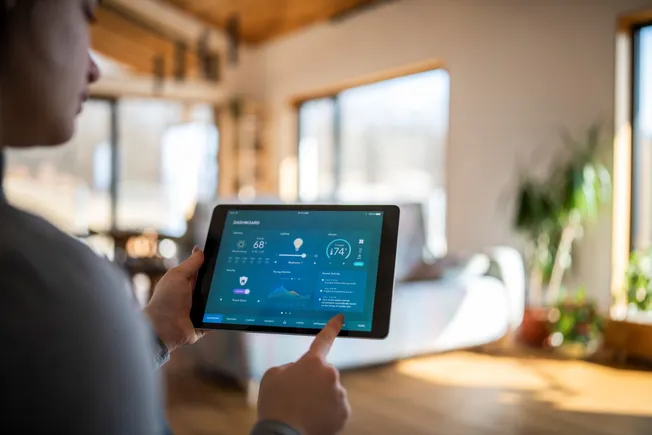
Public utility commissions should require utilities to provide customers with smart meters a simple dashboard or mobile app showing near-real-time electricity usage. This has already been achieved in some places. For example, in Texas, customers can view detailed energy usage through a statewide portal, seeing how much electricity they use at different times of the day.
Second, standardize data access rights
Regulators should require standardized data access so that customers can choose to share their energy information with third-party services if they wish. These services can help households reduce costs, automate energy savings, and participate in programs that pay customers to reduce electricity use during peak demand periods. Regulators have long expressed a desire for more flexible demand, but if utilities keep usage data at arm's length, customers cannot effectively play that role.
Third, allow customers to access data through their own devices
Customers should be allowed to access energy data through their own internet connections or smart home devices. Many households already run connected technologies such as smart thermostats, solar panels, and electric vehicle chargers. Allowing these systems to communicate directly with smart meters would increase transparency and control without building new infrastructure.
These are all feasible.
As electricity rapidly becomes the core fuel of the modern economy, private electric utilities are expected to invest more than $1 trillion over the next five years, and policymakers are encouraging households to electrify transportation and heating. The burden of managing rising energy costs and using electricity more efficiently is falling on consumers.
Utilities increasingly rely on demand response, flexible load programs, and virtual power plants to manage growing electricity demand. But these strategies assume that consumers can make informed responses to energy signals. When households cannot easily view their electricity usage in real time, this assumption becomes difficult to fulfill.
This expectation is only reasonable when households have access to the information they need.
This is why real-time energy data should be basic consumer information. Again, the technology already exists, and the infrastructure is in place. What is missing now is a clear requirement: that customers be able to view their electricity usage—which is plainly reasonable.
It is time for the electricity industry to catch up with modern expectations of transparency, accountability, and consumer choice. Making real-time energy data a consumer right is exactly how to achieve that.