
How Utilities Can Compress Expansion Cycles from Years to Months
Commercial buildings account for 35% of total U.S. energy consumption, and their flexible load has long been underutilized. Platforms like Edo, through standardized integration and AI pre-configuration, enable buildings to automatically respond to dispatch signals, forming virtual power plant capacity within months. This article analyzes technological breakthroughs, business models, and procurement strategies.
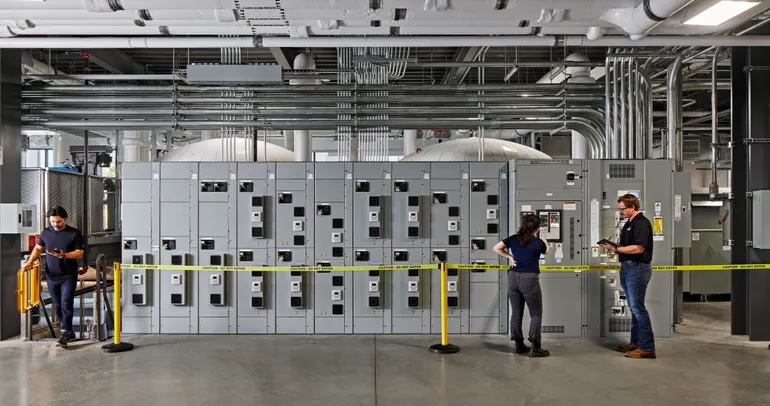
From office buildings and schools to campuses and retail chains, commercial buildings account for up to35%of total U.S. energy consumption. This "missing middle"—a commercial market segment historically too difficult to reach or enroll in demand response programs at scale—is actually a hidden electricity treasure trove, containing vast untapped flexible load that can serve as virtual power plants (VPPs) for the grid. For utilities grappling with surging electricity demand, the missing middle offers a scalable non-wires alternative that can expand grid capacity in just months.
Previously, this capacity was largely out of reach. Residential load can be automatically adjusted through simple temperature setback rules, and large industrial facilities have dedicated energy teams, but commercial buildings lack a natural mechanism to respond to dispatch signals without disrupting tenants or daily operations. At 3 p.m. on a Tuesday, no one is watching for a curtailment event, and there is no single device switch to flip.
"We can now connect to most modern building management systems, understand what's happening inside the building in real time, and provide immediate feedback to the utility," explained Hellai Sherzoi, Marketing Director at Edo. "But connectivity alone doesn't make a building flexible. The real transformation is that we can pre-configure how a building responds to dispatch events and execute it automatically—without anyone on site." This capability enables platforms like Edo to turn commercial buildings into dispatchable virtual power plants—reliable, scalable resources that respond to grid signals without disturbing occupants.
Key changes improving demand response reliability
Demand response has historically been considered difficult to scale because it relies on manual operations. Unlike traditional power plants, demand response requires people to curtail load, and this uncertainty, combined with a lack of real-time performance data, makes it difficult for grid operators to reliably depend on such resources.
Today, AI and advanced automation have transformed demand response into a reliable resource: precise, real-time energy adjustments are achieved without human intervention. Predictive analytics anticipate peak demand, allowing utilities to dispatch flexible resources before supply shortages occur. These technological advances make modern virtual power plants behave increasingly like traditional power plants.
"Reliability benefits from better forecasting and the volume of data we can now process," said Emilie Bolduc, Chief Commercial Officer at Edo. "Without today's computing power, we couldn't provide the near-real-time response utilities need."
A reliable energy system must balance safety and occupant comfort. Edo protects sensitive data through connection methods that minimize reliance on a building's internal IT network; meanwhile, automated pre-conditioning replaces "crude on-off switching," adjusting temperatures before events to support the grid with little to no perceptible impact on occupants.
Why "missing middle" commercial customers are an untapped resource
Missing middle customers share common traits: complex or aging building systems and a lack of dedicated staff to actively manage energy programs across spaces. "They're too small for large industrial demand response programs, but too large and operationally complex for residential or small commercial smart device programs," Bolduc said. "They have substantial and controllable load, but most program designs place too heavy a burden on facility teams to sustain."
Activating the missing middle can transform existing buildings into flexible assets that scale alongside today's surging demand. With software-driven solutions, utilities can unlock capacity in months rather than years, offering a cleaner, faster alternative to building new power plants or waiting for traditional grid upgrades.
"This is a non-wires solution," Sherzoi said. "No infrastructure needs to be laid, and there's no years-long planning and feeder upgrade process. Systems like Edo can connect load to the grid in months."
How to unlock this capacity now
Standardized building integration layer
Unlocking commercial capacity requires breaking down the "language barriers" of proprietary building control systems. In the past, mapping each vendor's equipment one by one was a slow, expensive manual process. Today, a single gateway can translate BACnet—the global standard for building automation—enabling interoperability among heterogeneous systems of different vintages and vendors.
AI then automatically classifies vast amounts of data, precisely identifying HVAC systems, chillers, and other hardware that regulates the building environment. "AI can ingest and classify millions of data points," Sherzoi said. "We've gone from months to weeks, and soon it will be just days."
Designing programs for the missing middle
Successful programs must bridge the gap between residential-level simplicity and large industrial customization. Since mid-sized building owners often lack dedicated engineering staff, programs must simplify enrollment, minimize on-site burden, and offer clear incentives.
- Prioritize operational value:Focus on the operational benefits facility managers care about most, such as making buildings more comfortable and cheaper to run. Bolduc noted that by "tuning" building operations, utilities can deliver "immediate bottom-line value," making grid participation a "bonus."
- Balance financial incentives:Bolduc recommends separating capacity reservation payments (for staying ready) from performance payments (for actual load curtailment). She noted this ensures owners stay engaged and don't "hit the override button."
- Energy efficiency and demand response synergy:Break down silos between energy efficiency and demand response. Bolduc suggests that when buildings improve daily operations and become grid-interactive resources—bidirectional resources that automatically shift load to support the grid—incentives should "increase by 2x or 3x."
Procuring flexibility as a resource
Scaling commercial flexibility as a grid asset requires utilities to value it on par with traditional generation. By defining clear performance expectations, this outcomes-based model can turn building load into a contractible core component of long-term resource portfolios.
- Define performance standards:Reliability is the metric grid operators value most. "Our goal is 90% delivery accuracy," Bolduc explained, emphasizing the importance of ensuring buildings deliver on their commitments. When utilities trust that a portfolio of buildings will respond reliably and consistently, those buildings become a high-quality alternative to traditional power plants.
- Demand real-time visibility:Effectively managing the grid requires seeing results in real time, not weeks after a crisis ends. Immediate data builds trust and supports rapid, critical decisions. "Utilities used to wait days or even weeks to confirm that power was actually curtailed," Bolduc noted. "Now near-real-time visibility enables much faster operational decisions."
- Value customer engagement:Procurement is about finding reliable partners, not simply buying megawatts. By continuously delivering value and incentives, utilities turn passive commercial accounts into active partnerships. "This model keeps utilities in ongoing communication with building owners," Sherzoi said. "Measured by customer satisfaction, this shift is existential for utilities."
Bridging the gap between surging demand and decade-long infrastructure cycles requires immediately deployable "non-wires" solutions. By partnering with Edo to automate building integration and procure reliable capacity, utilities can secure critical resources within months. This path delivers reliable power at a fraction of the cost of traditional physical upgrades.