
Advanced Nuclear Energy Deployment Accelerates: Wyoming, Virginia, and Michigan Lead the Nation
The development of advanced nuclear energy in the United States is extending from the federal level to state-level actions. Wyoming has taken the lead in paving the way for the TerraPower demonstration project, Michigan is funding the restart of Palisades, and Virginia is fostering an industrial ecosystem through occupational clusters and energy laboratories. State policy approaches vary, but they collectively face challenges related to cost, regulation, and talent.
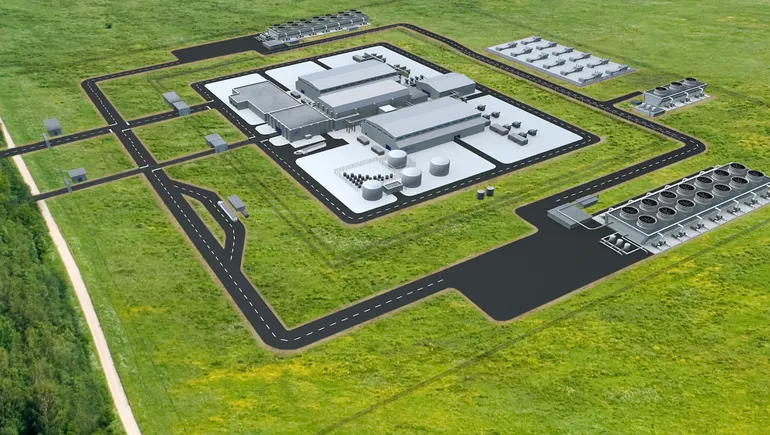
Advanced nuclear energy development in the United States is experiencing a wave of state-level policy momentum. TerraPower plans to begin construction this summer on its commercial advanced nuclear reactor near a coal plant in Kemmerer, Wyoming, a project expected to be the first of its kind in the country. Although the reactor is not expected to begin operations until 2030, Wyoming began laying the groundwork as early as March 2020—when Governor Mark Gordon, a Republican, signed a bill allowing small modular reactor capacity to replace coal-fired generation capacity. Subsequently, in 2022 and 2023, the state passed bills streamlining advanced reactor deployment and established up to $150 million in matching funds to support a range of energy technology deployments.
"Wyoming has done an excellent job in supporting advanced nuclear deployment," said David Terry, president of the National Association of State Energy Officials, in an interview.
Wyoming is an early mover in advanced nuclear, but industry experts point out that other states are catching up. According to Christine Csizmadia, senior director of state government affairs and advocacy at the Nuclear Energy Institute, state legislatures considered about 200 nuclear-friendly energy bills in 2023, and about 130 so far this year. "In the past, maybe only five to ten state bills would mention nuclear energy each year," Csizmadia said in an interview.
Beyond Wyoming, Michigan and Virginia are also at the forefront of the state-level resurgence of interest in nuclear energy. Michigan invested $150 million last year to support Holtec's restart of the recently closed Palisades nuclear plant, a project that subsequently received a conditional $1.5 billion loan commitment from the U.S. Department of Energy. Virginia's recent pro-nuclear measures include state funding for energy "career clusters" and support for a state energy laboratory that could advance the deployment of advanced nuclear reactors near abandoned coal mines.
Terry said these state efforts provide a roadmap for policymakers elsewhere, helping them attract emerging nuclear technologies and the skilled workforce they require. "There are no regional voters, only state and local voters," he said. "So states need to develop state-specific policies to create jobs and attract investment within their borders."
Four paths of state nuclear policy
Csizmadia noted that state nuclear policy typically takes one of four complementary forms:
Repealing moratoriums and advanced nuclear regulation
Since 2016, six state legislatures have lifted freezes on new nuclear facilities, and bans remain on the books in ten states. Csizmadia said Hawaii and Rhode Island could lift their nuclear bans this year. Betsy Smith, an environment, energy, and transportation policy expert at the National Conference of State Legislatures, said in an email to Utility Dive that state legislatures may also need to update regulations to allow specific advanced nuclear demonstration projects to proceed as planned.
Including nuclear in clean energy standards
Csizmadia said several states have recently enacted or expanded clean energy standards that include nuclear energy, rather than remaining silent on it or explicitly excluding it. According to NEI's state policy tracker, these states include Michigan, Minnesota, North Carolina, and Utah.
Exploring nuclear development
This is currently the broadest and most active category, encompassing state-commissioned and funded technical feasibility studies, working groups, and stakeholder committees. Recent and ongoing examples include Michigan, Kentucky, Tennessee, Ohio, and South Dakota, among others. "Some of these states don't have existing commercial nuclear facilities and want to see if nuclear is viable," Csizmadia said.
Financial support or incentives
Csizmadia said some states have committed substantial funding for nuclear energy, far exceeding the relatively modest costs of nuclear feasibility studies. Michigan's $150 million support for the Palisades restart is the most significant commitment to a single nuclear project in recent years. But other states, including Virginia (up to $10 million), Tennessee ($50 million), and Wyoming (up to $150 million for a broad suite of technologies including nuclear), have also recently enacted or proposed sizable financial commitments to nuclear.
States can lay the groundwork for a new or revived nuclear industry by including nuclear in clean energy standards and repealing bans, said NASEO's Terry. But Glenn Davis, director of the Virginia Department of Energy, noted in an interview that even with tangible financial commitments from elected and appointed officials, the payoffs of pro-nuclear state policies may take years to materialize.
Virginia began its "moonshot" journey in 2013 by creating the predecessor organization to the Virginia Nuclear Energy Consortium, gained momentum last year with a series of pro-nuclear laws, and now aims to have its first small modular reactor online by 2032 while "leading the nation in new nuclear development," Davis said.
The role of energy communities and industrial bases
TerraPower's first commercial reactor will be located one or two miles from the Naughton coal plant, a community with "high energy IQ," said Jeff Navin, director of external affairs at TerraPower, in an interview earlier this month. This is the first commercial advanced nuclear project to capitalize on what the U.S. Department of Energy sees as a huge "coal-to-nuclear" opportunity—transitioning coal communities to nuclear and other low-carbon energy technologies, a key focus for Wyoming and other states. The DOE projects that a large coal-to-nuclear project could directly create more than 100 additional jobs at the plant and indirectly support hundreds more, serving as a lifeline for energy communities in a decarbonized future.
However, David Eskelsen, a spokesperson for Rocky Mountain Power, which is partnering with TerraPower on the Kemmerer reactor, cautioned that the utility's consideration of other coal-to-nuclear projects is "at a very early stage of feasibility study and is currently uncertain." Eskelsen noted that Rocky Mountain Power's resource planning process "doesn't select specific projects but rather a portfolio of resource types over a 20-year planning horizon."
Nevertheless, with coal revenues declining and oil and gas prices fluctuating, Wyoming is adopting an "all-of-the-above" energy mindset, said Rob Creager, executive director of the Wyoming Energy Authority, in an interview. "We are a strong coal state, but the coal market faces challenges," Creager said. Wyoming is also working to support nuclear suppliers and upstream businesses that depend on fossil fuel communities, with a mindset of "'how do we get nuclear done from cradle to grave,'" he added.
In August, the Wyoming Energy Authority allocated $10 million in state matching funds to support a potential collaboration between nuclear fuel and component supplier BWXT Technologies and two Wyoming companies, including L&H Industrial, a heavy equipment manufacturer headquartered in Gillette.
Using nuclear as an economic revitalization tool is also a priority for other historically fossil-fuel-dependent states, such as Virginia, where the coal-producing region in the southwest is a focus of advanced nuclear efforts. Virginia Energy's Davis noted that the recently announced Microsoft-Google-Nucor 24/7 clean power request for information presents advanced nuclear opportunities for southwest Virginia, where a state-funded feasibility study last year identified seven promising small modular reactor sites at or near retired mine lands, and the state-supported Energy DELTA Lab will "deploy innovative and clean energy technologies," including nuclear, which could support hyperscale data centers and low-carbon hydrogen production clusters.
By supporting clean local and behind-the-meter generation, the lab's work could help reduce the need for new transmission lines in the already congested PJM interconnection region, Davis said. "This challenge is more easily addressed through behind-the-meter generation," he said.
Building the nuclear workforce
Workforce development is a key component of pro-nuclear state policy, experts and officials said. Partly due to the unique skills and sometimes extensive training required for critical nuclear jobs, there is "healthy competition" among states in establishing early advanced nuclear projects, Creager said, as states work to attract existing nuclear industry workers and train new ones at local colleges and universities. "I joke with my friends in other governors' offices that I'll tell you what we're doing in Wyoming, but I'm not sure I'll tell you what we're doing next," he added.
Even states like Virginia—home to BWXT's global headquarters, several commercial nuclear plants, a world-class nuclear engineering program at Virginia Tech, and "40 naval reactors parked off the coast"—need to invest in nuclear workforce development, Davis said. He cited the state legislature's 2019 creation of "energy career clusters," which include nuclear, and the anticipated collaboration of the Virginia Nuclear Innovation Consortium with the University of Virginia, Virginia Tech, Virginia Commonwealth University, and Liberty University. The Nuclear Innovation Alliance expects the cluster to "support the next generation of engineers, specialists, and technicians."
States can turn to the federal government for help with skilled workforce development, said NASEO's Terry. The DOE's Nuclear Energy University Program supports "highly skilled fields" such as nuclear engineering, and the Inflation Reduction Act and the Infrastructure Investment and Jobs Act include funding for nuclear higher education, he noted. In contrast, state energy offices often take the lead in building technician-level positions, Terry said.
In states further along in attracting advanced nuclear, workforce development can be done in partnership with operators, or even initiated by them. TerraPower is "as fast as possible" building nuclear education programs at the University of Wyoming's School of Energy Resources and several community colleges across the state, Creager said. TerraPower hopes to retain at least some of the Naughton workforce to staff its Kemmerer reactor, Navin said last month. In addition to existing transmission infrastructure and water rights, the presence of skilled workers who understand the energy business was a key factor in TerraPower's siting decision, he added.
In southwest Michigan, the workforce synergies between previous and potential future site operations are even more pronounced, as the Palisades nuclear facility closure affected nearly 600 employees, said Kara Cook, chief of staff at the Michigan Department of Environment, Great Lakes, and Energy. Many Palisades employees left the area after the plant closed in 2022, sometimes to work at other nuclear facilities, Cook said. But now that the decommissioning process is paused, some are returning, and some even coming out of retirement to help retrain workers, she added. Similar to TerraPower in Wyoming, Holtec plays a leading role in workforce development at Palisades, conducting training exercises in "an amazing simulator that is exactly like its control room," Cook said.
"Every state is different"
Wyoming, Michigan, and Virginia have all made progress in building, expanding, or revitalizing their nuclear industries, but the examples they set may not apply everywhere. In some states, policymakers remain ambivalent about nuclear energy. A legislative proposal in Oregon to repeal a nuclear moratorium failed last year due to grassroots opposition, while an official at the Colorado Energy Office expressed skepticism about a coal-to-nuclear conversion proposal for the Comanche 3 coal-fired unit in Pueblo, which is scheduled to retire in 2031.
"Current evidence suggests that the high cost of nuclear makes it unlikely to become a major contributor to Colorado's electricity generation anytime soon," said Ari Rosenblum, communications manager at the Colorado Energy Office, in an email. Rosenblum cited a recent analysis showing that Colorado's lowest-cost grid decarbonization path is "substantial wind, solar, and storage, with natural gas generation as a reliability and capacity resource."
Meanwhile, policymakers and utility officials in North Dakota are seeking to build a $1.4 billion carbon capture and storage project that would cut emissions from the state's third-largest coal plant as early as 2028—earlier than the expected online date of TerraPower's Kemmerer reactor. "We're considering carbon capture rather than coal-to-nuclear because we have better resources in North Dakota than anywhere else," including favorable local geology and seismic stability, said Ben Fladhammer, communications manager at Minnkota Power Cooperative, the plant operator, in an interview.
"Every state is different, and they have the right to choose," said NEI's Csizmadia. But for states serious about supporting the next generation of nuclear, she has some straightforward advice for policymakers: "Plan today." "If you commit today to building a reactor, it will take eight to ten years to realize," she said.