
Total solar eclipse may reduce US photovoltaic power generation by 40 GWh, how five major grid operators respond
On April 8, the US will experience a total solar eclipse, expected to impact photovoltaic power generation more than any previous eclipse. Solcast estimates maximum generation losses across the national grid could reach 39.9 GWh, with rooftop solar accounting for about 16.2 GWh. Five major grid operators—California ISO, ERCOT, PJM, New York ISO, and MISO—have developed response plans months in advance and stated that power supply reliability will not be affected. Natural gas, flexible load, and battery storage are expected to fill most of the gap.
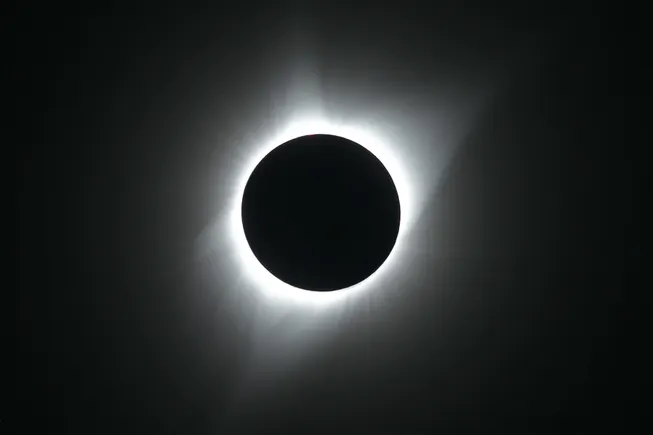
The total solar eclipse on Monday, April 8, will cause thousands of gigawatt-hours of solar power generation losses in parts of the United States—experts say the affected solar capacity may exceed that of any previous eclipse.
Grid operators nationwide have been preparing for months and say they can handle the event without compromising power reliability. However, they also note that uncertain weather forecasts and eclipse-related changes in electricity usage make load forecasting more difficult.
Although the 'path of totality' covers only some U.S. solar facilities, and clouds will affect the actual extent of generation losses, Hugh Cutcher, chief data scientist at Solcast, said, 'The impact of this eclipse on U.S. solar generation will be significant.' The company provides solar irradiance data and forecasting technology.
Solcast estimates that during the eclipse, maximum generation losses across U.S. grids could total 39.9 gigawatt-hours, with about 16.2 gigawatt-hours from rooftop solar.
U.S. solar plants covered by the April 8 eclipse path of totality
Despite the drop in renewable output, 'we will ultimately be fine,' said Michael Lee, CEO of Octopus Energy US, a demand response provider operating in the Texas market.
Experts generally expect natural gas to fill most of the gap in solar output during the eclipse.
'We expect natural gas to be the most likely solution because the eclipse is highly predictable and every grid has the natural gas infrastructure to meet this demand event—which will exceed last year's, both because of the eclipse path and because of capacity growth since October,' said Harry Woods, Solcast's head of marketing, in an email.
Flexible loads and batteries will also play a role, Lee said. 'Demand response and flexibility can build a low-cost grid,' he said. But ultimately, 'this event lasts only about an hour, and managing millions of thermostats while people are typically out watching the eclipse is a low-hanging fruit opportunity.'
California has long been known for leading in solar generation, but due to the eclipse path, the impact here will be relatively mild—Solcast expects losses of about 5% to 6% of typical daily generation. Losses in PJM Interconnection and the Electric Reliability Council of Texas (ERCOT) markets could reach 10% to 11% of daily generation.
Setting aside solar generation loss forecasts, how are grids in different parts of the United States actually preparing for the upcoming event?
California ISO
California is no stranger to high solar penetration and eclipses: last October, the state experienced an annular eclipse that affected the grid from about 8:40 a.m. to 9:30 a.m. According to officials at the California Independent System Operator (CAISO), grid-scale solar output fell at a rate of about 82 MW per minute, ultimately reducing output by about 9,600 MW compared to typical clear-sky levels.
Monday's eclipse impact will be smaller than the 2023 event, but the state's rapid solar capacity expansion adds some complexity. According to the grid operator, during the October 2023 eclipse, grid-scale solar capacity within CAISO exceeded 16,500 MW,and now exceeds 18,500 MW。
'Although it's been just over six months since the last eclipse, we've seen quite substantial growth in both grid-scale and behind-the-meter solar,' said Jessica Stewart, senior energy meteorologist at the ISO, at aplanning meeting inMarch, covering CAISO and the energy imbalance market it manages.
Stewart said that during the upcoming event, California will feel the eclipse's effects from about 10 a.m. to 12:30 p.m., with grid-scale solar output declining at about 79 MW per minute until maximum obscuration. During the recovery phase, solar will ramp up at about 84 MW per minute, adding about 6,700 MW to full output.
Officials said the impact of the eclipse on electricity prices will not be known until day-ahead and real-time markets clear.
ERCOT
The grid operator responsible for most of Texas said it expects solar generation to be affected for about three hours, with the maximum impact at 1:40 p.m.,when solar output will drop to about 7.6% of clear-sky maximum output。
ERCOT hasasked all market participants to'monitor operating conditions for the day and adjust current operating plans as needed,' butexpects to maintain normal operations during the event。
The grid operator 'is working with solar forecasting vendors to ensure forecast models account for the eclipse,' according to a planning presentation submitted last month to the grid operator's Reliability and Operations Subcommittee. 'ERCOT will pre-position system conditions as needed to address the solar decline and recovery ramps, and will use ancillary services to meet additional balancing needs.'
Lee said this could include the newERCOT Contingency Reserve Service, which keeps thermal and battery assets on standby. But the 'primary tool' for managing demand changes during the eclipse 'remains energy prices.'
'As supply changes, real-time energy prices will fluctuate,' he said. 'That fluctuation is good because it incentivizes more generation resources to connect and also incentivizes load-side flexibility to start participating.'
PJM Interconnection
Michael Stewart, senior engineer for load forecasting at PJM, said the specific scale of solar generation losses 'will depend on the weather pattern of the day.' He outlined preparations at theMarch 7 Operating Committeemeeting.
The grid operator is preparing for an 80% to 85% loss of output from 8,200 MW of interconnected solar resources. Additionally, about 4,800 MW of behind-the-meter resources will be affected, increasing grid load.
Stewart's presentation noted that multiple variables could affect load, including school closures or eclipse-related travel. It is 'a non-holiday, but not an ordinary Monday.'
'PJM is closely monitoring weather forecasts and is prepared to dispatch generation resources as needed to address solar output losses, including using reserves and regulation resources when necessary,' the grid operator said in ablog post. 'Reserve resources can provide the needed backup generation when called upon, while regulation resources can provide energy to help control system voltage and frequency.'
New York
In 2017, the New York Independent System Operator (NYISO) lost about 500 MW of output during an eclipse in which about 75% of the sun was obscured.
'Today, solar generation across the state is five times higher, but cloud cover will ultimately determine how much generation is lost during the eclipse,' said Mark Taylor, NYISO technical expert and meteorologist, in astatement.
The grid operator said that if skies are clear on April 8, it expects solar generation of about 3,500 MW at the start of the eclipse. Generation will then drop sharply over about an hour, potentially falling to about 300 MW, before recovering to 2,000 MW. Between 3:15 p.m. and 3:30 p.m., the sun will be completely obscured for up to 3.5 minutes in different parts of the state.
NYISO's solar forecasting tool 'predicts the solar generation the system can expect throughout the day and helps our planners and operators determine resource needs to meet expected demand,' the operator said in a blog. 'If unexpected conditions arise and solar resources generate less than initially forecast, NYISO's operations team must find ways to make up the difference.'
Midcontinent ISO
The last time an eclipse path crossed the Midcontinent Independent System Operator (MISO) region was in 2017, when the grid had only 100 MW of solar capacity. Now it exceeds 5,000 MW.
'We do not expect any reliability-related issues,' MISO said in anApril 2 blog post.
The eclipse path crosses MISO's southern and central regions, and its two control centers are within the path of totality. The grid operator expects 'darkness changes' from 1:30 p.m. to 4:25 p.m. Under clear skies, the grid said it could experience a generation drop of about 4 GW over 90 minutes, followed by a recovery of 3 GW.
Although demand forecasting on typical days is 'usually straightforward,' MISO noted that Monday 'will not be a typical spring day.' School closures, changes in business hours, increased hotel and restaurant traffic, and possible cooling from the eclipse 'make accurate forecasting of electricity demand for the day more challenging,' the grid operator said.
Data graphics by Diana DiGangi and Greg Linch.