
Analysts: Solving Three Key Challenges Can Unlock Multiple Benefits from Scaling Virtual Power Plants
Utility companies, suppliers, and analysts agree that by improving control technology, streamlining communication processes, and establishing attractive compensation mechanisms for users, virtual power plants (VPPs) can fully realize their potential. As of mid-2023, there were over 500 VPP projects in North America, with a total capacity of up to 60 gigawatts; the U.S. Department of Energy expects that by 2030, VPP flexible capacity could expand to 160 gigawatts, meeting nearly 20% of the projected 802-gigawatt peak load in the United States.
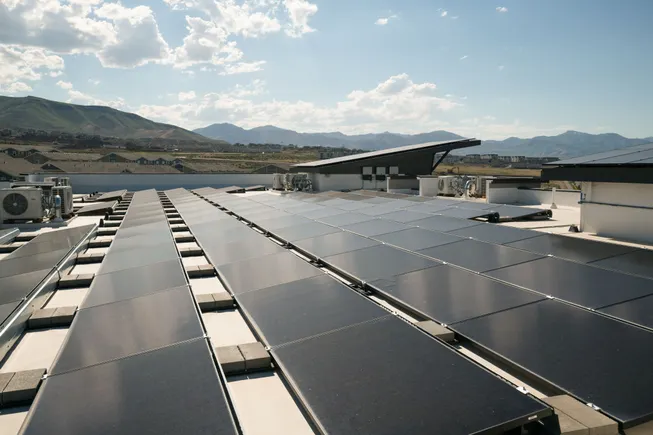
Utilities, suppliers, and analysts agree that for virtual power plants (VPPs) to reach their full potential, breakthroughs are needed in control technology, communication processes, and customer compensation mechanisms.
A VPP is a system that uses advanced software to aggregate and manage distributed energy resources to meet power system needs, including load reduction and system stability. According to one estimate, as of mid-2023, North America had over 500 VPP projects with a total capacity of up to 60 gigawatts. The U.S. Department of Energy (DOE) states that by 2030, VPP flexible capacity could expand to 160 gigawatts, covering nearly 20% of the United States' projected 802-gigawatt peak load.
Jigar Shah, Director of the DOE's Loan Programs Office, wrote in September 2022 that "scaling up" distributed energy resources into VPPs will present challenges, but these obstacles are "far from insurmountable and worth the cascade of benefits." Even analysts whose research shows VPPs can be key power system solutions acknowledge that scaling challenges are real and are only in the early stages of being addressed.
Ryan Hledik, a principal at The Brattle Group, said that for VPPs to grow, they must be "adequately compensated for the value they provide," and "customers need to be confident that participating won't be an inconvenience." He added that VPPs providing critical system stability services may require technology investments to "directly interface with utility control systems." His research has identified significant value in VPPs.
VPP suppliers, utilities, and analysts say that scaling VPPs could bring added operational technology costs, require new planning processes to recognize the multiple values of VPPs' flexible distributed energy elements, and prompt regulators to confront the need for system standardization.
Operational challenges
VPPs vary significantly across jurisdictions and suppliers, and there is currently no universally accepted communication standard to streamline their response to load reduction or system stability service requests.
Paul Doherty, spokesperson for Pacific Gas and Electric Company (PG&E), said the company has "approximately 412 megawatts" of VPPs and is "actively seeking to integrate more." Its VPP programs include state-level, aggregator-led, and utility-led types, with partners including Tesla, Sunrun, and BMW. Doherty said PG&E is deploying a new system-wide Advanced Distribution Management System (ADMS) and Distributed Energy Resource Management System (DERMS), and investing in communication systems, which will "support incremental VPP use cases."
William Comeau, Vice President of Customer Experience and Innovation at Rocky Mountain Power, said the company has standardized its Utah Wattsmart solar and battery VPP operations by establishing participation criteria that battery manufacturers must meet, thus "no DERMS is needed." Comeau said batteries must meet standards for capacity, cycle life, and daily charge/discharge capability to participate in its load reduction and stability service programs. Using the IEEE 2030.5 distributed energy interconnection protocol and 30-second interval data available to the utility, the company has achieved full dispatch control over the entire value of the VPP.
Scott Harden, Chief Technology Officer for Global Innovation at Schneider Electric, agreed that the "IEEE 2030.5 distributed energy interconnection standard" could be the solution for achieving national interoperability among all distributed energy resources and all system operators. The American National Standards Institute or other national standards bodies could also "take the lead" in developing another standard to achieve the same goal. Harden added: "The control room and communication technologies for VPP scaling have existed and been proven for a decade." But scaling still requires "developing standardized open communication protocols and open distributed energy registration systems so that all distributed energy resources can compete in a retail-market-like environment."
Lon Huber, Senior Vice President of Pricing and Customer Solutions at Duke Energy, added that the company's just-approved 60-megawatt PowerPair pilot program offers customers who purchase batteries and allow the utility limited control a $9,000 upfront incentive. But he also believes that automated interoperable communication and dispatch are crucial to achieving "meaningful scale."

Darren Pai, spokesperson for Hawaiian Electric, said that to scale VPPs, the company will need "smarter, faster" control room and communication technologies to enable visibility, control, and dynamic optimization. Joshua Tom, Director of Customer Future Electricity at National Grid, added that VPPs are a growing part of its resource portfolio, and additional control room and data management technology is "really important" for further expanding VPPs.
However, Chris Rauscher, Head of Grid Services and VPPs at Sunrun, said that "whether it's PG&E's sophisticated control room operations or LUMA's relatively basic operations in Puerto Rico, both can support Sunrun's participation in VPP partnerships," and "there are no technical, metering, or software challenges." Rauscher argued that claims of needing more advanced control room technology are "excuses" to delay expanding VPP projects. However, he also acknowledged that Sunrun "dispatches its own fleet of distributed energy resources" and is not integrated into utility operations. Brattle's Hledik added that for "large-scale, real-time grid balancing services, VPPs may need direct access" to utility operations.
Martin Milani, CEO of Sunverge Energy, said that to provide system stability services, the Sunverge-Delmarva Power-PJM Interconnection 500-kilowatt VPP project in Elk Neck, Maryland, must meet PJM's "real-time operational requirements," including providing two-second telemetry, two-second meter scanning, and aggregator response times of less than ten seconds. Milani said: "For VPPs to scale and provide the full suite of system services, state regulators will need to approve investments in faster telemetry, metering, and communication systems."
Nevertheless, Sunrun's Rauscher said, "any utility considering resource procurement should compare VPP peak generation costs with the costs of near-term alternatives."
But utilities, VPP suppliers, and analysts generally agree that attracting consumers to participate in VPPs at the scale projected by the DOE and Brattle raises other issues.

Compensation mechanisms to attract participation
Many stakeholders point out that the distributed energy elements of VPPs are typically customer-owned, making them "cost-effective" for utilities and system operators compared to traditional infrastructure investments, but customer-owners must see the value proposition for participating.
Ed Smeloff, an independent consultant at the Center for Energy Efficiency and Renewable Energy Technologies, said: "The biggest issue right now is cultivating market drivers." Smeloff said California's "Demand Side Grid Support program" is a driver for customer-owned distributed energy "moving toward full market participation" because it pays VPP aggregators to encourage the use of these resources to reduce load during peak demand periods. He added: "As interconnection rules and communication standards for larger VPPs providing more system services mature, more market-based compensation mechanisms will emerge."
Smeloff also noted: "Customers also need to learn to trust that limited third-party control of their distributed energy resources won't undermine the value of their investment and can lower their electricity bills." This requires utilities and aggregators to recognize that customers have different values and uses for their distributed energy resources.
Pearl Donohoo-Vallett, Director of Regulatory Strategy and Services at Pepco Holdings, Delmarva Power's parent company, said the Delmarva Power-PJM-Sunverge pilot project is facing this challenge. She added: "Delmarva provides batteries to customers for free in exchange for allowing the utility to control them when demand drives up electricity prices, but customers want to use the batteries for their own backup power." Delmarva is currently working to balance "customer needs and evolving system needs." She said the more system services distributed energy resources meet, "the higher their value and the more compensation customers receive."
Duke Energy's Huber noted: "The economics of a scalable program must attract participation, but it must also be cost-effective for all utility customers." However, Benjamin Hertz-Shargel, Global Head of Grid Edge at Wood Mackenzie, responded that some pricing for VPP aggregators and distributed energy customer-owners "does not provide attractive price signals for participation."
Hertz-Shargel said grid operators in New York and New England provide wholesale market capacity payments for VPPs. But he added that compensation for distribution system value, such as National Grid's ConnectedSolutions program and Consolidated Edison's distribution load relief program, would make "the customer value proposition more attractive."
Mathew Sachs, Senior Vice President of Strategic Planning and Business Development at leading VPP supplier CPower, Jamie Charles, Policy Manager for Grid Services at Sunnova, Sunrun's Rauscher, and National Grid's Tom also all endorsed ConnectedSolutions and California's Demand Side Grid Support program. Tom added that VPPs can also benefit customers through "time-of-use rates." He said: "Flexibility markets can recognize the timing and magnitude of demand created by local constraints and compensate aggregators for meeting that demand while avoiding the costs of traditional infrastructure solutions."
Stakeholders agree that state regulators will play a central role in addressing compensation issues, approving cost recovery for technology investments, and setting customer compensation standards that encourage participation.

Actions regulators can take
The DOE's Shah acknowledged that Federal Energy Regulatory Commission (FERC) Order No. 2222 "opened the door for VPP participation in organized markets," but much work remains. Sunrun's Rauscher said Order No. 2222 "started a useful conversation," which could open wholesale markets within the next decade and "serve as a lever for VPP scaling," but he added that regulatory efforts to further empower VPPs have now "returned to state regulators and utilities."
Brattle's Hledik said state regulators could streamline scaling efforts by proactively conducting "jurisdiction-specific VPP market potential studies" and using them to "set VPP procurement targets." He added that regulators could also improve the viability of VPP pilots through "innovative utility financial incentive mechanisms" and "updating existing policies."
Pepco Holdings' Donohoo-Vallett said utilities can also help regulators understand "the need for foundational investments," namely upgrading control room and communication systems to high-speed levels to support VPP scaling. He added: "These expenditures will help leverage the benefits of distributed energy resources and VPPs to achieve a more cost-effective energy transition."
CPower's Sachs said long-term planning that identifies future load reduction or stability service market needs could enable VPP suppliers to proactively build to meet demand while also reducing costs. He added that suppliers could proactively invest in technology and customer acquisition and education where planners anticipate these needs, thereby delivering system benefits faster and more cost-effectively.
Hertz-Shargel added that if planners can recognize the full value of VPPs at both the transmission and distribution system levels, it would likely show that the costs avoided by scaling VPPs make them "more cost-effective than traditional resources."
Correction:We have updated this story to correct a misattributed quote to Joshua Tom of National Grid. We further updated the story to more accurately convey Tom's assessment of the key elements for VPP scaling and National Grid's work on VPPs.