
The Battle Over Energy Permitting Reform: Tensions Between Climate Goals and Environmental Justice Demands Intensify
As the Biden administration seeks to achieve a net-zero emissions economy in the United States by 2050 and deploy up to $1.6 trillion in climate and infrastructure funding, efforts to update permitting processes for renewable energy, transmission, and other projects are sparking intense debate, sometimes causing divisions among groups that are typically aligned on policy. Clean energy groups generally support streamlining permitting processes to accelerate deployment, but many environmental organizations oppose reforms that could benefit the fossil fuel industry or weaken the National Environmental Policy Act. This article synthesizes various viewpoints, analyzing core issues such as costs, delays, community engagement, and environmental justice behind the reform.
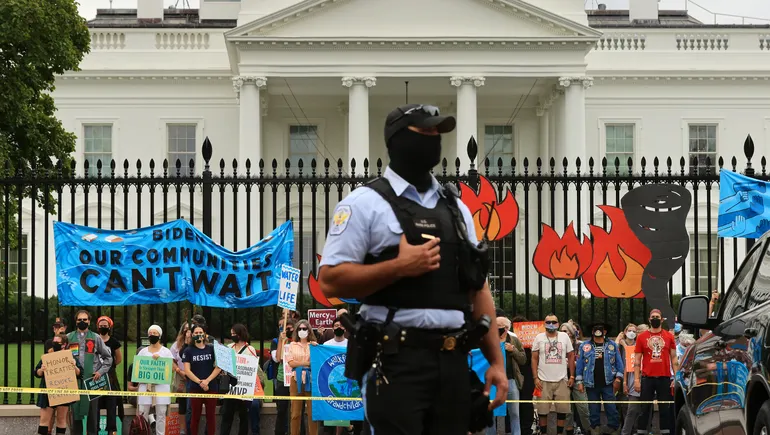
As the Biden administration seeks a net-zero U.S. economy by 2050 and works to deploy up to $1.6 trillion in climate and infrastructure funding, efforts to update permitting processes for renewable energy, transmission, and other projects are catalyzing fierce debate—sometimes even among groups that typically align on policy.
Clean energy groups broadly support streamlining permitting to accelerate deployment of renewables, storage, and other resources to help mitigate near-term climate impacts. But many environmental organizations oppose permitting reforms that could also benefit the fossil fuel industry or weaken the National Environmental Policy Act (NEPA).
"NEPA has always been seen as the vanguard for environmental justice communities," said Anthony Rogers-Wright, a racial and climate justice advocate who previously worked at ICF International and the New York Lawyers for the Public Interest. "It's not even as strong as it should be, but it's still seen as the first line of defense for cultural communities and Indigenous communities. Now seeing it being casually altered—for some, it's almost tantamount to tampering with Social Security."
The high stakes of this conflict "have brought us to a stage where we're beginning to see a lot of standoffs, lines being drawn in the sand, and the attendant divergence of ideas and approaches," he added.
From an environmental justice perspective, advocates argue that removing permitting and siting hurdles could endanger communities already burdened by pollution.
"In some cases, we actually want these analyses to be thorough, we don't want them rushed. We're talking about critical resources and development activities that require disturbing soil and the earth's surface," Rogers-Wright said.
Costs, Delays, and Uncertainty
On the other hand, advocates of permitting reform argue that current requirements imposed on project developers are not only burdensome but also unhelpful to the very communities they are meant to protect.
In a 2022 analysis,the Institute for Progress arguedthat the current NEPA "imposes enormous costs on the federal government, delays clean energy projects for years, and creates uncertainty that prevents other projects from even getting off the ground."
Alec Stapp, co-founder and co-CEO of IFP and one of the report's authors, said he advocates for a "robust" permitting process that provides both certainty and efficiency.
"I think a robust permitting process can be described as: giving a quick and informed answer on whether a project receives government approval to build—that is, a very fast and certain 'yes' or 'no' on whether the project can be built," he said.
"(The Inflation Reduction Act and the Infrastructure Investment and Jobs Act) represent huge investments, but there seems to be a noticeable lag in actual deployment on the ground."
—Alec Stapp, Co-CEO of the Institute for Progress
Stapp said an efficient permitting process with time limits would be "robust," but "that's the opposite of what environmental activist groups want—they want a tool they can use to block projects they don't like."
These groups want to "easily use (the permitting process) to stop bad projects they simply don't want built," such as "pipelines, new natural gas facilities, and export terminals."
Stapp supports the use of categorical exclusions in the NEPA environmental review process—defined by the U.S. Environmental Protection Agency as "actions that federal agencies have determined, after review by the White House Council on Environmental Quality (CEQ), do not individually or cumulatively have a significant effect on the human environment."
In April, CEQ finalized a rule to update the federal environmental review process under NEPA, including "new, more flexible approaches for agencies to establish categorical exclusions to accelerate low-impact projects such as solar, EV charging infrastructure, and transmission,"the White House said in a press release。
Earlier that week, the U.S. Department of Energy issued a final rule establishing theCoordinated Interagency Transmission Authorizations and Permits (CITAP) program, which will make DOE the lead agency for permitting new transmission projects.
Congress is also taking up permitting reform, with ten bills introduced in this session alone, but despite bipartisan calls for action, these billshave struggled to advance. West Virginia Independent Senator Joe Manchin and Wyoming Republican Senator John Barrasso on May 21announcedthat they would soon share a new bipartisan permitting reform legislative draft with their colleagues.
Manchin commented that the Federal Energy Regulatory Commission's (FERC)recently issued transmission planningand cost allocation reform rules are, as "my friend Senator Hickenlooper said... 'a Band-Aid on congressional inaction.'"
Stapp said he hopes to see reforms that would end "the litigation death spiral that projects currently find themselves in." He cited concerns about the uncertainty facing project developers and their financiers, and questions about the fate of the massive investments represented by the CHIPS Act, the Infrastructure Investment and Jobs Act, and the Inflation Reduction Act.
"Is that money turning into steel on the ground?" he asked. "Are projects actually being built in the real world? Or are these just large contracts that have been awarded but are stuck in permitting purgatory? ... We're far from having final answers, but we're starting to see some warning signs."
Stapp added that the President himself has reportedly "expressed concern that not enough new projects funded by the infrastructure bill or the IRA are breaking ground."
"I share that concern—like, where are the actual projects?" he asked. "There's a lot of investment, but there seems to be a noticeable lag in actual deployment."
Rogers-Wright, however, sees a political element among permitting reform supporters "on the liberal side of environmentalism... because many people have staked their reputations on the IRA, and they have very, very little time to show its actual benefits, because elections are coming in November."
Community Engagement and Environmental Justice
Denae King, associate director and fellow at the Bullard Center for Environmental and Climate Justice at Texas Southern University, said permitting reform is a priority and that the center is "very grateful" for recent actions by the White House and EPA on the issue. However, she added, thorough environmental review remains "extremely important."
"In environmental justice communities, there are often already multiple sources of industrial pollution, or sources of contaminants in the air or water," she said. "So understanding cumulative impacts becomes increasingly important, and this permitting reform does that. I think another thing it does is promote meaningful public participation."
"Community residents are the experts. They know their communities very well, whether it's exposure pathways or the health impacts they see in schools and among neighbors."
—Denae King, Associate Director of the Bullard Center for Environmental and Climate Justice at Texas Southern University
The White House's new rule removes provisions in NEPA that allegedly "created litigation risk and jeopardized community engagement," including "removing detailed and burdensome requirements for what public comments must contain to be considered by agencies," and "removing provisions that sought to limit judicial review."
King said public comment periods for projects under development are often "short and poorly publicized. So when (communities) actually get a chance to weigh in, their input isn't necessarily valued anymore... It's too late to ask communities after developers have drawn the full map and already decided how facilities will be laid out and sited."
This, she said, is disadvantageous to both developers and communities, as the former may end up sinking costs into a project that ultimately cannot be sustained.
"Community residents are the experts," King said. "They know their communities very well, whether it's exposure pathways or the health impacts they see in schools and among neighbors."
Opposition to Renewable Energy Projects
According to a May 22report from The Hamilton Project, visual and noise complaints often drive community opposition in wind and solar project permitting.
The report cited a 2023 paper by David Adelman, Harry Reasoner Regents Chair at the University of Texas School of Law, which found that "litigation pressure against offshore wind has emerged in rural Northeastern communities where residents place a high value on preserving local landscapes."
"Other times, the renewable energy transition threatens existing local economies," the report noted. "In Kentucky, coal is the most powerful political incumbent, in part because the mining industry supports thousands of workers and their families each year."
"I think there's also a fair amount of distrust externally about what the specific provisions of permitting reform are and where it's headed."
—Chirag Lala, Director of Energy Policy at the Center for Public Enterprise
Chirag Lala, director of energy policy at the nonprofit Center for Public Enterprise, said he views the permitting reform issue as an efficiency problem—ensuring that community-level input flows upward to facilitate the best possible decisions.
"The problem is not stakeholder engagement," Lala said. "I do think some groups involved in the permitting reform debate are either explicitly or nearly implicitly suggesting that stakeholder engagement is the problem. But that's far from the truth."
In the ideal world envisioned by CPE, Lala said, projects would receive "far more" automatic permits, categorical exclusions, and "public agencies would often be in a privileged position to obtain the permits and siting approvals they need, or at least be able to select certain types of private projects to receive automatic or expedited permits."
"But the key point is, we don't think the fact that these communities need and want to raise certain concerns about the investment process is itself an obstacle," Lala said. He argued that the existing permitting process is what "fails to meet their needs in this regard."
Lala suggested that environmental justice concerns, pollution cleanup, and local worker employment could be addressed through policy mechanisms outside the permitting process.
"But I think there's also a fair amount of distrust externally about what the specific provisions of permitting reform are and where it's headed," Lala added.
Both Lala and Stapp noted that "veto" legal mechanisms such as injunctions have the potential to threaten community benefit agreements reached between communities and developers, even when the "veto" is exercised by third parties such as environmental organizations.
In a process without final authority, Lala said, "when different groups participate in that process, they know that simply filing a document, raising an objection, or attending a meeting can itself generate enough resistance to prevent a project from moving forward."
"And if there's an entity that can step into the process at some point and say, 'Look, this project is going to proceed, everyone has said what they need to say,' that would change the incentives for some participants in the process," he said.
However, Rogers-Wright worries that moving toward a more unilateral decision-making process would strip voice from those directly affected by decisions.
"When you don't have a voice, when you're not part of the process, you tend to be sacrificed," he said. "If you speed up the process, it means you're going to dramatically reduce (participation)—that in itself is problematic, right? The so-called public participation is not at an ideal level."
Correction: We have updated this article to correct Anthony Rogers-Wright's title and role.
