
U.S. Department of Energy Emergency Order Causes Sharp Decline in Power Plant Output: Q1 Output Down 65% Year-on-Year
The U.S. Department of Energy issued an emergency order under Section 202(c) of the Federal Power Act to prevent the retirement of 10 units across six power plants. Data shows that in the first quarter of 2026, the combined electricity generation of five of these plants plummeted by 65% year-on-year, with some units barely operating or offline for extended periods.
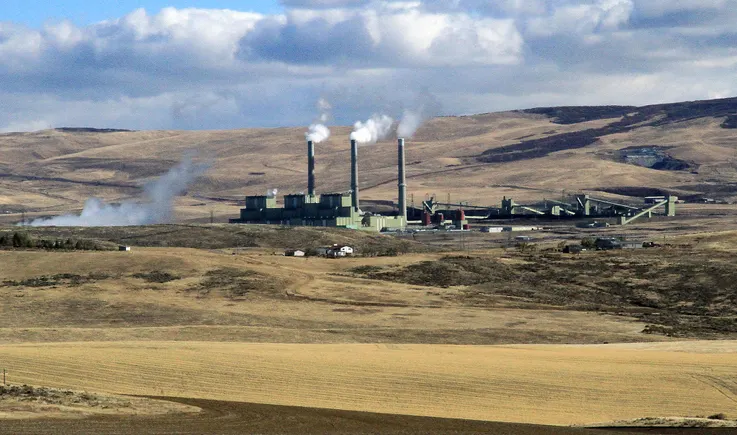
This is the first of a two-part series about the U.S. Department of Energy's (DOE) orders preventing fossil fuel power plants from retiring.The second part will explore the costs and reliability benefits of keeping these plants running.。
Last year, the U.S. Department of Energy ordered 10 generating units at six power plants—five of them coal-fired—to continue operating past their retirement dates to address what it called a reliability emergency covering much of the U.S. grid. So far, however, the impact of these emergency orders on power generation has been mixed.
According to the U.S. Energy Information Administration (EIA)data, under the Section 202(c) orders, one plant never operated, one operated for only two weeks, three generated less than in the same period last year, and one generated roughly the same amount as in the previous year.
Overall, in the first quarter of 2026, the five plants under DOE orders generated a combined 1.5 million megawatt-hours, down 65% from 4.3 million megawatt-hours in the same period last year. Of the six plants, one located in Pennsylvania has not yet reported its generation to the EIA this year, while its generation in the first quarter of last year was only 27,000 megawatt-hours.
In the DOE's nearly 50-year history, there has never been a precedent for ordering generating units to continue producing power after their scheduled retirement dates. To this end, the department issued a series of 90-day emergency orders under Section 202(c) of the Federal Power Act and reissued them for all units before the initial orders expired.
Industry observers expect the DOE to continue reissuing the 202(c) orders to prevent plant retirements and may add more units to the list. Earlier this month, the departmentordered the Orlando Utilities Commission(a municipal utility) to continue running its nearly 465-MW coal-fired Stanton Unit 1 rather than placing it in "cold shutdown." The Orlando Utilities Commission had originally planned to convert the plant's two coal units to gas, but later purchaseda nearly 475-MW gas-fired plant in Osceolaas an alternative to converting Unit 1, and therefore planned to cold-shutdown the unit.
The DOE did not respond to a series of questions, including under what conditions it would stop issuing these orders.
To understand how these plants have operated under the 202(c) orders, Utility Dive analyzed EIA monthly generation data and calculated the capacity factors of these units. The capacity factor measures the ratio of a plant's actual generation to its potential maximum generation over a given time. We compared the capacity factors of these units during the emergency order periods and the four corresponding periods before them.
The 202(c) orders for four of these plants effectively took effect on January 1, when these units were originally scheduled to retire. These plants include: Unit 2 at TransAlta's Centralia plant in Washington; Unit 2 at CenterPoint Energy's F.B. Culley plant in Indiana; Units 17 and 18 at Northern Indiana Public Service Company's (NIPSCO) R.M. Schahfer plant in Indiana; and Craig Unit 1 in Colorado, operated by Tri-State Generation and Transmission Association.
The DOE's emergency orders for the J.H. Campbell plant in Michigan, majority-owned by Consumers Energy, and Units 3 and 4 at Constellation Energy's Eddystone plant in Pennsylvania, effectively took effect on June 1, 2025, when these plants were originally scheduled to shut down.
The latest EIA data for the Eddystone plant is through December 2025. Data for all other units is through March, which is the most recent available.
Capacity factors decline under 202(c) orders
Changes in capacity factors of plants prevented from retiring by DOE orders.
Since the orders were issued, Consumers Energy's 1,420-MW Campbell plant in Michigan has operated at a 46% capacity factor since June 1, down from an average of nearly 66% over the same four prior-year periods, according to EIA data.
The 730-MW Centralia plant in Washington has produced no electricity since the DOE ordered it available on January 1, a spokesperson for plant owner TransAlta said in an email on April 29.
Since the DOE emergency order took effect at the start of the year, the 446-MW Craig Unit 1 has only generated electricity for two weeks, from April 10 to April 25, in response to aLevel 1 Resource Advisoryissued by the Southwest Power Pool due to resource outages, load, and uncertainty in intermittent resources, said Amy Robertson, vice president of communications at Tri-State.
CenterPoint's 104-MW F.B. Culley Unit 2 operated at a 14% capacity factor in the first three months after its DOE order took effect, down from an average of nearly 22% over the same four prior-year periods, according to EIA data.
The 380-MW Eddystone units in Pennsylvania operated at a 0.5% capacity factor, roughly in line with the past, according to EIA data. These units use oil and gas fuel, unlike the other coal-fired plants whose retirements were delayed by DOE orders.
NIPSCO's 847-MW Schahfer units in Indiana operated at a 17% capacity factor in the first quarter of this year, down from an average of 24% in the first quarters of the previous four years. However, one of the plant's two units has not operated since last summer, and both units did not operate in March.
Plant age takes a toll
Partly because these plants are old and were originally scheduled to shut down, they are generating less than in the past.
"If you plan to retire [your plant]... you're not going to spend a lot of money in the last few years to make sure it runs well and efficiently," said Nikhil Kumar, project director at GridLab, a nonprofit technical consulting organization.
Plant owners may have deferred facility investments ahead of the expected end of operations, so maintaining operation under DOE orders may require additional spending, said Greg Wannier, senior attorney at the Sierra Club, which is challenging the orders in court.
"If plants are required to run for too long, those deferred maintenance projects will start to significantly increase the costs of these orders," Wannier said.
That issue has already affected two Indiana plants under 202(c) orders.
NIPSCO's Schahfer units are offline for maintenance, and the company expects to complete the work in the third quarter of this year, NIPSCO President and Chief Operating Officer Vince Parisi said at a summer reliability forum hosted by the Indiana Utility Regulatory Commission on May 19.
NIPSCO declined to provide details on the scope, timing, or cost estimates of the maintenance. "The total cost of complying with the federal order is still being assessed as reliability work continues, and we will not speculate on potential future federal actions beyond the current [202(c)] order," Jessica Cantarelli, communications manager for the utility, said in a June 3 email.


CenterPoint has opposed the orders partly due to maintenance needs. Complying with the DOE order would require "significant investment to support an inefficient and increasingly unreliable asset," Michael Roeder, president of CenterPoint Energy Indiana, said in a February 17 letter to Energy Secretary Chris Wright, requestingpermission for the utility to retire its Culley unit。
According to the letter, CenterPoint estimated it would need to spend up to $20.5 million and take the plant offline for 14 weeks of maintenance to keep it running.
"Our teams continue to evaluate other operational factors, as additional investment may be required, pushing estimated costs higher," Roeder said in the letter. "These factors indicate that extending the life of Unit 2 is neither practical nor financially responsible, highlighting the need for a more prudent and economically sound path."
In Colorado, the owners of Craig Unit 1 have planned for a decade to shut it down and have maintained it at "appropriate" levels since 2019 in anticipation of retirement, with two of the owners—Tri-State and the Platte River Power Authority—stating in an April 29request for DOE reconsiderationof the 202(c) order for the unit.
Complying with the DOE order required the unit's owners to repair out-of-service equipment, such as feedwater heater tubes, sootblowers, and side-stream filter pumps, Tri-State and Platte River said.
Tri-State and Platte River on April 29 asked the U.S. Court of Appeals for the District of Columbia Circuit tooverturn the DOE's first 202(c) order for Craig Unit 1。