
DOE Emergency Orders Drive Up Electricity Costs—What Are the Reliability Gains?
Starting in 2025, the U.S. Department of Energy issued a series of emergency orders under Section 202(c) of the Federal Power Act, requiring 11 generating units across seven power plants to postpone retirement to address potential electricity supply shortages. However, industry observers question the necessity and efficiency of these orders: some units are not operating, regional near-term reliability risks are low, and the orders last only 90 days, which does not align with long-term grid planning cycles. In terms of costs, according to Sierra Club data, maintaining these plants in operation incurs net expenditures of approximately $548.8 million annually; owners such as Consumers Energy and TransAlta are seeking regulatory approval to recover costs from ratepayers. Additionally, operating units produce significant carbon dioxide, sulfur dioxide, and nitrogen oxide emissions, leading to indirect environmental and health costs.
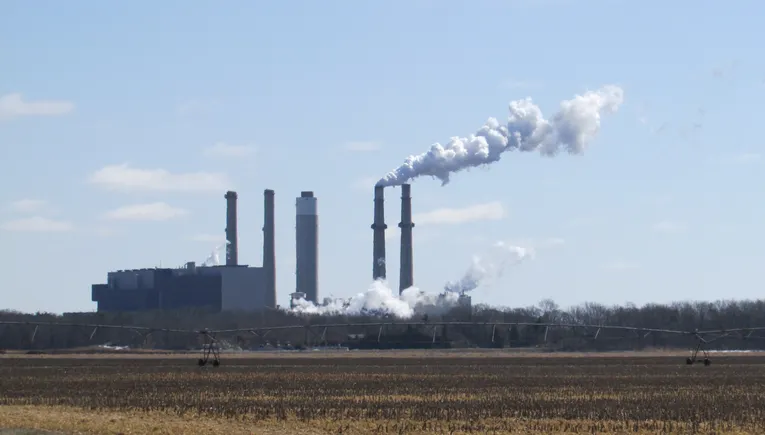
This article is the second in a two-part series by Utility Dive about U.S. Department of Energy (DOE) orders preventing the retirement of fossil fuel power plants. In the first article, Utility Dive found that the plants subject to the department's ordersgenerated significantly less electricity than previously, partly because some of those units were not operating.
In 2025, the U.S. Department of Energy began issuing a series of "emergency" orders preventing the planned retirement of generating units at seven power plants.
In issuing the orders under Section 202(c) of the Federal Power Act, DOE said the regions where the plants are located face potential electricity supply shortfalls, some of which could occur years from now. The department also cited potential demand growth—especiallydata center development—as a reason to keep the plants running.
In other cases, DOE noted that several plants subject to emergency orders provided electricity during Winter Storm Fern in late January, when extreme cold covered large parts of the U.S. When DOE issuedits latest Section 202(c) order for two units at the R.M. Schahfer Generating Stationon June 18, it said the station, owned by Northern Indiana Public Service Co., had both units operating at over 285 megawatts daily during the storm.
When DOE in early June ordered the Orlando Utilities Commission, a municipal utility, to continue operating its nearly 465 MW coal-fired Stanton Unit 1 rather than place it in "cold shutdown," it cited Winter Storm Fern as evidence Florida faced an "emergency situation."
In that order, DOE noted that the North American Electric Reliability Corporation's (NERC) latest long-term reliability assessment placed Florida at "normal risk" for long-term energy adequacy. But DOE said the NERC report indicated Florida's resource and transmission growth projections lag behind what is needed to support new data centers and other large loads.
Deputy Assistant SecretaryAlex Fitzsimmonstold Utility Dive earlier this month that DOE makes Section 202(c) decisions based on the facts and circumstances of each case.
"What we're hearing from NERC is that resource adequacy nationwide is deteriorating and has been for several years, due to premature retirement of reliable dispatchable generation while energy demand is rising," Fitzsimmons said. "We need to make sure we have dispatchable generation to meet peak demand."
Necessity of emergency orders questioned
DOE defends the emergency orders on the grounds of reliability needs amid demand growth, but it is unclear to what extent the Section 202(c) orders are shoring up grid reliability. Currently, four of the 11 units DOE has ordered to remain operating are not running.
According to the program director at GridLab, a nonprofit technical advisory organization focused on the grid,Nikhil Kumar, there is no indication that regions affected by DOE's orders face near-term reliability risks.
"Adding more capacity to the grid certainly helps reliability," he said. But he noted that NERC's recent summer and winter assessments indicate minimal risk in the nearer term.
"There is no emergency," Kumar said.
For example, NERC'ssummer assessmentreleased in May found that the Midcontinent Independent System Operator (MISO), which covers the Schahfer plant and Indiana's Culley Unit 2, faces "normal" reliability risk.
When CenterPoint urged DOE to allow its Culley Unit 2 to retire as scheduled on December 31, CenterPoint Energy's Indiana region presidentMichael Roedersaid the unit is not needed to support grid reliability, citing NERC assessments as well as reports from MISO and state utility regulators.
In part, DOE said Michigan's Campbell plant and the Schahfer and Culley units need to keep operating because MISO's recent capacity auction showed tight supply. However, the grid operator'slast auctionheld this spring cleared with a reserve margin 3.5 percentage points above MISO's 7.9% reliability reserve target.
Looking ahead, according toannual survey resultsreleased June 3, MISO's projected capacity additions over the next five years will outpace growth in electricity demand. In other words, the grid operator expects to have more than enough power to meet demand during that period.
Kumar noted that grid operators and state utility regulators typically review power plant owners' decisions to retire generating units to ensure the units can be shut down without causing reliability issues.
Additionally, the vice president at research firm Capstone,Erin Mellysaid the 202(c) orders create uncertainty for plant owners and grid planners. DOE orders plants to keep operating based on long-term resource adequacy concerns, but each order lasts only 90 days, Melly said.
"From a planning perspective, that timeline doesn't necessarily align with how grid operators plan years in advance," she said. Melly said that with more gigawatts of capacity and coal units scheduled to retire by 2028, Capstone expects DOE to issue additional 90-day 202(c) orders, also delaying their retirements.
According to NERC, the 202(c) orders have helped reliability overall.
"It's a blunt tool used as a last resort to keep necessary generation online, and it has certainly helped, especially this past winter, in maintaining reliability," NERC's director of reliability assessment and performance analysisJohn Mourasaid at aFERC meetingin February.
But according to Moura, the benefits of DOE's orders vary. "Some have helped, some may not have," he said. "But overall, keeping units online has certainly helped."
Costs of emergency orders
Preventing unit retirements may enhance short-term reliability, but it comes at a cost to customers. Industry observers say it is unclear whether ordering plants to keep operating is the most effective way to improve grid reliability. Additionally, they note, these plants may be displacing cheaper power supplies and adding to air pollution, which also carries costs.
According to data from a report released June 8 by the Sierra Club, keeping these seven plants running costs about$1.5 million in net expenditures per day, or about $548.8 million per year.
The Institute for Energy Economics and Financial Analysis (IEEFA) estimates costs exceed$30 million per month, or more than $300 million as of mid-May. The nonprofit, which supports moving away from fossil fuels, said costs could increase if plants subject to the orders need repairs.

Consumers Energy, the primary owner of the Campbell plant, said in an April 28 filing with the U.S. Securities and Exchange Commission (SEC) that it spent$401 millionto keep the plant running as of March 31. It recovered $221 million through power sales in the Midcontinent Independent System Operator market, but will seek to recover $180 million in costs from customers in MISO's north and central regions. DOE issued itslatest 90-day order for the Campbell planton May 18, which keeps it running through August 16.
TransAlta is seeking to recover $19.9 million from customers to cover the costs of keeping its Centralia plant from retiring, according to an April 30 filing with the Federal Energy Regulatory Commission (FERC).
TransAlta is preparing to reach an agreement with Puget Sound Energy to convert the coal-fired plant to gas operation. The Calgary, Alberta-based independent power producer estimates it would need an additional $23 million to repair the plant if DOE issues additional emergency orders.
"While the unit is currently offline and preparing for conversion, employees remain on standby to support operations if needed," a TransAlta spokesperson said.
According to a company spokespersonMark Rodgers, Constellation Energy spent about $4.8 million operating its Eddystone units under its first DOE order. PJM Interconnection customers will pay those costs, minus any revenue from the units' power sales.
CenterPoint has filed cost recovery paths with FERC and the Indiana Utility Regulatory Commission, but according to a company spokesperson, it has not yet sought recovery of any 202(c)-related costs.
Who pays, and how much?
The costs of keeping the Indiana and Michigan units running will be spread across customers in MISO's north and central regions.
Thus, utility companies in states not subject to the orders, such as North Dakota, Minnesota, and Iowa, will bear some of the costs.
"They will pass on the costs, but when they do rate cases, this could reduce room for other expenditures," Melly said.
She explained that as state utility regulators increasingly focus on energy affordability, they may view utility proposals with greater scrutiny. Thus, 202(c) costs could effectively crowd out other potential utility investments.
PJM Interconnection customers will pay the costs of keeping Constellation Energy's Eddystone units near Philadelphia running. It is unclear who will pay costs related to Colorado's Craig Unit 1 and Centralia, an independent plant in Washington state with no customer base. Last month, the California Independent System Operator (CAISO)urged FERC to reject TransAlta's petition that CAISO paysome of its emergency order costs related to the Centralia plant. The Bonneville Power Administration, Southwest Power Pool, and GridForce Energy Management also opposed being required to absorb some 202(c) costs.
Washington state and the Washington Utilities and Transportation Commission told FERC that FERC "should deny the application for lack of jurisdictionuntil TransAlta Centralia provides jurisdictional service to voluntary customers and the legal validity of TransAlta's emergency order is resolved."
Air pollution impacts
Beyond the direct costs of the 202(c) orders, there are indirect costs, such as air pollution.
According tothe latest U.S. Environmental Protection Agency (EPA) data, the Campbell plant, for example, has produced about 5.7 million short tons of carbon dioxide while operating under DOE's orders—equivalent to the emissions of 1.2 milliongas-powered cars driven for a year.
According to EPA data, the plant has also produced about 3,020 short tons of sulfur dioxide and 2,140 short tons of nitrogen oxides. "Short-term exposure to sulfur dioxide can harm the human respiratory system and make breathing difficult," EPA said. It can also contribute to the formation of particulate matter pollution, which can be harmful.
According to EPA, nitrogen oxides react with other volatile organic compounds to form ozone and fine particulate matter, leading to asthma, bronchitis, respiratory infections, and premature death.
Other generating units operating under DOE emergency orders are also producing air emissions that could have been avoided if they had been allowed to retire as scheduled.