
New Solution to the U.S. Nuclear Waste Dilemma: Can the Department of Energy's 'Nuclear Lifecycle Innovation Park' Break the Deadlock?
After decades of deadlock in nuclear waste disposal, the U.S. Department of Energy is attempting to use the 'Nuclear Lifecycle Innovation Park' initiative, offering long-term employment and industrial clustering as incentives, to convince states to accept some spent fuel. Although many states have responded positively, persistent issues such as insufficient funding, policy reversals, and technical and economic viability continue to constrain the pace of the U.S. nuclear renaissance.
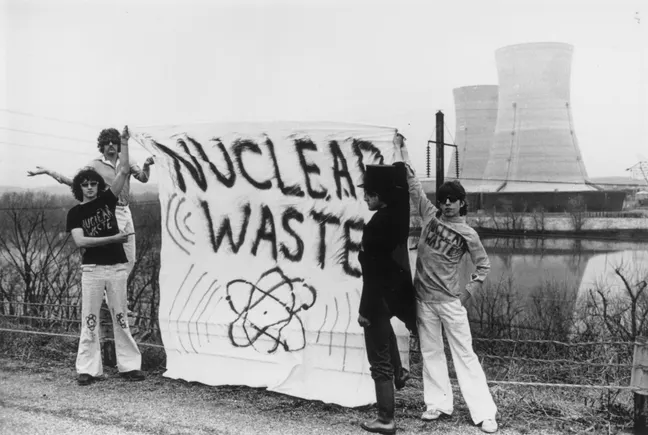
After decades of deadlock over the disposal of radioactive waste from nuclear power plants, the U.S. Department of Energy (DOE) is hoping to persuade states to accept some spent fuel as part of a broader plan that includes advanced industry, power generation, data centers, and long-term employment commitments.
With rising electricity demand and growing bipartisan interest in non-fossil baseload power, many states have responded positively. Recycling and reusing nuclear fuel, as France has done for years, is seen by many as key to revitalizing the U.S. nuclear industry.
However, the many financial, policy, and practical challenges that have previously hindered the United States from finding a lasting solution for approximately95,000 metric tonsof spent fuel remain. Federal officials, utility planners, nuclear technology suppliers, and analysts told Utility Dive that these issues could hinder the nascent nuclear renaissance and the Trump administration's ambition to add about300 gigawattsof nuclear capacity over the next two decades.
"Generations that benefit from nuclear reactors should solve this problem rather than kicking the can down the road."
— Manuel C. Camargo, Chief Manager of Decommissioning at Southern California Edison
Manuel C. Camargo, Chief Manager of Decommissioning at Southern California Edison, said the company supports the DOE's proposed "Nuclear Lifecycle Innovation Park" concept and its collaborative approach. SCE owns the San Onofre nuclear plant, which was retired in 2013, but Camargo noted that decommissioning cannot be completed until the spent fuel is removed from the site.
He added that in the meantime, SCE must pay rent to the U.S. Navy, which owns the land, until the federal government "fulfills its legal and contractual obligations" to dispose of the waste. SCE hopes any new plan will include a commitment to reliable funding for a spent fuel repository.
Camargo said: "Not addressing spent fuel storage could hinder the deployment of advanced reactors," making it difficult to meet "exponentially growing electricity demand." "Generations that benefit from nuclear reactors should solve this problem rather than kicking the can down the road."
Historical legacy issues
The first generation of U.S. nuclear power came online in Pennsylvania in 1957, with licensing peaking in the 1970s. As radioactive waste accumulated at plant sites, safety concerns in the 1980s prompted policymakers to tighten Nuclear Regulatory Commission (NRC) licensing requirements and address spent fuel storage.
In 1987, Ronald Reagan signed legislation designating Yucca Mountain in Nevada as the nation's only deep geological permanent repository site. But over the next 20 years, the project stalled due to state and local opposition; in 2011, the Obama administration effectively terminated it by cutting funding.
However, without Yucca Mountain, the DOE could not take over spent fuel from U.S. nuclear plants by 1998 as required by the Nuclear Waste Policy Act of 1982. Utilities and independent nuclear plant developers complain about the rising costs of storing and securing spent fuel.
The DOE's 2012 Blue Ribbon Commission report highlighted this issue. Subsequently, a series of federal court rulings between 2013 and 2017 supported the "Decommissioned Plant Alliance," composed of 13 closed plants.
"The courts couldn't order the DOE to act because Congress didn't appropriate funds," recalled Tim Smith, who helped form the alliance and founded the advocacy group Governmental Strategies. "But the courts acknowledged partial breach of contract and the plaintiffs' right to recover incurred costs."
As spent fuel accumulates nationwide at a rate of about2,000 metric tonsper year, taxpayer liabilities grow. Rep. Mike Levin, a California Democrat, noted at a recent House hearing that in 2025, taxpayer liabilities from the DOE's failure to meet its legal obligations had reached$56.5 billionand continue to grow. He also highlighted bipartisan efforts, including the "Spent Fuel Solutions Caucus."
Levin said: "We must be realistic about the Trump administration's intentions to build more nuclear power. We should not site new nuclear projects until we solve the back-end of the fuel cycle."
The DOE's solution
In January, the DOE issued a Request for Information seeking "input from states interested in hosting potential 'Nuclear Lifecycle Innovation Parks,"" aimed at "anchoring an integrated, full-lifecycle nuclear ecosystem that can co-locate and support the entire nuclear value chain while exploring durable pathways for managing spent nuclear material in a safe, secure, and fiscally responsible manner."
The RFI states that these parks "must" support functions such as fuel fabrication, enrichment, nuclear fuel reprocessing or recycling, and waste disposal. They "may also additionally support advanced reactor deployment, power generation, advanced manufacturing, and co-located data centers."
States were invited to submit "the appropriate scope and specific funding structures of their proposed parks," with an emphasis on prioritizing private and state funding while relying on "targeted, conditional, and time-limited federal support, subject to appropriations and statutory authorization."
The RFI states: "The DOE envisions these parks will be deployed rapidly, with the first facilities expected to come online around2027." The deadline for state responses was April 1. The department has not yet indicated when it will announce the proposals it selects.
According to Nuclear Newsline on April 1, among responses from 28 states, Utah, South Carolina, Tennessee, and Washington showed strong interest. Another 11 states submitted a joint response through the National Association of State Energy Officials, offering suggestions for improvement.
The responses from Utah, Tennessee, Idaho, and Nebraska each included letters from their Republican governors describing potential private sector partners, sites, workforce, policy support, and stakeholder concerns. This contrasts sharply with Nevada's historical opposition to Yucca Mountain and recent opposition in Texas and New Mexico.
Marla Morales, Acting Deputy Assistant Secretary for Spent Fuel and High-Level Waste at the DOE, told Utility Dive that combining waste storage with nuclear sector economic growth opportunities is a "game changer."
Morales said: "If states and communities are willing to help the federal government fulfill its spent fuel responsibilities, they have the opportunity to integrate into the national and international economy, developing intergenerational economic growth, jobs, and fiscal revenue." She added that the DOE prefers the term "spent fuel" over "waste" or "garbage" because it implies "an asset that still retains 90% of its inherent energy."
Morales said: "Yucca Mountain remains the repository under the 1982 law," but Energy Secretary Chris Wright has made clear that is not the solution.
Bipartisan support for spent fuel storage and recycling
Both Republican and Democratic administrations have recognized the need for spent fuel storage and recycling to support advanced nuclear development. A report released by the DOE under President Biden stated: "Nuclear power plays an indispensable role in the energy transition as a clean baseload complement to renewables. The United States will need at least about 700-900 GW of additional clean baseload capacity... and nuclear is one of the few mature options capable of providing that at scale."
The report said a key change to support nuclear development is "adopting a consensus-based approach to siting federal consolidated interim storage and disposal facilities."
Despite President Trump's dismissal of climate change concerns, he has pushed an aggressive nuclear expansion plan to meet the demands of AI data centers and advanced manufacturing. In May 2025, he directed the DOE to authorize advanced reactor demonstration projects outside national laboratories, with 11 pilot projects now underway.
In March, the NRC issued the first commercial nuclear reactor construction permit in nearly a decade to a subsidiary of Bill Gates' TerraPower, for a345 MWplant near a retiring coal plant in Kemmerer, Wyoming.
Other tailwinds include: the federal ban on importing uranium from Russia takes effect in2028, increasing pressure to move toward a closed fuel cycle or at least increase domestic nuclear fuel recycling.
"Changing leadership and uncertain funding"
"In theory, all 95,000 metric tons of spent fuel stored in the United States could be reprocessed," said Joseph Faldowski, Senior Project Manager for Spent Fuel and High-Level Waste at the Electric Power Research Institute (EPRI). But he acknowledged it depends on "the reprocessing technology and reactor type."
Faldowski said that in France, where over 65% of electricity comes from nuclear power, spent fuel is routinely shipped to reprocessing facilities, and all spent fuel is reprocessed. According to state-owned nuclear fuel company Orano,96% of spent nuclear fuelcan be reused to make new fuel. But even the world's leading La Hague facility has only reprocessed about40,000 metric tons。
over 55 years of operation.
Setting aside technology, some of the biggest practical challenges to storing and recycling nuclear fuel relate to timelines and financing. A recent report by the Energy Innovation Reform Project and nuclear startup Oklo said: "Past U.S. recycling programs were costly and short-lived." But it also noted that "technology, policy, and markets have evolved rapidly."
A paper funded by the University of British Columbia's School of Public Policy and Global Affairs, authored by former NRC Chairman Allison MacFarlane and former DOE spent fuel official Lake H. Barrett, noted that Congress has for decades used the Nuclear Waste Fund to offset national debt, making it "unavailable" for "developing nuclear waste disposal solutions.""The Trump administration deserves credit for prioritizing this issue, but the program's budget request for [fiscal year 2027] is only$102 million
," Smith said. "That's far from sufficient for park development, because the DOE only provides land, technical expertise, and policy support; it's unclear what private investment is available."
Other aspects of economic viability could also weigh on the DOE's plans. Rod Baltzer, CEO of nuclear waste drilling and storage company Deep Isolation, said most U.S. spent fuel is "old and cold," and "may not be economical to reprocess."
"In theory, all 95,000 metric tons of spent fuel stored in the United States could be reprocessed."
As a member of the House Appropriations Committee, Levin said he has "helped secure over$248 millionto advance long-term management of spent fuel." "It's not moving fast enough, but we have momentum, and we're seeing progress."
Although the DOE says it hopes some innovation parks will come "online" by 2027, Energy Secretary Chris Wright acknowledged the long-term nature of the commitment when testifying before the House Appropriations Committee in April, saying the government may need to create a "single-purpose entity" to manage these parks. The MacFarlane and Barrett paper argues that a single-purpose entity is key to closing the U.S. nuclear fuel cycle.
"First and foremost, the United States needs an entity that can successfully implement a solution," the paper said. "It has become clear that using a government agency subject to changing leadership and uncertain funding is challenging."
Governmental Strategies' Smith agreed. "Canada, Sweden, and Finland are already designing permanent waste repositories because they have set up organizations outside government to engage in dialogue with the public and build trust," he said.


