
PJM Capacity Auction Results Intensify 'Alarm': FERC Chairman Swett Calls for Coordinated Action
FERC Chairman Laura Swett noted that PJM Interconnection's latest capacity auction results fell nearly 7 GW short of reliability targets, attracting only about 500 MW of new generation, which intensified the 'alarm' for reform. She emphasized that the issues involve multiple levels, including federal, market, state, and entities, requiring coordinated action from all parties. FERC will hold a technical conference on July 23, focusing on PJM governance issues.
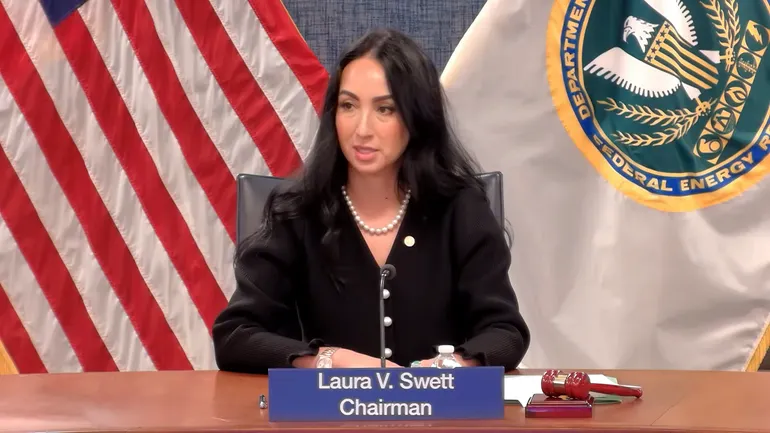
Federal Energy Regulatory Commission (FERC) Chairman Laura Swett said Thursday that PJM Interconnection's just-concluded capacity auction results fell nearly 7 GW short of its reliability target and attracted only about 500 MW of new power supply. "These numbers heighten the alarm that PJM needs to take action," Swett said at FERC's monthly meeting. She later added at a media briefing, "PJM failed to meet the target. Am I surprised? No, I'm not surprised." However, Swett said FERC is not trying to "single out" PJM.
"This is an issue involving the federal level, the market level, the state level, registered entities, market participants... all utility companies and related businesses," Swett said. "This is a very complex issue that requires all parties to build consensus and work together to find solutions."
FERC plans to address some of the issues at a technical conference scheduled for July 23, which will focus on PJM's governance issues. Swett noted: "PJM's current stakeholder process is slow when it needs to move quickly, opaque when it needs to be transparent, and vulnerable to vetoes and agenda control at a time when the region urgently needs immediate action."
Swett said FERC expects to gain "written and on-the-record ideas" from the conference. "I'm very optimistic that certain proposals will become front-runners based on the record gathered next week, thereby providing a clearer path forward for PJM thereafter."
FERC Commissioner Lindsay See also emphasized the need for reform at PJM. PJM is the largest grid operator in the United States, serving 67 million people in the mid-Atlantic and Midwest regions. See said: "PJM must be able to drive reforms forward in a timely and transparent manner. This also includes the need for a governance structure that not only delivers concrete results but also gives stakeholders confidence in reforms, thereby driving investment where and when it is needed."
Last week, FERC Commissioner David LaCerte said PJM's current situation is "unsustainable."
Here are five other key takeaways from the FERC meeting.
Data center reliability standards
FERC set a deadline for the North American Electric Reliability Corporation (NERC) to develop reliability standards for computing loads, including data centers and cryptocurrency mining operations, and rules for registering these loads by December 31. The grid regulator is already developing these standards and rules. FERC also directed NERC to submit a plan by March 1 detailing the next steps in its computing load standards development process.
"I commend NERC for its proactive efforts on these matters," Swett said. She said FERC set these deadlines because "they are effective mechanisms for producing results." As part of its "Large Load Action Plan," NERC said Thursday it expects to release draft proposed reliability standards and registration rules for public comment in August.
FERC requires CAISO and SPP to submit western seam reports
FERC ordered the California Independent System Operator (CAISO) and Southwest Power Pool (SPP) to submit a report by September 30 explaining how they plan to manage the seams between their respective markets and neighboring balancing authority areas in the West. CAISO's extended day-ahead market began operating in May. SPP expanded its footprint into the Western Interconnection in April, and its Markets+ program is expected to launch in October 2027.
FERC said: "While the increased deployment of organized markets is intended to bring significant reliability and economic benefits to the West, the resulting seam issues present reliability, operational, and market efficiency challenges that warrant proactive attention." Earlier this month, CAISO President and CEO Elliot Mainzer said the grid operator is working with SPP to develop a joint operating agreement before Markets+ begins operations.
Complaint over PSE&G cost recovery advances
FERC advanced a complaint against Public Service Electric and Gas Company (PSE&G) regarding cost recovery for a $546 million transmission project the company is building in New Jersey. The agency ordered an administrative law judge to hold a hearing on the complaint filed by Public Citizen in January, which alleges imprudent cost expenditures. In December 2024, PSE&G agreed to pay a $6.6 million penalty to settle an investigation by FERC's Office of Enforcement into its justification to PJM for building the Roseland-Pleasant Valley transmission project.
FERC dismisses complaint over Duke transmission rates
FERC dismissed a complaint that sought to prevent Duke Energy Progress from including the costs of four transmission lines that could benefit solar developers in its overall transmission rates. The agency rejected the arguments raised by North Carolina Electric Membership Corporation in its complaint, stating: "Including the costs of these four projects in the consolidated rate treatment is consistent with the Commission's long-standing precedent favoring consolidated rate treatment for integrated transmission facilities."
FERC considers adjusting 'hypothetical capital structure' incentives
FERC approved a 50/50 hypothetical debt-to-equity capital structure for two transmission projects Basin Electric Power Cooperative plans to build in North Dakota, with project costs of approximately $469.3 million. FERC offers hypothetical capital structures as an incentive for transmission development. Swett said: "They can help new transmission companies secure financing for large projects and allow developers to move forward when their actual capital structure may not yet reflect the project's long-term financial profile."
However, Swett said at the agency's meeting that FERC is considering adjustments to the incentive because it increases costs for consumers. "This is a very complex topic with significant implications for financing, project development, regional planning, and customer affordability. Even small changes to utility return rates can have significant impacts," she said. "I believe that working with my colleagues, we can find the right balance to ensure our policies protect consumers while promoting the necessary transmission investment."