
GE Vernova gas turbine backlog climbs to 116 GW, driven by dual engines of power and electrification businesses
GE Vernova reported second-quarter results with double-digit growth in both revenue and orders, mainly driven by strong performance in the power and electrification businesses. Gas turbine backlog increased from 100 GW in the first quarter to 116 GW, and the company expects it to reach 125 GW by year-end. The electrification business backlog exceeded $40 billion, up 69% year-over-year. Wind power orders declined 40% year-over-year, but the company mentioned a potential replacement cycle that could bring a turnaround.
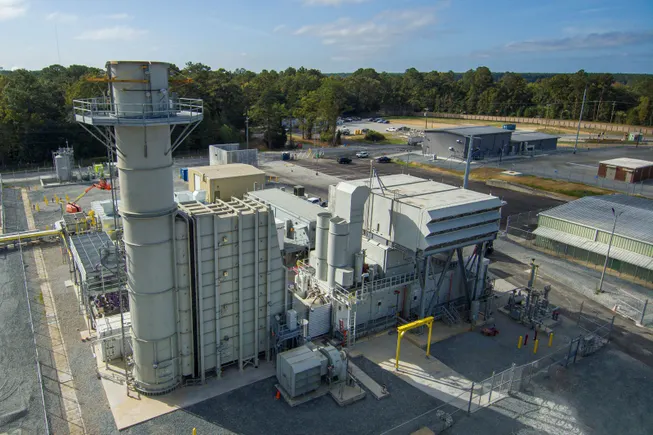
GE Vernova posted double-digit revenue and order growth in the second quarter, driven once again by the continued strong performance of its Power and Electrification segments. The Power segment manufactures and maintains gas, hydro, and nuclear power equipment, while the Electrification segment supplies transformers, switchgear, and other commercial power equipment.
In contrast, orders in the company's struggling wind segment fell sharply, mainly due to persistently weak demand for onshore wind turbines and blades in the United States.
"We remain focused on what we can control," CEO Scott Strazik said on Wednesday's earnings call, hinting at the economic, regulatory, and legal challenges facing its wind business.
Key data at a glance
- $176 billion: Total backlog across the three segments, up from $129 billion in the second quarter of 2025.
- 116 GW: Gas turbine backlog, up from 100 GW in the first quarter of 2026.
- $41 billion: Electrification segment backlog, up 69% year-over-year.
- 40%: Year-over-year decline in wind equipment orders.
Strazik said GE Vernova expects combined gas turbine orders and slot reservations backlog to reach 125 GW by year-end. The company shipped 3 GW of turbines in the quarter and signed 20 GW of orders and slot reservations, more than half of which were for its large HA-class turbines—equipment that customers typically operate at higher capacity factors.
Strazik noted that the customer base is increasingly diversified, spanning about 100 entities across 26 countries. About 80% are "traditional" customers such as utilities, and 20% are data center customers.
Similar to major competitors Siemens and Mitsubishi Heavy Industries in heavy-duty gas turbine manufacturing, GE Vernova is currently taking reservations four to five years out.
The company has begun accepting reservations for 2031 delivery and expects to "sign more than half of its 2031 capacity by year-end." Strazik added that while there have been "productive discussions" with customers regarding potential 2032 reservations, "we still need more time before clarifying the 2032 contracting timeline."
Strazik repeatedly mentioned "strong" pricing for gas power equipment on the call. Although he did not disclose specific turbine prices for the second quarter, Moses Sutton, senior analyst at BNP Paribas Equity Research, estimated in a Wednesday note that heavy-duty turbines are priced at approximately $790/kW, HA-class combined-cycle turbines at approximately $950/kW, and aeroderivative turbines at approximately $1,800/kW.
Sutton believes most investors will view Strazik's 125 GW year-end backlog guidance as conservative, "given management's track record of underpromising and overdelivering." In December, Strazik had projected 80 GW of gas turbine backlog by end-2025, while the actual figure was 83 GW.
Sutton said market expectations for actual year-end backlog in 2026 could range between 130 GW and 140 GW.
As for GE Vernova's plan to expand annual turbine capacity from the current 20 GW to 30 GW by 2030, Sutton said "it's still up in the air." Strazik's statement about needing more time to finalize the 2032 order pipeline may signal that "peak momentum is emerging" in the company's gas business growth story.
"Early stages of a multi-year growth opportunity"
Continuing the tone of recent earnings calls, Strazik expressed strong enthusiasm for the Electrification segment's prospects, describing it as being in a "power investment supercycle."
"The long-cycle power industry is in the early stages of a multi-year growth opportunity, and we are well positioned to create significant value," Strazik said.
Company data shows its Electrification segment's overall backlog has surpassed $40 billion, partly due to the completion of the acquisition of the remaining stake in GE Prolec—formerly a joint venture with Mexican industrial group Xignux. Strazik said the acquisition also contributed to the approximately $800 million in transformer orders the company recorded in the U.S. during the quarter.
Strazik noted that broad load growth, increased awareness among utility and data center customers of grid stability equipment, and national security needs are all driving demand for GE Vernova's electrical systems and components.
Julien Dumoulin-Smith, equity analyst at Jefferies Investment Bank, said in a Wednesday investor note that GE Vernova's solid-state transformers and uninterruptible medium-voltage transformers under development will position it to benefit from expected data center demand for these advanced electrical components.
But in another report covering multiple companies in the power industry, Dumoulin-Smith noted that community opposition and labor shortages are major constraints on data center-related load growth, factors that "call into question the integrity of the power supercycle." Jefferies' base case remains that data center energization will accelerate over the coming years, "but not without bumps."
Possible turnaround amid wind industry woes
Despite continued pressure on the U.S. wind industry from the Trump administration's trade and energy policies, Strazik said the government's upcoming Section 232 tariff guidance could bring more "order certainty" in the second half of 2026. He acknowledged that tariff-related uncertainty is currently affecting onshore wind development.
Independent energy analysts are cautiously optimistic about the industry's rebound over the coming years. Wood Mackenzie this month raised its five-year outlook for U.S. greenfield wind development by 5%, as developers race to take advantage of expiring federal tax credits and contracted corporate clean energy demand surges.
"Big tech companies are turning to wind as an additional energy source to meet their growing needs," Wood Mackenzie said in a July 20 report.
Both Wood Mackenzie and Strazik noted that the upcoming repowering cycle—where owners of older wind farms replace old turbines with more efficient units—will sustain demand for wind equipment through the 2030s.
"In the U.S., about 10 GW of our installed base has repowering potential—these projects have already qualified for new production tax credits," Strazik said.
Strazik did not directly address the ongoing legal dispute with Vineyard Wind, one of the company's wind customers, over the 800 MW project off the Massachusetts coast. GE Vernova subsidiary GE Renewables had threatened to exit the near-complete project after Vineyard Wind withheld hundreds of millions of dollars to offset what it called "catastrophic harm" from a 2024 blade failure. Vineyard Wind sued GE Vernova in April to prevent it from exiting the supply agreement.
In regulatory filings this week, GE Vernova said it has "successfully completed installation of all remaining turbines" at the Vineyard Wind project and has entered the commissioning phase. The filing stated: "During the project closeout phase, we are working with the customer to resolve outstanding claims and counterclaims."
Correction: This article has been updated to correct the timeline for GE Vernova's expected backlog.