
Eversource second-quarter profit plunges, dragged by transmission ROE refund and offshore wind impairment
Eversource Energy's second-quarter net income fell 85% year-over-year to $53.7 million, with earnings per share dropping from 96 cents to 14 cents. The company recognized multiple one-time charges, including $111.4 million related to the Aquarion sale, $62 million for transmission ROE refunds, and a $164 million increase in Revolution Wind project liabilities. Management reaffirmed full-year earnings guidance and disclosed several capital expenditure plans and regulatory developments.
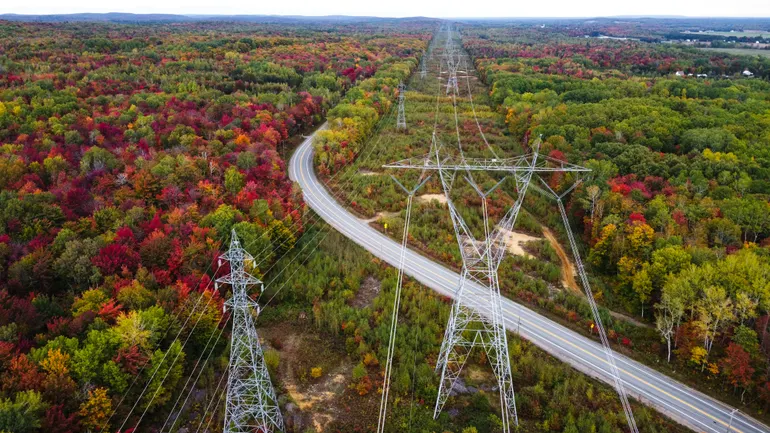
Eversource Energy's second-quarter earnings report released last Friday showed net income fell sharply to $53.7 million from $352.7 million in the same period last year, weighed down by several one-time charges. The Springfield, Massachusetts-based electric and natural gas utility said the charges included $111.4 million related to the sale of Aquarion Water Company, a $62 million reserve for a pending transmission return on equity (ROE) refund, and a $164 million increase in liabilities due to its investment in the offshore wind project Revolution Wind.
Diluted earnings per share for the second quarter fell to 14 cents from 96 cents in the same period last year. The company reaffirmed its full-year continuing operations earnings guidance of $4.57 to $4.72 per share. Additionally, the company said it expects annual earnings per share growth of 5% to 7% through 2030, based on the midpoint of its adjusted 2026 non-GAAP earnings guidance of $4.65 per share.
Key data at a glance
- $700 million: Eversource's share of the $2.2 billion transmission project preliminarily selected in ISO New England's competitive solicitation.
- $1.7 billion: Potential capital expenditures not included in the company's $26 billion five-year capital spending plan.
- $1.7 billion: Proceeds from the completed Aquarion sale, which the company plans to use to reduce parent company debt.
- $451 million: The amount of the 11% rate increase application filed by Connecticut Power and Light with the Connecticut Public Utilities Regulatory Authority on July 14.
Revolution Wind project progress and delays
According to Eversource Chairman, President and CEO Joseph Nolan, the 704-megawatt Revolution Wind offshore wind project is 97% complete and expected to begin commercial operation by the end of the year. However, two stop-work orders issued by the Trump administration have caused delays, increasing Eversource's potential costs on the project. Nolan expressed confidence during the second-quarter earnings call that the project would be completed within the year, noting it is currently delivering 300 megawatts of power to ISO-NE.
"The remaining installation work is very straightforward and there is no uncertainty," Nolan said. The project is being built by Ørsted.
Transmission projects and capital expenditure plans
ISO-NE preliminarily selected a joint proposal by Avangrid and Eversource on July 22 to build a $2.2 billion transmission line intended to deliver 1.2 gigawatts of wind power from Maine to Massachusetts, targeting operation by 2032. Nolan said on the call that ISO-NE is expected to make a final decision on the project in September after reviewing stakeholder comments.
"If this project ultimately succeeds, it will help significantly improve the electricity affordability challenges facing New England by increasing supply and alleviating congestion costs," Nolan said.
Additionally, the company's Connecticut Power and Light subsidiary proposed in mid-July a six-year, $1 billion advanced metering infrastructure (AMI) program covering the utility's 1.4 million customers. Neither project is included in Eversource's current $26.5 billion capital expenditure plan.
According to Jefferies equity analysts, the CP&L proposal has a benefit-cost ratio of 0.66, meaning the plan would impose approximately $350 million in costs on ratepayers above expected benefits, making it unlikely to gain approval from state regulators. "We continue to expect the AMI plan to either be securitized or not proceed, thus not providing earnings benefits to shareholders," analysts said in a Friday report. "It is unsettling to see a filing with a negative net present value."
Regulatory and ROE disputes
Eversource's transmission investment plans come amid a significant debate over the level of return on equity (ROE) that transmission asset owners should be allowed to earn, partly triggered by a mid-March ruling by the Federal Energy Regulatory Commission (FERC) that found ROE levels in New England were too high. Eversource and other utilities have challenged the FERC ruling and asked the agency to reset their allowed return rates. According to the company's quarterly report filed with the U.S. Securities and Exchange Commission, Eversource faces a refund risk of up to $968.4 million if the ruling is upheld.
Nolan linked electricity affordability to grid reliability. "A power system allowed to deteriorate becomes less reliable and more costly to maintain and repair over time," Nolan said. "This balance between affordability and reliability can be achieved through efficient operations, rigorous cost control, and strategic investments that maximize long-term customer value at the lowest reasonable cost."