
New Solutions Emerge for Grid Integration of Renewables: Xcel, Eversource and Other Utilities Disclose Progress
U.S. utilities are preparing for a surge in clean energy integration in 2024. As wind and solar penetration increases, grid reliability faces new challenges. Xcel Energy, Eversource, and others are exploring solutions such as distributed energy resource management systems, grid-enhancing technologies, private LTE networks, and grid-forming inverters to optimize transmission and distribution system coordination and address demand peaks and frequency fluctuations.
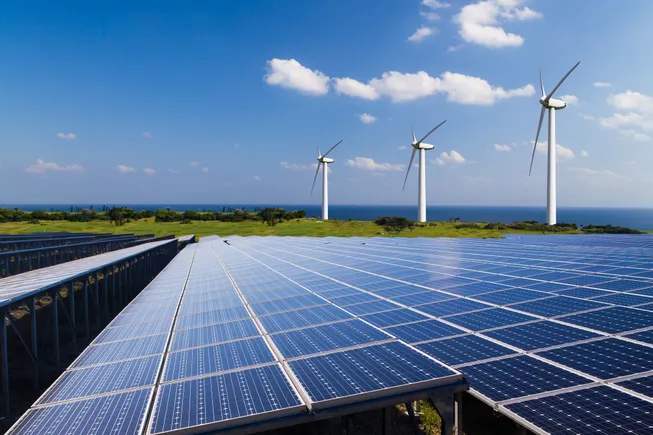
Engineers are preparing for a wave of clean energy integration into the U.S. power system in 2024, driven by Biden administration goals and funding, according to utility companies and industry analysts.
Researchers and utility sources agree that as variable wind and solar penetration rises, sudden cyclical demand spikes and current technology fluctuations pose growing threats to reliability. Sources say new management approaches that integrate customer-owned resources through control room and communication technologies to balance supply and demand can mitigate these threats.
"Outdated market-based laws and rules fail to recognize the value of integrating new technologies and resources," said Elizabeth Cook, Vice President of Technology Strategy at the Edison Electric Institute (AEIC). "Unlocking the true capability of today's system requires viewing it as a whole, from bulk system resources to customer loads and customer-owned resources." She added that current dispatch optimization is based on energy market price models, not granular real-time data showing the capabilities and value of new assets.
Some utilities are exploring new technologies and strategies to integrate system-wide operations and dispatch. "We are actively considering not only which technologies to use, but also where and when to deploy them," said Xcel Energy spokesperson Kevin Coss, to optimize "not just the distribution system, but ultimately the bulk system."
Cook, Coss, and others acknowledge that potential new tools and practices such as system-enhancing power flow tools, advanced communications, and customer behavior data analytics have not yet been widely deployed. But they add that Department of Energy research simulations and utility pilot projects are beginning to validate the higher potential for integrating and benefiting from clean energy across bulk and distribution systems.
Emerging Systems
Despite ongoing supply chain disruptions, U.S. clean energy investment reached a record $64 billion in the third quarter of 2023, up 42% from the third quarter of 2022, according to a December 7 Rhodium Group report.
Forecasts suggest this investment surge is just the beginning. Achieving the Biden administration's goal of a zero-carbon power sector by 2035 may require annual solar and wind growth rates four times higher than projected, according to a recent National Renewable Energy Laboratory (NREL) report. Analysts say such growth will transform the U.S. power system.
"The last five years have seen more change than the previous 50, and it's accelerating," said Kevin Schneider, a researcher and division manager at Pacific Northwest National Laboratory (PNNL)'s electricity office. "Emerging systems will be more automated, operate under a wider range of conditions, and customer expectations are higher than ever." He added that this means growing reliability challenges from variable utility-scale renewables and uncertain customer-owned generation and loads.

Smoothing Variability
Researchers at NREL and PNNL report that the importance of geographic resource diversity and the need for resource sharing are well understood. The laboratories say resource and load forecasting and bulk system ramping capabilities are improving.
Heading into 2024, a new emphasis on interregional transmission to increase access to low-cost clean energy could reduce the use of more expensive fossil fuel generation, saving customers tens of billions of dollars in generation and transmission costs, according to a November Grid Strategies study. But Rob Gramlich, president of Grid Strategies, told the Volts podcast on November 17 that new transmission lines are not being built due to interconnection, permitting, and other regulatory and economic barriers. However, grid-enhancing technologies that optimize power flow and new high-performance conductors that carry more current can be deployed immediately to "get more throughput from existing transmission lines," Gramlich said. He continued that improving the efficiency of existing infrastructure to deliver utility-scale clean energy also avoids the need for "new easements on undisturbed land." Regulators could consider rewards for deploying new technologies and penalties for not considering them.
Engineers say integrating more variable and distributed renewable energy increases the threat of steeper or unexpected demand spikes due to daily resource availability changes or extreme weather conditions. Energy management and communication systems and strategies capable of absorbing and responding to the growing influx of supply and demand data into control rooms may be the solution, they say.

Managing Demand Spikes
Researchers, system operators, and utilities agree that steeper or unexpected customer demand spikes are a direct challenge of renewable integration because resource availability can be compromised by sunset, weakening winds, or extreme customer demand from severe weather.
Alice Jackson, Xcel Energy's Senior Vice President of System Strategy and Chief Planning Officer, told Utility Dive last year that the DER management system (DERMS) technology available to utilities is not yet capable of optimizing the integration of bulk and distribution system resources. But Xcel's Coss added that Xcel continues to invest in and research DERMS and other energy management systems. The goal is for the technology to "benefit not just the distribution system, but ultimately the bulk system," he said.
Eversource Energy is deploying DERMS in its Massachusetts territory to integrate more than 1 GW of installed distributed energy resources (DER) and 1 GW of DER in its interconnection queue, reported Jennifer Schilling, the utility's Vice President of Grid Modernization. But she said that having DERMS as part of a utility's operating system is "emerging," and "dispatching customer-owned DER as grid assets will require a regulator-approved compensation framework."
PNNL's Schneider added that in 2024, "DERMS is a marketing term" for tools that "provide the capability to dispatch DER." Utilities may ultimately meet 30% or more of their load from distribution-level resources, meaning "integrating variable renewables must be addressed across the entire system to optimize reliability and resilience and avoid unintended consequences," he said.
Schneider continued that a system "operationally flexible enough" to integrate current and future bulk and distributed system resources may require an independent distribution system operator. But in 2024, "it is unclear how that entity would function, who would operate it, what its scope of responsibilities would be, or how its services would be monetized," he added.
Utility engineers agree that without specific integrated tools to manage distribution system flexibility, utilities can enhance multiple capabilities to build system visibility and control.
"Advanced technologies, greater computing power, new communication systems, and power flow solutions have turned the transmission system into the world's largest machine," said AEIC's Cook. Failing to develop new approaches for variable and distributed system resources "is hindering the industry's ability to integrate them," she said. Cook continued: "A framework for the entire system could optimize all resources on the system based on physical capabilities and technical feasibility. But today's dispatch is optimized by models based on energy market prices, not granular real-time data showing the capabilities and value of new assets."
A key technology solution, already being deployed by some utilities, is private 900 MHz spectrum LTE broadband networks, Cook said. This would improve control room system awareness and speed its response to changing conditions caused by renewable variability.
San Diego Gas & Electric is deploying broader coverage, lower latency communications and analytics to similarly enhance its network capabilities, said Humberto Gurmilan, the utility's communications manager for sustainability programs and initiatives.
Duke Energy's integrated supply-demand planning includes "future deployment of predictive analytics, sensors, and machine learning communications," said Emily Henson, Duke's Vice President of Integrated Grid Strategy.
"Advanced communications will soon be critical for some utilities, while others may not need them for a decade or more," said PNNL's Schneider. Deployment will depend on regulatory decisions about network value and high capital costs, but ultimately "secure, reliable, and resilient communications infrastructure" will be needed to manage higher levels of variable renewables, he added.
Advanced communications can also let utilities understand "customer impacts on transformers, potentially overloading or protecting that transformer," Cook noted. Cook added that to prevent outages from overloads, there is renewed interest in inverters that would allow variable renewables to replace traditional generation in stabilizing the power system.

Stabilizing the System
Engineers at the North American Electric Reliability Corporation (NERC) and the Energy Systems Integration Group (ESIG) recently told Utility Dive that inverters convert renewable generation into AC power for the transmission system, and grid-forming inverters have power electronics that can stabilize frequency fluctuations and voltage variations. Historically, traditional power plants stabilized frequency and voltage, but they are retiring and being replaced by utility-scale renewables, which without grid-forming inverters do not provide stability, a November 2020 NREL paper reported. As the transition to renewables accelerates, reliability threats increase, according to NERC.
The recently released NERC three-year reliability standards development plan responds to an October Federal Energy Regulatory Commission decision to address events where renewables trip when system conditions cause frequency fluctuations.
According to Julia Matevosyan, ESIG's chief engineer, system operators can reliably integrate no more than an estimated 75% variable renewable penetration without grid-forming capability. But with grid-forming capability, "stability services" can avoid abnormal operating conditions that could threaten outages if voltage dips make system frequency unstable, she added.
Deploying utility-scale batteries with grid-forming capability "is a low-hanging fruit solution" that can bring more stability to high-renewable systems, Matevosyan said in a March 2023 ESIG paper. Requiring grid-forming capability for the more than 400 GW of battery capacity in the U.S. interconnection queue could make variable renewable growth "cheaper and faster than adding new transmission lines to mitigate stability issues," she said.
Batteries with grid-forming capability are "ideal" for stability and other system services if their state of charge can be verified, said Xcel's Coss. According to Matevosyan, the Electric Reliability Council of Texas will finalize performance requirements for grid-forming batteries in 2024.
But PNNL's Schneider warned: "If the system's grid-forming inverters are not properly coordinated, they could exacerbate instability." He said, "The coming years will be about developing the proper integration and control of all new resources and removing resistance to new technologies that will improve the system for all stakeholders."
"The system is undergoing transformational change," said AEIC's Cook. But tools such as grid-enhancing technologies, high-speed communication systems, and grid-forming inverters will enable utilities to improve reliability and resilience, and "their importance will grow as economy-wide electrification increases peak demand and climate-driven extreme weather impacts become more frequent," she said.