
As wildfire losses mount, will commercial insurers refuse to underwrite utilities?
In 2023, wildfires across multiple regions of the United States caused massive losses, with utilities such as Xcel Energy and Hawaiian Electric facing severe litigation and insurance pressure. Insurance industry analysts are divided on whether the commercial insurance market can continue to provide wildfire liability coverage for utilities: one side believes risks can be managed through innovative products, while the other worries that government intervention will be needed to ensure grid stability. PG&E has already shifted to a fully self-insured model and relies on California's wildfire fund to address challenges.
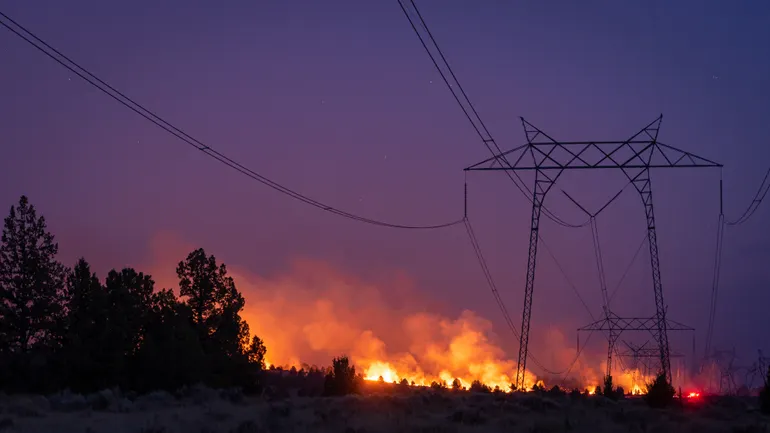
In 2023, the United States once again faced costly wildfires in multiple regions. In June, an investigation into the 2021 Marshall Fire—recognized as the most destructive wildfire in Colorado's history—revealed that hundreds of litigants were lining up to sue Xcel Energy, alleging that its fallen power lines may have ignited parts of the fire. Xcel executives disclosed during a July earnings call that the company's potential liability for the fire could exceed its insurance policy limits.
Two months later, Hawaiian Electric stated in a filing with the U.S. Securities and Exchange Commission (SEC) that, as part of "prudent scenario planning," the company was "seeking advice from various experts" to address litigation related to the devastating August wildfires on Maui. The company has not declared bankruptcy but has consulted with restructuring advisors, hired a new chief financial officer with experience in utility bankruptcies, and injected $75 million into a fund for fire victims willing to waive their lawsuits.
Utility companies declaring bankruptcy due to wildfire-related litigation is not without precedent—Pacific Gas and Electric (PG&E) is a prime example. But PG&E spokesperson Paul Doherty said bankruptcy is not the only consequence of the wave of wildfire lawsuits. Insurers are also reconsidering how—and under what circumstances—they provide liability coverage to utilities in high-risk wildfire areas.
"At PG&E, we have experienced varying responses from insurers in the commercial market," Doherty said in an email. "From some insurers choosing to no longer offer wildfire liability coverage, to setting sub-limits for wildfire-related losses, to increasing deductibles and raising premium costs to cover wildfire risk."
Insurance industry analysts point out that climate change has increased the risk of severe wildfires, and shifts in the legal environment have made utilities more responsible for fire losses—these factors have indeed changed the pricing logic for utility liability insurance. But analysts are divided on the long-term impact. Some believe the growing demand for wildfire-related liability coverage will spur innovation and give rise to new insurance products.
However, others argue that government intervention may be necessary to practically maintain electricity supply in parts of the United States.
"I can't say whether insurance will exist or not, or whether utilities will encounter underwriting issues," said Rade Musulin, principal at Finity Consulting. "But I can say that many of the prerequisites for an insurance market that provides stable and affordable prices are not being met in this area."
Climate risk, or climate uncertainty?
Musulin said that for insurance to work, actuaries need to do two things: calculate the potential losses a possible event could cause, and then calculate the likelihood of that event occurring. This allows them to estimate the cost for an insurer to underwrite a specific risk and set premiums accordingly to cover potential losses.
Musulin noted that in most cases, actuaries incorporate historical data when estimating potential risks and losses. And this is precisely the problem insurers face when covering modern threats like terrorism, cyberattacks, and climate change—historical data no longer represents today's risk environment.
Regarding wildfires and climate change, Musulin believes the insurance industry has a relatively good grasp of the scientific issues. They largely have the information needed to understand how drought and strong wind frequency are changing and how that leads to more frequent and severe wildfires in the future. But what remains unclear—and is currently causing the most anxiety among underwriters—is how infrastructure designed for past climate conditions will perform under unprecedented future conditions.
"The scientific evidence is relatively solid. The question is, when this climate acts on something, what happens? How likely is that thing to be damaged?" Musulin said.
Musulin emphasized that one cannot simply assume that if wind speeds increase by 10% during a severe storm, the damage caused by the storm will also increase by 10%. He said most structures are designed to withstand extreme conditions up to a certain limit—beyond that limit, they fail.
"At wind speeds under 100 miles per hour, there may be almost no damage," he said, "but at 110 miles per hour, buildings collapse."
Musulin said wildfire risk is also affected by changes in the legal environment. Not only have societal expectations shifted regarding climate and corporate responsibility for climate-related disasters like wildfires, but in the past it was relatively difficult to determine who or what started a wildfire—but today, if there are cameras pointed at power lines, it becomes much easier—and cameras are now everywhere.
Add inflation and rising property values to that, Musulin said, and it begins to raise some real questions: Can insurance—or any party—bear the costs of losses that wildfires may bring in the coming years?
Insurance innovation
Alp Can, an actuary at USI Insurance Services and chair of the Climate Index Working Group that compiles the Actuaries Climate Index, takes a more optimistic view of the future of commercial insurance for utilities. He does not intend to downplay the importance of the liability risk wildfires pose to utilities—potential liabilities on the order of billions of dollars are hard to underestimate—but Can believes the problem is manageable. More importantly, he and other industry observers believe wildfire risk could spur commercial insurance innovation that ultimately benefits utility companies.
Historically, utility insurance policies have focused more on risks related to power generation than on transmission risks.
"That needs to change," Can said, "because wildfire risk is not only a function of climate change, but also a function of how utilities manage their transmission lines."
This has prompted actuaries to collaborate with other industry experts to develop models that can set premiums based on factors such as whether utilities bury their cables and whether they have programs to prevent vegetation from contacting overhead lines.
"These factors will all be taken into account, and insurers will use improvements in catastrophe modeling and positioning tools like satellite spatial monitoring to precisely assess the level of risk involved with individual assets and locations," Can said.
Can said insurers are also exploring contractual innovations such as parametric insurance. Parametric insurance is a form of contingent coverage based on specific parameters—for wildfires, for example, the total area burned in a single event could serve as the parameter. With this type of insurance, when a wildfire reaches a certain catastrophic scale, the policy triggers and covers the utility's liability. Can noted that wildfires are well-suited to this type of coverage due to their binary nature—insured property is either not in the path of the event, or it is affected by the fire's spread, in which case it is typically burned and constitutes a total loss.
"With these tools and methods, I think we are capable of addressing this particular risk," Can said. "Insurers will begin to become more prudent about potential losses in the billions, but given all the mitigation measures, I believe underwriting is feasible."
For Mike Doyle, senior equity analyst at Edward Jones covering Xcel Energy, this all sounds like fairly good news. Doyle said insurance costs are rising, and insurance is not an item you like to see a company spending too much money on. But it also creates a financial need for transmission upgrades and grid hardening, which will drive capital requirements and create opportunities for investors.
"A common theme for utilities is that when a problem is identified, they find a solution. And typically that solution costs money," Doyle said. "If regulators deem it important to solve that problem, they will invest the money and earn a return."
Musulin said that by raising the costs utilities incur due to poor grid maintenance, insurers can also help utilities convince regulators—and investors—of the need for grid hardening. In the long term, he believes this will drive the industry to invest in building a future-oriented grid, thereby reducing the risk and cost of catastrophic wildfires. He added that electrification and renewable energy growth in the coming years will require large-scale grid investment, which presents an opportunity to address wildfire mitigation at the same time.
But Musulin noted that this is a long-term perspective. Rebuilding the grid will take years, and in the meantime, government may need to step in to practically maintain electricity supply in certain high-risk wildfire areas. Because if utilities face massive liabilities and rising premiums from wildfire events, they may conclude that the most financially prudent solution is to shut down the grid when fire risk is highest—a phenomenon already so common that claims against Hawaiian Electric allege it failed to de-energize its grid and is responsible for Maui's losses.
Similarly, PG&E states on its website that it may implement Public Safety Power Shutoffs under conditions such as low humidity, strong winds, or dry vegetation near power lines.
But that is not the only strategy PG&E has adopted in response to rising insurance costs and reduced availability of suitable policies. Doherty said PG&E chose to transition to a 100% self-insurance model by the end of 2023, seeking a more cost-effective solution for wildfire risk—meaning the company has ceased third-party insurance and plans to use its own funds to cover future wildfire liabilities.
PG&E can also utilize the California Wildfire Fund, which reimburses participating utilities for legal claims arising from wildfires. The program is funded through surcharges on electricity bills and is administered by the California Earthquake Authority—a publicly managed, privately funded insurer created by the state legislature. According to Doherty, PG&E expects these programs to save customers up to $1.8 billion over the next four years.
Doherty said this public-private partnership approach "is an innovative solution that protects the utility while supporting continued investment in safe, clean, and reliable power for customers at a reasonable cost."
Correction:A previous version of this article mischaracterized the wording in Hawaiian Electric's SEC filing. In response to a question about whether it had hired restructuring advisors, the company stated it was "seeking advice from various experts" as part of "prudent scenario planning."