
Surge in electricity demand dominates U.S. power industry policy agenda
President-elect Trump returns to the White House amid a surge in electricity demand, a reality that will dominate the new administration's power-related policies. Experts point out that new power supply faces multiple obstacles, and the personnel layout and agenda setting of agencies such as the Federal Energy Regulatory Commission (FERC) will be key points to watch.
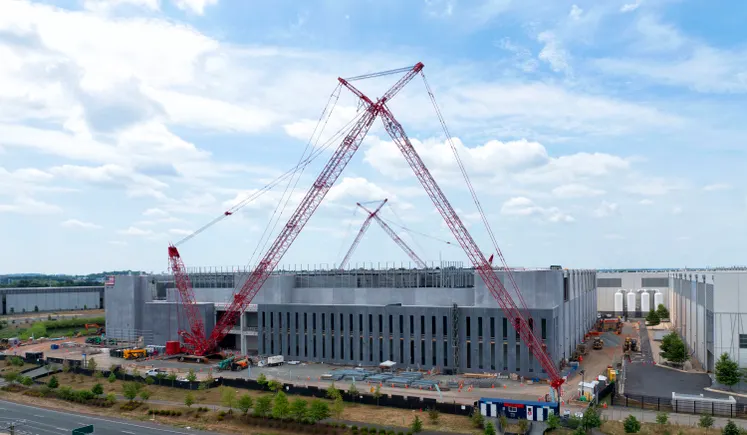
President-elect Donald Trump is set to be sworn in on Monday, returning to the White House amid a surge in electricity demand. This growth is partly driven by planned data centers, new manufacturing facilities, and electrification in buildings and transportation.
Experts say this reality—a sharp contrast to the flat electricity demand growth during Trump's first term from 2017 to 2021—will dominate the new administration's electricity policy.
At the same time, obstacles to adding new electricity supply may be greater than at any time in the past, such as state policies that make infrastructure construction difficult. Devin Hartman, director of energy and environmental policy at the market-oriented think tank R Street Institute, noted: "You cannot reconcile the enormous obstacles to new supply with growing demand, and the situation you inherit in the power sector is the same set of conditions constraining decarbonization."
Trump moves quickly on personnel nominations
At least three agencies—the Federal Energy Regulatory Commission (FERC), as well as the Department of Energy and the Department of the Interior—will play important roles in the Trump administration's efforts to boost electricity supply and cut energy costs. The Environmental Protection Agency (EPA) will also play a role in these efforts.
The new administration is moving quickly on personnel nominations, with nominees for the heads of the Department of Energy, the Department of the Interior, and the EPA all announced in mid-November. The Senate is holding hearings this week on the following candidates: North Dakota Governor Doug Burgum, a Republican, Trump's nominee for Interior Secretary and potential energy czar; former Congressman Lee Zeldin, a Republican, nominated as EPA Administrator; and Liberty Energy CEO Chris Wright, nominee for Energy Secretary. At Wednesday's hearing, Wright said that if confirmed, he would work to increase U.S. electricity supply to help lower electricity prices.
John Lushetsky, senior vice president at ML Strategies, said during a January 9 webinar hosted by the law firm Mintz that these nominees are likely to be confirmed smoothly. "With this accelerated pace, the Trump administration is better positioned to advance many of the energy-related items they campaigned on from day one."
For example, during the campaign, Trump said he would cut electricity bills in half within 12 months of taking office. Trump has also chosen former FERC Chairman James Danly as Deputy Secretary of Energy.
Who will lead FERC?
Trump inherits a FERC currently operating with a 3-2 Democratic majority, whereas at the start of his first term, the agency lacked a quorum for months.
Travis Fisher, research director for energy and environmental policy at the Cato Institute, said: "We will maintain a quorum and continue to work, but I think some Republicans view this as a loss because they hoped to make changes on day one, and that's not possible." Fisher noted that most FERC orders are unanimous, but on major policy issues, commissioners often diverge. Therefore, he suspects no action will be taken on major policy matters until Republicans gain a majority.
How long this process takes may depend on whether FERC Chairman Willie Phillips, a Democrat, decides to leave the agency before his term ends on June 30, 2026. Phillips has not revealed his plans.
"The Trump administration has been very public about wanting to take major action in the energy sector, but if FERC is deadlocked, it could slow the new administration's agenda."
— Steven Shparber, attorney at Mintz, Levin, Cohn, Ferris, Glovsky and Popeo
Meanwhile, Trump could immediately appoint one of FERC's two Republican commissioners, Mark Christie or Lindsay See, to lead the agency until a permanent chairman is chosen. Christie's term expires on June 30, while See's term runs until June 30, 2028.
Former Commissioner Allison Clements said the new chairman will set FERC's priorities. She noted that the agency's current commissioners seem to work well together. "Whenever new commissioners or a chairman come in, the dynamics of the entire agency change," said Clements, who this week joined ASG, a consulting firm focused on data centers, as a partner. "At this important moment, hopefully whoever becomes chairman, this collaborative atmosphere and productivity can continue."
Changes in the agency's composition could affect the Trump administration's success on energy policy. Steven Shparber, an attorney at Mintz, said: "The Trump administration has been very public about wanting to take major action in the energy sector, but if FERC is deadlocked, it could slow the new administration's agenda."
Demand growth dominates FERC agenda
Shparber said FERC's agenda will be driven by the paramount issue of once-in-a-generation demand growth. "This (demand growth) chart really unsettles many people, not just at FERC, but also on Capitol Hill and in the energy industry." The chart shows U.S. electricity demand flat since around 2000, then a sharp rise starting in December 2023 in the North American Electric Reliability Corporation's forecasts.
Clements noted that given new electricity supply can take years to come online, FERC may consider how to facilitate cost-effective and reliable near-term resource additions. This could include further steps on interconnection queue reform, finding ways to utilize remaining interconnection capacity, and addressing co-located loads at power plants, such as data centers. She also said it could include studying how to make the existing grid more efficient through grid-enhancing technologies, reducing inefficiencies at seams between grid operators, and increasing transparency to provide market participants with opportunities to compete effectively.
John Moore, director of the Sustainable FERC Project at the Natural Resources Defense Council, said FERC may continue to support transmission development and competitive wholesale markets. "The reality tells us we may need more transmission, and these regional markets play an important role in helping ensure reliability and resource adequacy."
Hartman expects FERC to advance regulations on dynamic line ratings—a "great candidate to put downward pressure on electricity prices quickly at low cost"—and push for interregional transmission build-out while implementing its Order 1920 on transmission planning and cost allocation.
Managing new load
Josh Price, director at consulting firm Capstone, said another issue FERC may address is analyzing best practices for handling new interconnection requests from data centers and manufacturing facilities. Utilities lack uniformity and oversight in load interconnection processes, making it difficult to clarify how much load will be added, and when and where. Price said FERC could hold a technical conference on the issue or meet with the National Association of Regulatory Utility Commissioners to discuss jurisdictional questions.
Clements said the load interconnection process has become a "Wild West" like the generation interconnection process, with speculative projects flooding the queue. "People are submitting load applications that are commercially unrealistic and economically unreasonable," Clements said. "Or they submit five speculative applications when they only want to build one. We've seen this in interconnection before." She said there may need to be some policy requirements on load applications, such as financial readiness or commercial readiness, to better clarify which projects are likely to move forward.
Shparber said large load siting is primarily under state jurisdiction. "So FERC may continue to coordinate with states to better understand where and how much load growth is most significant, thereby optimizing transmission planning processes within FERC's jurisdiction. This sounds straightforward, but it's a very important and complex task."
Will FERC lose staff?
The Trump administration may face a conflict between shrinking the federal government and addressing urgent issues, such as getting more electricity supply onto the system to help lower energy prices.
The Heritage Foundation's presidential transition project, "Project 2025," includes the "Mandate for Leadership," a roadmap for "dismantling the administrative state." In addition to calling for changes to electricity markets, the roadmap urges the new Trump administration to re-adopt the "Schedule F" classification from the first Trump administration for career federal employees involved in policymaking. This personnel classification would allow the president to fire these employees and replace them with selected individuals. According to a 2022 Government Accountability Office report, in response to Trump's October 2020 executive order establishing Schedule F, FERC estimated that more than half of its positions met Schedule F criteria.
Fisher, who contributed to the FERC chapter in the Project 2025 roadmap, said the Trump administration is unlikely to conduct a political purge or fire a specific number of people at FERC. "I think that would be a bad move, especially at an agency as highly specialized as FERC." Hartman said that given FERC's importance to the U.S. economy, the agency is unlikely to see staff cuts. However, he said some employees are exploring new job opportunities.
DOE restructuring and loan pause imminent
Through the Bipartisan Infrastructure Law and the Inflation Reduction Act, the Department of Energy has disbursed billions of dollars to clean energy and transmission projects during the Biden administration. Lushetsky said it is unclear how this funding at DOE's Loan Programs Office and other offices will be affected. However, given Energy Secretary nominee Wright's technical, engineering, and business background, he may be "very pragmatic." He noted that Liberty Energy has invested in geothermal company Fervo, and Wright is on the board of Oklo, a company developing small modular nuclear reactors.
Lushetsky said clawing back Inflation Reduction Act funds from already-awarded projects, especially those under contract, would be challenging, noting that these funds flow to Republican districts at a ratio of about six to one. He mentioned that in August, 18 House Republicans urged Speaker Mike Johnson (R-La.) to protect the Inflation Reduction Act, while other members talked about "surgical" changes to the law rather than a "sledgehammer" repeal.
Kennedy Nickerson, vice president at Capstone, said under Trump, the Department of Energy may, within regulatory limits, reallocate unused funds to support priorities such as nuclear and geothermal energy. Nickerson expects the new administration to temporarily pause Loan Programs Office (LPO) programs to review pending loan applications. As of December 31, the LPO was reviewing 182 applications involving approximately $279 billion in loans for advanced nuclear, renewable energy, transmission, and other technologies. According to the office, the LPO has about $397 billion in remaining loan authority, primarily for its Energy Infrastructure Reinvestment program. Fisher of the Cato Institute said DOE may also undergo restructuring, and the Grid Deployment Office could be eliminated.
EPA power plant rules face reversal
Hartman of R Street said Trump did not leave a strong legacy on energy and environmental policy in his first term, with many decisions overturned in court or actions launched too late to be easily reversed by Biden. "I'm very curious to see whether there will be a more pragmatic EPA agenda." Experts generally expect the Trump administration to reverse EPA greenhouse gas regulations for power plants and other rules affecting generators. However, according to Lushetsky of ML Strategies, this process could take up to three years to complete.
