
2025 Renewable Energy Outlook: Trump's Second Term Begins, Industry Moves at Full Speed
In 2025, the U.S. renewable energy industry maintains investment momentum driven by the Inflation Reduction Act, but faces issues such as grid interconnection backlogs and policy shifts. Industry leaders and experts analyze opportunities and challenges in load growth, energy storage boom, solar, and offshore wind in Utility Dive's outlook.
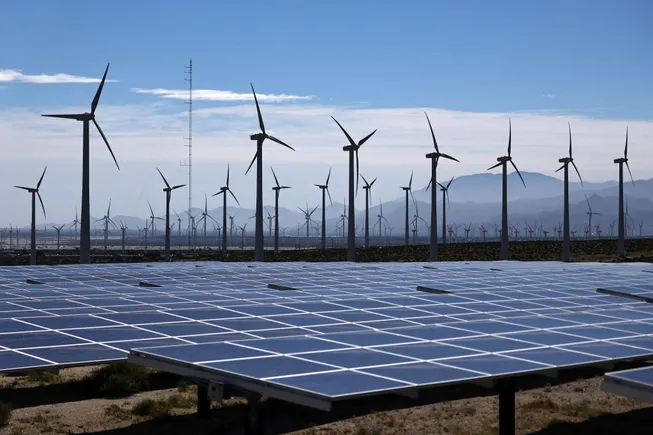
At the start of 2025, the renewable energy industry faces a complex landscape as the Inflation Reduction Act continues to spur record investment and surging electricity demand creates new deployment opportunities, while also grappling with interconnection queue backlogs, siting and permitting challenges, and the start of a second presidential term for industry critic Donald Trump.
"It's an interesting moment because things are moving very fast, but we're still stalled in some key areas," said Heather O'Neill, president and CEO of Advanced Energy United. "The interconnection queue is a clear example—while there has been some progress and FERC is rolling out reforms—we haven't yet unlocked the full potential and the economic opportunities and vitality that could be realized."
After decades of flat load growth, U.S. electricity demandcould increase by 128 gigawatts over the next five years, a forecast from a Grid Strategies report released last month. Meanwhile, new transmission interconnection requests have grown by 300% to 500% over the past decade, with2.5 terawattsof clean energy and storage capacity waiting to connect to the grid, according to an October report from the Department of Energy.
Still, O'Neill said, "the macro trends are very positive...we are in the midst of the energy transition." She attributes some of her optimism to the scale of investment and growth the industry is seeing.
O'Neill believes the storage sector is particularly active right now: "A few years ago, storage capacity was very limited, but with a lot of innovation in technology, cost curves are coming down. Storage plays a key role when considering how to manage load."
A November BloombergNEF report shows global storage installations surged 76% in 2024 and is expected to maintain that momentum in 2025. However, the firm also noted that growth could be affected by "uncertainty from the new Trump administration."
Trump has publicly opposed electric vehicles and said he would "rescind all unspent funds" under the Inflation Reduction Act. Congress is expected to attempt toclaw back the EV tax credits in the law, which could affect the battery industry. Trump has also said he would end offshore wind "on day one" and supports oil and gas generation, but last month he pledged tospeed up federal permitting and environmental reviews for projects with investments of $1 billion or more—a move that could benefit clean energy.
Felisa Sanchez, a partner in K&L Gates' maritime and finance practice, noted that Trump's goal of ending offshore wind could conflict with his push to boost the U.S. economy and domestic manufacturing.
"When you're also affecting the massive supply chain that has been built up over the past few years—ports developed, vessels built or coming out of shipyards ready for offshore wind work—it's hard to say 'we're going to end offshore wind,'" she said.
The need to meet electricity load growth won't disappear. Any administration—Republican, independent, or Democrat—will prioritize a strong and resilient economy. That depends on a first-class transmission and distribution grid.
Paul DeCotis
Senior Partner and East Coast Energy & Utilities Lead at West Monroe
John Northington, a government affairs advisor and member of K&L Gates' public policy and law practice, expects the offshore wind industry may adapt to the new administration by shifting its messaging focus away from "the primary message that steel in the water is good for the environment."
"Maybe over the next four years, the focus becomes that steel in the water means jobs, means money, and is good for America," he said. "Talking about commercial benefits rather than environmental benefits could become a new trend for some companies."
In a December interview with Utility Dive, Northington also expressed hope for the Energy Permitting Reform Act of 2024, co-sponsored by outgoing West Virginia independent Senator Joe Manchin and Wyoming Republican Senator John Barrasso—but the bill was not included in the continuing resolution passed later that month, "removing permitting reform from this Congress's agenda," said Manchin, who retired in early January.
New demands on the grid
Regardless of how Trump's second term shapes the U.S. generation mix, his administration will face expected load growth of about 3% annually over the next five years—a level not seen since the 1980s, according to a December Grid Strategies report.
"The need to meet electricity load growth won't disappear. Any administration—Republican, independent, or Democrat—will prioritize a strong and resilient economy," said Paul DeCotis, senior partner and East Coast energy and utilities lead at West Monroe. "That depends on a first-class transmission and distribution grid."
The surge in load growth is driven primarily by data center demand. A December report from Lawrence Berkeley National Laboratory found that data center electricity demand has tripled over the past decade and is expected to double or triple again by 2028. Demand growth also stems from industrial electrification and domestic manufacturing expansion.
This growth "means continued capital investment in the energy sector, regardless of changes in administration," DeCotis said. "I don't think any administration would want to come in and suddenly see blackouts, curtailments, or insufficient capacity to meet demand, nor would they want to dampen demand and the associated job growth by failing to meet energy needs."
O'Neill believes states will also continue to drive the clean energy transition because "energy policy happens at the state level...that's where investments become reality."
"Governors and regulatory commissioners want manufacturing in their states," she said. "They want data centers in their states. The discussion around siting reform, I think, is not a partisan issue—it's: how do we help unlock these desired economic activities? For us, regardless of the political landscape in Washington, siting and building will be the work we focus on in the states."
Projects advanced through the Inflation Reduction Act are not limited to blue states. For example, we're working on projects across the country and seeing that places like Ohio and Pennsylvania, where things didn't work before, are now moving forward.
Dan Smith
Vice President of Markets at DSD Renewables
Beyond states and utilities, corporations like Microsoft, Amazon, and Meta are also driving clean energy demand—investing billions in renewable energy deployment while also seeking nuclear and natural gas generation to meet data center loads.
Molly Jerrard, demand response lead at Enel North America, expects "significant load growth...to test grid flexibility and pose challenges to local system reliability" in 2025.
"Combined with aging infrastructure, congestion, and rising climate-driven stress on the grid, utilities and grid operators need to place greater emphasis on demand response programs and distributed energy resources to address these challenges and improve grid stability," Jerrard said.
But she noted that utilities' "inconsistent data access standards" continue to limit the scalability of virtual power plants (VPPs)—an effective demand response solution.
O'Neill is excited about VPPs, seeing "a lot of innovation" flowing into the space, expanding the ways VPPs can provide grid flexibility.
"We're seeing virtual power plants in different parts of the country—whether coastal or Texas—where utilities and regulators are really testing them," she said. "They're managing load, shaving peak demand, so they don't have to build as much generation."
Solar and offshore wind
In 2025, the American Clean Power Association forecasts that U.S. utility-scale solar installations will be16% lower。
than 2024, driven by concerns over new tariffs in Trump's second term and the possibility he may work with Congress to repeal parts of the Inflation Reduction Act. The residential solar sector "continued to decline" last year, largely due to California—where residential installations have dropped significantly since the state shifted from net metering to net billing in 2023, according to a Q3 2024 report from the Solar Energy Industries Association.
Although California solar projects "don't provide the savings they once did," said Dan Smith, vice president of markets at DSD Renewables, "we still see California as our largest market."
Part of the reason is that California utility rates "continue to rise at extremely high levels," he said: "So, while we've been negatively impacted by NEM 3.0, as rates rise, customer savings also increase, which somewhat offsets the gap."
Smith said DSD Renewables enters 2025 concerned about potential repeal or reform of the Inflation Reduction Act's solar tax credits but hopeful that the Trump administration and Congress will see their value.
"Projects advanced through these policies are not limited to blue states," he said. "For example, we're working on projects across the country and seeing that places like Ohio and Pennsylvania, where things didn't work before, are now moving forward."
Smith said his concerns about potential tariffs would be alleviated if the domestic content adder in the Inflation Reduction Act is preserved and domestic solar supply continues to come online.
"But that's also the question facing the entire industry right now—will these suppliers continue to invest in their domestic factories?" he said. "Many plants are under construction or planned, and the biggest question many of us have right now is whether federal policy will change, causing these companies to scale back their commitments?"
Many in the offshore wind industry are also "holding their breath," Sanchez said, "waiting to see what happens after he (Trump) takes office at the end of January."
Shares of offshore wind companies like Ørsted and Vestas fell after the election and have yet to recover. Sanchez sees this as a "temporary signal," depending on what actions Trump takes on offshore wind.
"There's been massive investment, and that momentum continues this year, even as the industry takes a more cautious approach," Sanchez said. "I do see that continuing. But again, I think everyone is pausing right now, waiting to see what happens in the coming months to determine whether it's worth continuing to invest further."
On his first day in office, Trump signed an executive order suspending offshore wind lease sales in federal waters, as well as approvals, permits, and loans for onshore and offshore wind projects. Under the order, the suspension has no expiration date and will remain in effect until revoked.
We don't expect—and I believe many people don't expect—the Inflation Reduction Act to be completely overturned and dismantled.
Marlene Motyka
U.S. Renewable Energy Leader at Deloitte
Northington said he views Trump's selection of former North Dakota Governor Doug Burgum to lead the Interior Department as a positive signal, given Burgum's promotion of onshore wind in his state during his tenure.
"I think Trump's energy policy is genuinely anti-wind, but when it comes to getting things done, it's more pro-oil and gas," he said. "At the end of the day, it takes effort and energy to tear something down, while ignoring something takes much less effort."
However, Northington worries that the high turnover of officials during Trump's first term could continue into his second, and career staff at agencies like the Bureau of Ocean Energy Management may choose to retire. People might say, "'Well, I survived the first round—do I have to go through a second?'" he said. "I think that could have a somewhat harmful effect on things like permitting approvals or lease sales."
Both solar and offshore wind continue to make technological progress, with promising innovations emerging. Sanchez said there is still "a lot of discussion taking place" about the future of offshore wind, floating wind, and the development of the technology and infrastructure needed to support floating wind on the West Coast.
The solar industry benefits each year from "continuous improvements in module efficiency," Smith said. "Now we're using bifacial modules almost exclusively, which increases generation."
Marlene Motyka, U.S. renewable energy leader at Deloitte, said she hopes solar cell technology will continue to advance with further innovations in materials like silicon and perovskite, and was encouraged by a December SEIA and Wood Mackenzie report stating that U.S. solar module factories now have the capacity to meet nearly all domestic demand.
Motyka said Deloitte expects "good momentum" for the industry in 2025: "We don't expect—and I believe many people don't expect—the Inflation Reduction Act to be completely overturned and dismantled."
"Many factors have been gradually converging and won't stop overnight," she said. "I've been in the renewable energy industry for 17 years, and now all the factors seem to be converging. I think this is still an exciting time."
