
A New Paradigm for Climate Resilience Planning: APS, Duke Energy and Other Power Companies Tackle Extreme Weather Challenges
With the frequent occurrence of extreme weather events such as Hurricanes Milton and Helene, the U.S. electric power industry is shifting from single-event response to systematic climate resilience planning. Based on interviews with experts from PA Consulting, EPRI, ICF, LBNL, and companies such as Duke Energy, Central Hudson, Pacific Power, and APS, this article analyzes the four pillars of resilience planning, the current regulatory landscape, and industry divergences, and points out that EPRI's Climate READi framework is expected to provide more scientific decision support by 2025.
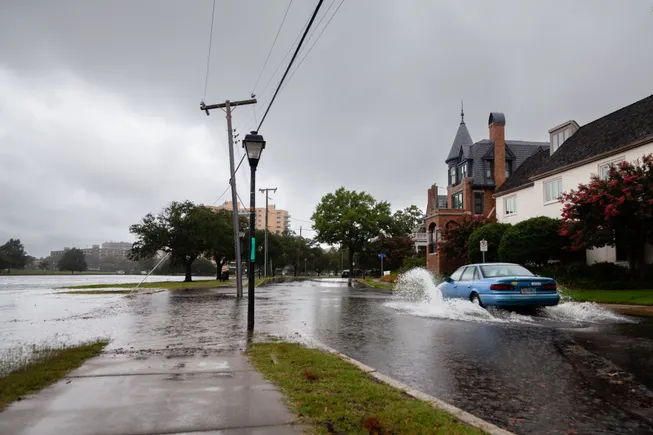
Facing increasingly frequent and intense extreme weather events such as Hurricanes Milton and Helene, U.S. power companies are restructuring their response strategies to enhance grid climate resilience.
The National Oceanic and Atmospheric Administration (NOAA) reports that 2024 has already seen 24 weather events with losses exceeding $1 billion; over the past decade, such events have affected all 50 states. The annual average was 20.4 events between 2019 and 2023, jumping to 28 events in 2023 with total losses of $95.1 billion.
As customers of CenterPoint Energy in Houston, Texas, experienced earlier this year, resilience planning and preparation at many utility companies are just getting underway.
Hurricane Beryl caused "over one million customer outages," and Wei Du, an energy and utilities expert at PA Consulting and a senior analyst formerly with New York's Con Edison, told The New York Times afterward that this demonstrates "the urgent need for resilience hardening investments proposed by companies like CenterPoint."
Andrea Staid, principal technical leader for climate resilience in the power sector at the Electric Power Research Institute (EPRI), noted that well-planned resilient systems can better withstand severe weather. New climate modeling and asset performance metrics "can show which investments allow previously damaging events to go unnoticed by customers."
However, EPRI, utility companies, and analysts still have doubts about exactly which climate and asset performance metrics and methodologies are needed to accurately identify power system vulnerabilities.
What is resilience planning?
New frameworks are emerging to guide utility resilience planning.
Aditya Ranade, director of energy, sustainability, and infrastructure at Guidehouse, said: "The utility industry is moving from responding to single events to mapping financial risk from vulnerabilities and quantifying the benefits of potential investments based on four pillars."
Ranade explained that the first pillar is "hazard mapping," identifying threats from floods to wildfires; "multi-hazard cost-benefit analysis methods are the next step in planning refinement." The second pillar is vulnerability assessment, quantifying asset exposure to climate hazards.
"The third pillar is financial risk, which is the sum of the values obtained from hazard mapping and vulnerability assessment," Ranade said. "The fourth pillar is making adaptation decisions based on comparing benefits, such as replacing wooden poles with composite poles, elevating substations for flood protection, or adopting dynamic line ratings."
These pillars help utilities optimize investments, but final approval "is determined by state policymakers or regulators," Ranade added: "The trade-off between resilience and keeping electricity rates low is decided case by case by state regulators and policymakers."
Wei Du of PA Consulting believes that although no two companies face identical risks, assessment frameworks help companies understand "the specific combination of risks that must be mitigated." "Risk data analysis and mitigation methods for different events such as storms and wildfires follow the same framework."
Wei stated that specific planned mitigation measures include system hardening and technologies that improve real-time situational awareness. Planning can also include proactively obtaining more granular local weather data to predict affected areas, as well as strengthening engineering standards and building codes to harden infrastructure.
Wei further noted that utilities need to improve "restoration performance as reflected by storm recovery curves." The steeper the curve's slope, the more customers are restored in a shorter time, indicating more effective restoration preparedness.

Judsen Bruzgul, senior vice president of climate resilience and climate centers at ICF, said: "Best practices are emerging around four response dimensions." "Some facilities can be hardened to withstand events, such as burying cables and reinforcing poles," while "some impacts can be absorbed."
But for certain events, the only answer is "to limit impacts through faster response because hardening is too costly," Bruzgul added. "The fourth dimension is investing in resources like microgrids to maintain power for communities and customers," with sufficient adaptability "to continue addressing new future challenges."
"Proactively investing in resilience is often more cost-effective than rebuilding after the fact," Bruzgul emphasized.
New papers from the Edison Electric Institute (EEI) and the Pacific Northwest National Laboratory (PNNL) propose similar resilience planning frameworks and priority mitigation measures. But several utilities believe EPRI's yet-to-be-completed Climate Resilience and Adaptation Initiative (Climate READi) may be the most anticipated assessment tool.
EPRI's Staid said there is currently no framework ensuring "scientifically informed modeling" in climate resilience planning and decision-making. But by 2025, Climate READi will provide "a comprehensive set of climate-informed models to evaluate adaptation investments."
Staid said Climate READi will include clear climate data and metrics, asset vulnerability guidance, and power system resilience planning. Data-based comparisons (such as hardening assets, building new assets, or changing system operations) help prioritize and justify the best resilience investments.
"READi won't add new metrics to traditional planning," Staid said, but it will demonstrate "resilience planning data on the increasing frequency and severity of extreme events, which typically doesn't appear in resource planning models," and support "planning for combinations of multiple climate hazards," thereby addressing "diverse regional or system-specific conditions."
Some utilities will wait for EPRI's 2025 framework, while others already facing climate impacts cannot wait.

Are utilities planning?
According to research released in July by the Lawrence Berkeley National Laboratory (LBNL), regulators in 14 states, including California, Texas, Florida, and New York, have imposed resilience planning requirements on regulated utilities. As of June, at least 30 utilities had submitted resilience plans.
"Best practices are emerging," said Lisa Schwartz, senior energy policy researcher in LBNL's Energy Markets and Policy department and co-author of the report. "Not having a resilience planning requirement doesn't mean utilities aren't doing resilience planning." But the study found that current utility resilience planning remains limited.
Josh Schellenberg, co-author of the report, principal of H&S Insights, and an LBNL affiliate researcher, noted that many resilience plans lack a clear connection between identified hazards and planning timeframes, making it difficult to see how these lead to vulnerability assessments. "This makes it difficult to evaluate the impact of proposed mitigation measures on risk."
Feedback from five utilities revealed different attitudes: some are waiting for EPRI's Climate READi, others are advancing their own planning tools and data, and still others are adopting tools from other research institutions.
Duke Energy's subsidiaries in Florida and the Carolinas are adopting advanced technology, modeling, and self-healing systems as part of a "multi-year grid improvement strategy," said Duke spokesperson Jeff Brooks. The company is also developing "self-healing technology to isolate problems and restore power when faults occur."
Brooks said Duke invested over $4 billion in 2023 to harden and modernize systems across its service areas, with "approximately $75 billion" planned over the next decade. Recent electricity rates "do reflect these improvements," but the company strives to keep increases "predictable and gradual."
Central Hudson Gas & Electric, following New York state law requirements, has developed a vulnerability study and resilience plan currently under regulatory review, said Jennifer Paull, senior engineer at the company. The resilience plan outlines improvements "addressing current climate projections, system conditions, and resilience service from 2025 to 2044." The total funding request for 2025 to 2029 is approximately $28 million, equivalent to an average annual customer rate increase of only 0.06%.
Paull added that future investments may be larger due to the clear increase in storm frequency and intensity. "There is currently no widely accepted method for comparing resilience investments with avoided costs," but "industry initiatives like EPRI Climate READi may change that."
PacifiCorp operates in states with resilience requirements like Utah and states without such requirements like Washington. Josh Jones, vice president of asset management, said the company plans to invest over $10 billion in reliability and resilience projects over the next decade. "We don't raise rates lightly," but "cannot ignore" the risks and impacts of climate events.
Arizona has no state-level resilience requirement, but Arizona Public Service (APS) incorporates resilience into planning, said spokesperson Yessica Del Rincon. The company invests $2 billion annually to "understand and mitigate risks" to minimize or avoid service interruptions.
Although Washington state has no resilience planning requirement, Puget Sound Energy (PSE) participated in the three-year EPRI Climate READi initiative, said David Landers, PSE's director of system planning. The company remains focused on near-term planning and is waiting for EPRI's 2025 guidance because scientifically informed long-term climate impact projections "are not yet mature."

Three unresolved challenges
Utilities, analysts, and LBNL researchers agree that better resilience metrics, estimation of resilience benefits, and cost-benefit analysis of resilience investments still require further research.
"There's no perfect optimization method, but traditional cost-benefit analysis is one way to prioritize investments," said LBNL's Schellenberg. "Quantifiable factor impacts help identify the most valuable resilience investments."
"Quantifying the benefits of resilience investments or justifying potential rate increases is difficult because the cost of not investing is unknown," Schellenberg continued. But further analysis "of the full range of benefits across multiple events over longer planning horizons may show benefits far exceeding costs," because it can "prevent catastrophic impacts."
"Electricity rates are already rising," acknowledged LBNL's Schwartz. "But early stakeholder engagement can convey the fact that not only upfront capital matters—reducing storm impacts is equally important."
Resilience plans could become part of integrated distribution system plans and demonstrate "a holistic assessment of all investments affecting customer rates," Schwartz said. But "climate risks need frequent assessment, so commissions also need to advance standalone plans." Central Hudson's Paull agrees.
EPRI's Climate READi calls for incorporating climate metrics into all resilience planning decisions, "whether as standalone plans or as part of integrated system plans," said EPRI's Staid. Either way, "it will produce more scientifically informed outcomes, thereby improving resilience decisions and performance."