
With Palisades and Three Mile Island Restarts Imminent, Can More Retired Reactors Follow?
With Constellation Energy planning to restart Three Mile Island Unit 1 in 2028, and Holtec International's Palisades plant expected to resume operations in October 2025, the wave of restarts of retired nuclear reactors in the United States has drawn attention. This article reviews the list of restart candidates, capital investments, regulatory processes, and industry experts' assessments of feasibility.
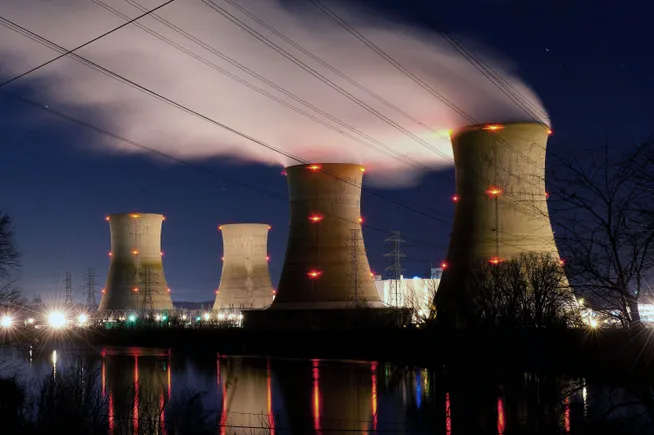
Last month, Constellation Energy made national headlines by announcing plans to restart its shuttered Three Mile Island Unit 1 (TMI-1) nuclear power plant in 2028. The 835-MW facility in Pennsylvania joins Holtec International's 800-MW Palisades plant, which could reopen in Michigan next October. These two projects are part of a small but growing list of nuclear reactors that have recently retired and are planning to return to service. NextEra CEO John Ketchum said in July that his company is considering restarting the 601-MW Duane Arnold Energy Center in Iowa.
Constellation plans to invest approximately $1.6 billion in the TMI-1 restart, involving "significant investments" in major plant systems, a three-year re-licensing process with the U.S. Nuclear Regulatory Commission (NRC), and concurrent PJM interconnection and Federal Energy Regulatory Commission (FERC) grid connection applications and studies. The company stated this in an investor presentation on September 20.
According to the presentation, Constellation has inspected TMI-1's major electrical system components, initiated repairs to the training simulator, and begun procuring nuclear fuel and long-lead-time materials and equipment. Future major activities include additional inspections, testing and repairs, main power transformer installation, and workforce development.

On Wednesday, Reuters reported that Constellation has ordered a power transformer worth approximately $100 million for the TMI-1 restart. A Constellation spokesperson told Utility Dive that the cost cited in the report includes indirect costs, such as upgrading a bridge and dismantling and reassembling a security checkpoint along the transformer's transportation route.
The company's plans reveal the immense technical, regulatory, and financial requirements involved in restarting a nuclear power plant, even for units that recently retired after 45 years of reliable operation. Constellation is seeking a federal loan guarantee for the full $1.6 billion expected cost of the TMI-1 restart, The Washington Post reported earlier this month. However, a spokesperson said, "Constellation is still evaluating its financing options, has not secured any loan guarantee, and the project does not require a guarantee to proceed."
Meanwhile, state and federal agencies have committed nearly $2 billion to the Palisades project. Palisades retired in 2022—three years later than TMI-1—and had undergone only limited decommissioning work before Holtec decided to restart it. Holtec International plans to contribute up to $500 million of its own funds to the Palisades restart, said Patrick O'Brien, its director of government affairs and communications.
How many retired nuclear plants could be recommissioned?
Keith Drudy, chief commercial officer at nuclear industry consulting firm Studsvik Scandpower, said Palisades, TMI-1, and Duane Arnold are the most obvious restart candidates among the more than two dozen U.S. nuclear reactors that have shut down over the past 50 years. "These are the only three where we've heard public discussions, and they're probably the easiest to operate. With sufficient funding, there might be one or two other candidates, such as the 2.2-GW San Onofre nuclear plant in Southern California, but the chances are slim," Drudy said.
"I don't think you're talking about restarting 20 nuclear plants in the U.S."

Patrick White
Research Director, Nuclear Innovation Alliance
Restarting Palisades, TMI-1, and Duane Arnold would bring 2,236 MW of conventional nuclear capacity to the grid to meet growing electricity demand from data centers, high-tech manufacturing, and electric transportation. Drudy noted that a Microsoft power purchase agreement underpins the Three Mile Island restart, with power pricing "potentially in the double-digit percentage range above wholesale market expectations," indicating that some industrial and high-tech electricity consumers are willing to pay a premium for reliable, low-carbon power.
But as the ten-figure budgets for the Palisades and TMI-1 restarts show, the tailwinds driving renewed interest in nuclear power can quickly meet economic reality. According to World Nuclear Association data, corporate owners of eight nuclear reactors in Japan that were temporarily shut down after the 2011 Fukushima Daiichi accident spent up to $1 billion per reactor over the following six years, totaling approximately $17 billion on restarts. NextEra's Ketchum said in July that his company would only restart Duane Arnold "in a way that is essentially risk-free with adequate mitigations," and that "several issues still need to be resolved."
Patrick White, research director at the Nuclear Innovation Alliance, said that given the physical and economic realities of recommissioning even recently retired reactors, the number of viable reactor restart candidates in the U.S. may only be in the single digits. "I don't think you're talking about restarting 20 nuclear plants in the U.S.," he said.
Drudy explained that as decommissioning progresses, the cost of reversing the work increases. "At some point, you've taken the plant apart enough that rebuilding it is no longer economical." That is the case for three other nuclear plants Holtec currently owns and is decommissioning, including the 636-MW Oyster Creek in New Jersey, the 677-MW Pilgrim in Massachusetts, and the 2,083-MW Indian Point in New York, O'Brien said. Although Holtec is considering adding small modular reactor capacity at Oyster Creek, O'Brien said the conventional generation assets at that plant and the other two Holtec plants have undergone too much decommissioning work to make a Palisades-style restart feasible. "You've passed the point of restarting those plants... unless you put a new reactor in the reactor vessel," he said.
What does restarting a retired nuclear plant involve?
Holtec's situation highlights a key determinant of project risk for potential restart sponsors: the condition of the retired unit. Kate Fowler, global nuclear leader at commercial insurance and risk consulting firm Marsh McLennan, said the time since shutdown is one factor in assessing unit condition, but the bigger question is how well the plant was maintained during that period. The NRC requires extensive inspections and testing of plant systems and equipment before restoring an owner's operating authorization, and even recently retired facilities may have deferred maintenance issues. For example, inspections of Palisades' steam generators earlier this year found "additional maintenance activities requiring on-site and external experts," Holtec said on September 18.
"Everyone is watching to see what happens with Palisades."
Patrick O'Brien
Director of Government Affairs and Communications, Holtec International
Fowler said another important consideration is how much work needs to be done on major components and systems before the facility can be safely and legally restarted. Nuclear plants requiring significant new equipment or large-scale rebuilding may carry a higher risk premium compared to facilities that only need refurbishment. "The question is whether it's more like a construction project or an extended refueling outage," she said.
White noted that this may depend on the plant operator's decommissioning strategy. Some retired U.S. nuclear plants quickly entered "prompt dismantlement mode" after shutdown, while others chose SAFSTOR. According to the NRC, SAFSTOR, sometimes called "deferred dismantlement," involves "maintaining and monitoring the plant so that radioactivity decays, followed by dismantling the plant and decontaminating the site." White said that because the plant remains largely intact for years, a restart may involve less rebuilding work.
From that perspective, Palisades is the closest to the "finish line" among the three most likely restart candidates, said Studsvik Scandpower's Drudy. "Before they seriously began decommissioning work, they realized they might want to restart it." This is reflected in Palisades' compressed recommissioning timeline. Holtec acquired Palisades from Entergy in June 2022, applied for restart-related financing from the U.S. Department of Energy's Loan Programs Office in early 2023, and formally initiated the NRC licensing process in October 2023. Holtec currently has seven license applications under NRC review, most expected to be completed by January. O'Brien said Palisades remains on track to resume operation in October 2025.
Constellation expects recommissioning TMI-1 to take slightly longer—about four years. But even the Palisades effort is far more complex than a long refueling outage. Holtec has rebuilt the facility's control room simulator for personnel training and is now moving to projects such as turbine exciter refurbishment (a one-year effort) and flushing the main cooling system, O'Brien said.
Drudy said site-specific technical challenges could complicate the restart of any retired nuclear facility. For example, Duane Arnold's boiling water reactor may require "different players" with expertise in that technology, rather than the pressurized water reactors at Palisades and TMI-1. He added that storm-damaged cooling towers—which had forced the plant to permanently close two months early—are another variable for Duane Arnold.
White said that even as grid support for more nuclear power increases, basic plant economics still matter. Multi-unit and large single-unit plants have better economies of scale than smaller single-unit plants, which "may still face challenging economics even with federal support." Additionally, depending on the time remaining on a plant's current NRC operating license, project sponsors need to be prepared to apply for renewal, as Holtec is doing at Palisades, White said.
Finishing the job or starting from scratch?
No U.S. nuclear reactor has successfully restarted after beginning decommissioning work, and "everyone is watching to see what happens with Palisades," O'Brien said. But Jeff Merrifield, chairman of the board of the U.S. Nuclear Industry Council, noted that TVA's 1,150-MW Watts Bar Unit 2 successfully entered service in 2016 after a 20-year construction hiatus. This raises the possibility of resuming construction of two 1,100-MW AP1000 pressurized water reactors at the V.C. Summer nuclear plant in South Carolina, Merrifield said.
Before South Carolina Electric & Gas and Santee Cooper abandoned construction in 2017 amid Westinghouse Electric's bankruptcy proceedings, contractors had completed foundation work and advanced other site infrastructure, "so resuming operation is certainly possible, though it would require a significant amount of work to achieve," he said. But Merrifield said that, like many recently retired nuclear plants, the V.C. Summer site also underwent substantial dismantlement work that could increase restart costs and complexity. Additionally, "there are a host of other issues surrounding site ownership and state government concerns" that would further complicate efforts, he added. "Personally, I think it's a shame those reactors were stopped," Merrifield said.

This month, a state nuclear advisory panel visited the V.C. Summer site and found it "actually in good condition," panel member Jim Little told the South Carolina legislature. But Little acknowledged there is no regulatory precedent for restarting nuclear plant construction after a federal license has been terminated, The State reported on October 15. A spokesperson for Dominion Energy, the plant's owner, told the newspaper that "there are no plans to resume construction of additional units."
Marsh's Fowler said restarting V.C. Summer would clearly be a "construction project" rather than a refurbishment project. But one favorable factor today—which did not exist when construction stopped seven years ago—is the operational experience accumulated by thousands of workers involved in building the AP1000 reactors at Georgia's Vogtle Units 3 and 4, Fowler said. "There are now people in the U.S. who have brought this technology into operation, and that's favorable for V.C. Summer," she said.
Fowler and Drudy said a strong and active workforce is critical not only for current and future recommissioning projects, but also for efforts to build more nuclear reactors from scratch. At its peak, the Vogtle project employed thousands of construction workers—a feat that would need to be repeated at scale over the coming decades to significantly expand the U.S. nuclear fleet. Restarts may involve fewer people, but Palisades' workforce has more than doubled from a low of about 220 to approximately 450, according to O'Brien. "Any nuclear asset that keeps our workforce engaged is important," Fowler said.