
Analysts say the Treasury urgently needs to issue guidance to tap the clean energy 'gold mine' of the Inflation Reduction Act
The U.S. clean energy industry is awaiting the Treasury's implementation rules on key provisions of the Inflation Reduction Act to unlock billions of dollars in investment potential.
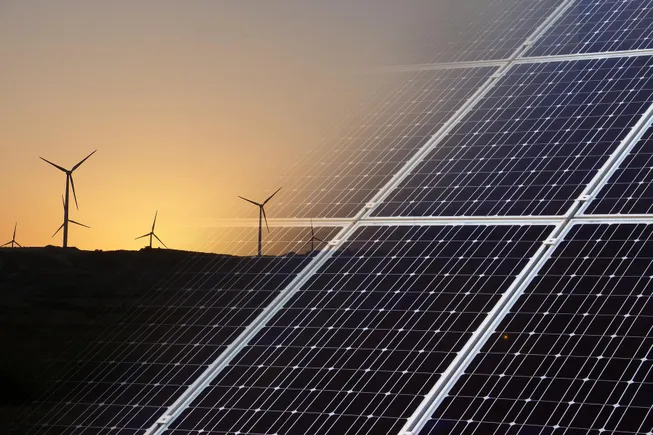
Industry analysts generally believe that the federal clean energy support measures contained in the Inflation Reduction Act (IRA), passed in August 2022, are expected to reshape the U.S. economic landscape.
A report released by the American Clean Power Association (ACP) in December 2022 shows that, as of December of that year, new clean energy investment announcements driven by the IRA had exceeded $40 billion, corresponding to more than 13 GW of new installed capacity and involving 20 manufacturing facilities, with over 6,850 jobs expected to be created.
However, as of March 1, 2023, clean energy advocates and analysts have submitted nearly 4,000 comment letters to the U.S. Treasury Department, requesting clarity on how investors can ensure they qualify for the new and extended tax credits, grants, and various programs under the IRA.
Erica Larson, Regulatory Affairs and Market Development Manager, and Justin Rodgers, Senior Director of Energy Business Development at global business consulting firm ICF, wrote in October 2022 that many of the IRA's most ambitious programs are "far from prescriptive," and federal agencies, other regulators, and utilities "will ultimately shape" the implementation details of these programs.
A major obstacle remains. President Biden told House Democrats on March 1, 2023: "The important task before us is implementing the laws we passed." This requires the Treasury Department to issue implementation rules in the first half of 2023 on provisions such as prevailing wage, qualified apprentices, energy communities, domestic content, and direct payment of tax credits under the IRA, according to implementation preparation personnel.
But the IRA's potential to drive a transformative shift in the energy industry remains clear.
Amy Farrell, Senior Vice President of Government and Public Affairs at clean energy advocacy group CRES Forum, said on March 6 that with the IRA building on the record clean energy generation in 2022, the clean energy industry will become "deeply integrated into the U.S. economy."
Deep integration into clean energy
The Environmental and Energy Study Institute (EESI) reported in August 2022 that the expanded tax credits and funds for rebates and research in the IRA, totaling $369 billion, represent "the boldest action Congress has taken on climate."
A 2022 study by Rhodium Group found that the IRA is expected to increase projected U.S. emissions reductions by 10% by 2030 and boost clean energy's share of the U.S. electricity mix from about 40% in 2021 to as high as 81% by 2030. Rhodium also noted that due to greater use of lower-cost renewables, "household energy costs will fall by $717 to $1,146 by 2030 compared to 2021 levels."
The nearly 4,000 stakeholder comments submitted to the Treasury are spread across eight IRA-related dockets, many of which are responses to Requests for Information (RFIs) issued by the Treasury's Internal Revenue Service (IRS). Analysts and energy lawyers say the IRS responses issued so far provide few answers.
ICF noted that the IRA's main focus is on the revised clean energy Investment Tax Credit (ITC) and Production Tax Credit (PTC), as well as options to expand clean energy use for non-taxable entities.
According to international energy law firm Norton Rose Fulbright (NRF), the IRA allocates an estimated $62.3 billion for the wind PTC, extending the credit through 2032. The PTC's base rate increases from $0.003 per kWh to the current $0.015 per kWh, provided new wage and apprenticeship requirements are met. Credits can be further increased for projects meeting other IRA requirements or located in designated areas.
The IRA allocates an estimated $64.8 billion for the solar ITC, extending the credit through 2032 and expanding the ITC to standalone battery energy storage projects. NRF said the new ITC base credit is 6% of project costs after one year of operation, but can be increased to the existing 30% or higher by meeting the same IRA requirements as the PTC.
Keith Martin, NRF partner and co-head of U.S. projects, and Kevin Pearson, partner at Stoel Rives LLP, said the ITC will accelerate the energy storage market, while the newly allowed use of the PTC for solar projects may benefit high-production solar projects but will create negotiation complexities for developers and tax equity investors.
Martin said that by 2025, when the new tax credits are replaced by "technology-neutral clean energy" credits targeting zero-emission electricity production, important new issues will arise. Pearson added: "This will require the Treasury to determine which technologies and carbon reduction measures qualify."
Allison Nyholm, Vice President of Government Affairs at the American Council on Renewable Energy (ACORE), said: "The Treasury has time to work through the many details of the technology-neutral credits." But she added that if the IRA's new tax credits become a "wasted opportunity to achieve climate goals," the bill could face criticism.
Validating Nyholm's concerns, major utilities including Con Edison, Arizona Public Service, and Southern California Edison told Utility Dive they look forward to the IRA but are awaiting IRS guidance.

Labor issues
NRF's Martin told an audience at the Intersolar North America conference on February 14 that the IRA is "a goldmine of opportunities," but "people are still digging" to understand how to ensure key requirements are met.
He said tax credits could account for "up to 70%" of new project costs, and clean energy manufacturers "will also receive substantial subsidies." This is because the base 30% ITC and $0.015 per kWh PTC value increase by 10% when IRA domestic content requirements are met, by 10% at "energy community" sites, and by 10% to 20% when serving low-income customers, provided the IRS clarifies these provisions.
Stoel Rives' Pearson said: "Almost every new concept in the IRA has at least one provision requiring IRS guidance." But he added that the IRS must first clarify the wage and apprenticeship requirements, as the IRS's initial guidance in November 2022, based on existing Department of Labor practices, "may be too broad," limiting opportunities to obtain the base ITC and PTC values and making projects "economically unviable."
ACORE Policy Manager Daniel Wolf said the initial guidance allows "good faith exemptions" for apprenticeship requests that are publicly made but unanswered, but "does not clarify how requests must be made, how they must be documented, and what developers must ultimately do to actually comply."
Martin, Pearson, and others agree that developers are starting projects without tax credit certainty, expecting that final IRS rules will align with the law's intent to support a clean energy economy.
Martin said a solution to sustain the tax equity market, which is expected to exceed $20 billion by 2023, has emerged. Tax equity investors initially assume "tax credit levels remain viable" at 20% of investment, but may change when paying the 80% balance.

Energy communities and domestic content
Martin said developers want to obtain higher tax credits, but "confidence levels vary on accurately applying these credits."
According to a December 2022 study by Charles River Associates (CRA), the IRA defines three types of "energy communities" where projects can receive higher credits: areas with recent coal mine or power plant retirements, areas likely to face relatively high fossil fuel-related unemployment, and brownfields (land potentially contaminated by hazardous substances).
CRA analysis concluded that due to misapplication of definitions for retired coal units or fossil fuel-related jobs, "10% to 20% of the total energy community scope could be affected," thus requiring clarification.
Pearson said that for domestic content, structural materials made of steel or iron, such as rebar or foundation piles, must be "100% U.S.-made." By 2023, 40% of manufactured product content must be "U.S.-made," not merely "assembled in U.S. factories," rising to 55% by 2032.
ACORE's Nyholm said these are "oversimplified" percentages of total project costs.
John Godfrey, Senior Director of Government Relations at the American Public Power Association (APPA), said more precise domestic content rules are crucial for publicly owned utilities, electric cooperatives, and nonprofits because they must meet these rules to use new IRA funding for tax-exempt entities.
Godfrey added that rules must be "fully clear but easy to implement," otherwise small tax-exempt power suppliers and nonprofits may find it burdensome to prove the origin of steel for solar racking or transistors in electrical equipment.
ACORE's filing to the Treasury suggested that a potential solution is for the IRS to approve taxpayers using written certifications, with supporting records when necessary, to prove domestic origin of materials, which may be sufficient.
According to Barron's on February 24, IRA support for domestic clean energy manufacturers has already led to at least 40 new manufacturing investments totaling $77 billion. Lindsay Cherry, Market Intelligence and Policy Manager at Qcells, said clarifying domestic content rules could drive more investment; the company announced a $2.5 billion U.S. solar manufacturing expansion plan on January 11.
But stakeholders agree this will only happen when IRA details become less complex and more certain.

Three key clarifications
Many stakeholders say that in addition to domestic content and labor provisions, the Treasury needs to clarify provisions allowing taxpayers to receive cash payments in lieu of tax credits, the definition of clean hydrogen, and energy efficiency-related measures.
Direct paymentAllows project owners to "receive the cash value of their project's tax credits," said NRF's Martin.
Martin said manufacturing tax credits can be transferred for five years, which could bring "significant cash infusions" to large renewable manufacturers. But developers have limited interest in transferability because competition in transfers could lead to uncertain credit values and increase uncertainty for financial markets and taxpayers.
APPA's Godfrey said public power utilities, rural electric cooperatives, and nonprofits from Habitat for Humanity to small municipalities are now also eligible for direct payments through 2032. This eliminates the need for complex contract negotiations with tax equity investors, enabling public power utilities and electric cooperatives to own and operate renewables.
But Hunter Johnston, a lawyer at Steptoe and Johnson LLP, said direct payment and credit transferability are "new innovations not in previous tax law" and need clarification before transactions close.
Stephen Bell, spokesperson for the National Rural Electric Cooperative Association, said if IRS rules align with "congressional intent," direct payments will provide exciting opportunities for cooperatives to "leverage new tools."
Energy efficiencyThe largest impact of IRA funding will be seen in the $4.3 billion "Home Energy Performance-Based, Whole-House Rebate Program" and the $4.3 billion "High-Efficiency Electric Home Rebate Program," according to EESI.
But Jenifer Bosco, staff attorney at the National Consumer Law Center, said "low-income consumers need protections when making financial decisions on home improvement investments." She added that contractor certification, information accessibility, compensation funds, and complaint processes are all important.
Clean hydrogen productionEstimated to receive about $13.17 billion in IRA support, according to EESI. Clean hydrogen facilities can receive up to $3 per kilogram in PTC for the first ten years of operation, with additional credits for meeting labor standards. But the Treasury faces decisions to ensure hydrogen is clean.
Daniel Esposito, Senior Policy Analyst at Energy Innovation's Power Program, said: "Electrolysis using clean energy generation can produce zero-carbon hydrogen." Inadequate Treasury guidance could lead to a "worst-case scenario" where fossil fuel generation is increased to produce hydrogen, "and increase power system emissions."
Esposito said adhering to the three principles of additionality, deliverability, and time matching can ensure hydrogen production uses clean electricity. Requiring hydrogen producers to add new clean generation and transmission facilities at the time of production meets the law's intent, but "hydrogen hype" could lead to overly lenient IRS guidance.
Steptoe's Johnston said "billions of dollars in investment and many projects are waiting for Treasury guidance on hydrogen tax credit use," but "significant uncertainty is preventing projects from reaching financial close." He added that "the legislative intent seems to be verifying hydrogen is produced with clean energy," but requiring expensive deliverability and time matching rules could affect "industry economics." "We need rules that align with the law's intent to provide investment incentives," he suggested, "a compromise could be looser rules in early years, tightening in later years."
ACORE's Nyholm said: "The Treasury is in a brave new world, venturing into risk management for the first time. It wants to expand investment, but still needs to work on understanding how to do so most effectively, and when it gains clarity, it will provide guidance."