
California energy circles worry about isolation and reliability impacts as SPP plots western market expansion
The Southwest Power Pool's (SPP) push for western market expansion has raised concerns in California's energy community about isolation and reliability impacts. The article explores SPP's Markets+ initiative, competition with the CAISO market, potential isolation risks, and the urgency of western RTO governance.
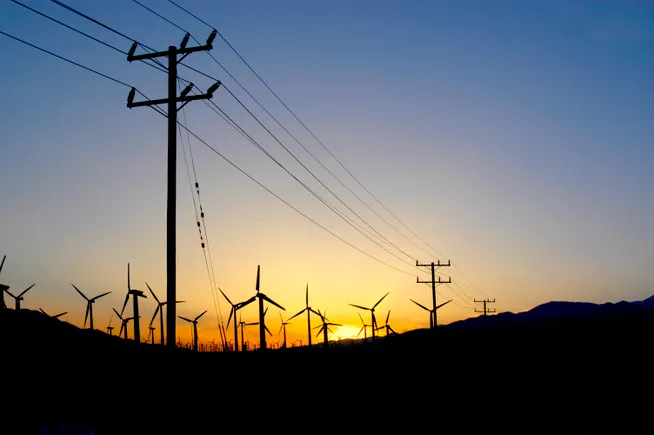
As the Southwest Power Pool (SPP) makes progress in its efforts to expand westward, some experts in California worry that the state could become isolated and potentially lose access to renewable energy resources and electricity import channels that are critical to its grid.
The West is one of the few regions in the U.S. without a regional transmission organization (RTO), and discussions about establishing an RTO have continued for more than two decades. Currently, 22 entities in the region participate in the California Independent System Operator's (CAISO) real-time wholesale energy trading market—the Western Energy Imbalance Market (WEIM)—and CAISO is also in the process of developing a voluntary day-ahead market (Extended Day-Ahead Market, EDAM). CAISO expects to begin accepting EDAM participants in early 2025, with PacifiCorp set to be the first entity to enter the implementation phase.
Meanwhile, the Southwest Power Pool, an RTO headquartered in Arkansas that spans 17 states, is advancing its westward-facing energy market plan called Markets+. In early March, SPP announced that several entities, including Arizona Public Service, NV Energy, and Puget Sound Energy, have signed funding agreements to develop this market.
This news has raised concerns among some in California's energy industry, who worry that SPP's potential expansion could isolate California's energy system and increase the complexity of electricity imports. Electricity imports have been an important part of California's power mix for years, accounting for an average of 18% to 20% of its supply during the summer.
These developments also come amid broader discussions among stakeholders about establishing a West-wide RTO that would go beyond real-time and day-ahead energy market operations to encompass other aspects of energy planning, such as transmission and grid reliability.
In addition to the Markets+ plan, SPP is also studying the possibility of expanding into the region as a full RTO. In mid-2021, its board of directors and strategic planning committee approved a framework of terms and conditions for the RTO West effort.
If SPP attracts WEIM participants or entities already committed to EDAM into its RTO footprint, "my concern is that California will be isolated from the rest of the West," said Amisha Rai, vice president of policy and advocacy at the clean energy trade organization Advanced Energy United.
She noted that in past summers, California has relied on electricity imports when the grid is under stress, "and that isolation would create significant challenges for all of us in California... in meeting electricity demand."
Given this dependence, experts say California would benefit from deeper engagement in regional conversations about Western grid expansion.
"(Western energy) markets are going to form anyway, and our inaction has prompted SPP to start trying to catch up," said Michael Colvin, director of regulatory and legislative affairs at the Environmental Defense Fund. "So, do we want California to be a virtual island, or do we want to actually have a seat at the table and influence this market from the start?" he added.
The competitive market landscape in the West
The Western Energy Imbalance Market (WEIM), operated by CAISO, was created nine years ago and covers parts of 11 states, including Arizona, Idaho, and Montana. Since its launch, WEIM says it has generated $3.4 billion in benefits.
A West-wide day-ahead market could further expand these benefits—an analysis conducted by Energy Strategies late last year found that such a market could yield up to $1.2 billion in annual operational and capacity efficiency savings and increase renewable generation in the region by more than 1,800 GWh. Meanwhile, a report from Advanced Energy United shows that a West-wide RTO could generate up to $79.2 billion in additional gross regional product annually for 11 Western states.
It is against this backdrop that SPP—an RTO located on the "western edge of the Eastern Interconnection"—has been creating its alternative to CAISO's markets, said Andrew Campbell, executive director of the Energy Institute at UC Berkeley's Haas School of Business and a member of the WEIM governance committee.
SPP launched a real-time balancing market in the West in 2021, called the Western Energy Imbalance Service market, and is now viewing Markets+ as a "conceptual service portfolio... that centralizes day-ahead and real-time unit commitment and dispatch."
"This is essentially a competitive market, and for any utility, it's almost a binary choice between joining the SPP market or joining the market operated by California ISO," Campbell said.
In early April, SPP said 31 entities had joined the effort to develop and launch Markets+, and it had begun market development after securing sufficient funding a month ahead of schedule.
SPP spokesperson Meghan Sever said in an email that the first phase of Markets+ development will include filing tariff changes with the Federal Energy Regulatory Commission (FERC) in January 2024. The next phase will involve acquiring necessary software and hardware and creating the Markets+ systems and processes. Participants in the second phase will be integrated after the market launches, expected in late 2025 or early 2026.
The threat of isolation
However, some stakeholders in California have expressed concerns about the impact SPP's westward expansion could have on the state. Colvin said that if SPP establishes its market, it would significantly diminish the value of the real-time and day-ahead markets operated by CAISO, "because people won't want to participate in two different sets of rules and two different markets..."
"Of course, if many other entities join SPP's Markets+ or further plans, we could face the risk of losing participants in the Western Energy Imbalance Market, which could have significant reliability and financial impacts on California. We could also lose the potential benefits of having a broad set of entities join EDAM—so, it's a risk," said Elliot Mainzer, president and CEO of CAISO.
Having two day-ahead energy markets in the West would make it more complex for California to import electricity during times of grid stress, agreed Fred Heutte, senior policy associate at the NW Energy Coalition. He said this would create a "hard seam" between the two markets, requiring more formal approaches to handle issues like congestion management.
These obstacles could also have implications for the reliability of California's grid. For example, last September, when the state faced a record heat wave, imports from neighboring balancing authorities were one reason CAISO was able to avoid blackouts, according to an analysis released by the grid operator in November. California imported about 6,500 MW during that period, with an additional 1,000 MW of WEIM transfers during the most strained periods, CAISO said.
"Creating these regional markets really lowers the barriers to trading across state and utility boundaries, and also greatly enhances visibility and coordination between these different regions," Campbell said.
But if entities in neighboring states join SPP's energy market, "I think it will make it harder for Californians to trade with other states. And coordination among those other states will become easier," he said.
However, SPP's Sever said that whether or not SPP continues its westward expansion, seams between balancing authorities, transmission service providers, bilateral markets, and organized markets will persist.
"Importantly, transmission between the West and California will continue, and Markets+ provides an opportunity to manage the seams more effectively to support and enhance reliability for all participants," Sever said.
Markets+ is designed with proactive support for existing bilateral transactions, and as the market operator, SPP will work with transmission service providers, balancing authorities, and other market operators to support coordination of transmission and systems, Sever said.
For California stakeholders, while part of the concern is that entities in CAISO-operated WEIM and those committed to EDAM might shift to SPP's Markets+, the broader question is what a full Western RTO might look like.
Currently, nine entities operating in the West are evaluating the possibility of joining SPP's RTO West or expanding facilities. Potential members will sign membership commitment agreements this year, and SPP will prepare tariff changes and submit them to FERC next year. SPP plans to welcome new members to RTO West in April 2026, becoming the first RTO to operate in two interconnections, Sever said.
More broadly, many clean energy advocates favor the idea of a single Western RTO footprint, said Vijay Satyal, deputy director of regional energy markets at Western Resource Advocates.
Having two RTOs in the West "would be a less-than-ideal situation," he added, because it would require stakeholders to participate in two different markets, track two different processes, and follow different forms of reporting. While having two RTOs is better than having none—which is the status quo—"it's still not the ideal solution... because the West is unique, its footprint is so diverse, and the maximum benefits can be achieved by leveraging the full diversity of time zones and resource mixes under one large market," he said.
Starting the RTO conversation
Given these concerns, some stakeholders believe California would benefit from advancing regional conversations about Western grid expansion. A policy brief released by the Union of Concerned Scientists in March noted that some Western states and utilities have begun organizing markets without California, including through SPP.
"All of this suggests that as other options emerge, California may see some partners shift to other organizations, especially if the state chooses not to push for CAISO's expansion into a Western RTO. Over time, as these various forms of Western grid cooperation mature, California may lose the ability to influence the design and governance of these systems," the brief said.
The biggest issue surrounding expanding CAISO into a West-wide RTO lies in its governance structure. CAISO's board members are appointed by California's governor and confirmed by the state senate, said Vivian Yang, Western states energy analyst at the Union of Concerned Scientists. If the grid operator expands into a full Western RTO, this structure would need to change, as other Western entities are unlikely to join the current structure.
CAISO's governance structure is one of the main issues market participants want to address in the long term to advance the RTO conversation, CAISO's Mainzer agreed.
"(If California cannot achieve its long-term governance evolution), other entities are seriously looking at the SPP market to see if that might be an alternative path under a different governance structure," Mainzer said.
While discussions around a Western RTO and its governance structure have been ongoing for some time, SPP's expansion "has certainly added a sense of urgency," CAISO's Mainzer said.
"It has further reinforced for us at CAISO, and for many of our partners in the utility and regulatory sectors, the value of regional partnerships and the absolute importance of continuing to develop infrastructure within California... to ensure our resource adequacy portfolio is as robust as possible..." he added.
