
As the U.S. power system transforms, how can electricity pricing mechanisms keep pace?
The U.S. electricity industry is undergoing profound changes, and traditional electricity pricing models face challenges. In recent years, residential electricity bills have continued to rise, prompting states and experts to explore new rate designs, such as low-income discounts in New York and New Hampshire, and income-based fixed charges proposed in California. However, these proposals have also sparked controversies involving fairness, implementation complexity, and incentives for electrification.
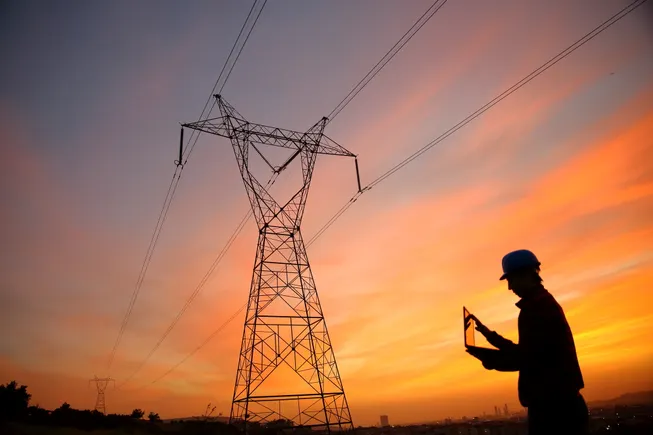
As the U.S. electricity industry transitions to cleaner, more distributed forms of energy, and as electrification of transportation and buildings accelerates, experts are closely watching how to restructure electricity rates to make them fairer and more reasonable.
Although discussions about electricity rate reform have been ongoing for decades, residential electricity rates have remained largely similar in structure for nearly a century. According to Mark LeBel, a senior associate at the Regulatory Assistance Project, residential rates typically consist of a small fixed customer charge plus an energy charge per kilowatt-hour, which recovers most of the power system costs—he says, "In most cases, this model works for most people."
However, LeBel added that over the past five to ten years, the electricity industry has placed a series of new "pressures" on traditional rate-setting models. For example, net metering frameworks (which allow customers to feed self-generated electricity back to the grid and receive credits) began to emerge about 15 years ago. Over the past decade, there has also been a strong push for electrification in building heating and transportation.
Meanwhile, the U.S. Energy Information Administration reports that between 2021 and 2022, average monthly electricity bills for U.S. residential customers rose by 13%—5% after adjusting for inflation—due to extreme temperatures and rising fuel costs at power plants. This was the largest reported annual increase since 1984. In the first quarter of 2023, average residential electricity bills were 5% higher than the same period last year.
As a result, states and experts are closely examining new rate-setting strategies to address these pressures. LeBel noted that a few states, such as New York and New Hampshire, have implemented different forms of low-income tiered discounts.
In California, regulators are considering a proposal to set different fixed electricity charges based on household income—no other state currently has such a system. Last October, Hawaii's regulators adoptedan advanced rate design framework, using time-of-use rate designs, which regulators said would allow customers to explore different rate options and save money.
LeBel said, "I think over the next few decades we will see a variety of different ideas and proposals. Sometimes, people's imagination of possibilities is too limited—but I think we will see a lot of different experiments."
Three major trends in the electricity industry
According to Eric Gimon, a senior fellow at Energy Innovation, current U.S. electricity rates are composed of a combination of the following elements: an energy charge per kilowatt-hour; a monthly fixed charge that does not vary with usage; and a demand charge that typically applies only to commercial and industrial customers and varies with usage.
Historically, policymakers and others have tended to favor energy-based rates for various reasons. However, rate design experts increasingly point to the dynamic changes in the energy industry, which may require a re-examination of different electricity rate mechanisms.
Matt Baker, director of the Public Advocates Office at the California Public Utilities Commission, said that about a decade ago, his office was one of the main forces pushing for comprehensive energy-based rates. But three major trends have forced his office to reconsider this decision.
First, grid costs are increasingly driven by fixed costs rather than generation costs. Second, policy-driven electrification of various sectors of the economy requires ensuring that marginal electricity rates are low enough to encourage people to switch from gasoline cars to electric vehicles, for example. Third, California has made significant investments in the grid, especially to adapt to climate change.
He said, "So these costs are rising, and whether you use a lot of electricity or a little, they are rising."
"If electricity rates rise equally for everyone, the impact is greater on low-income people—this is regressive." —Eric Gimon, Senior Fellow at Energy Innovation
Baker pointed out that maintaining the status quo with energy-based rates as the main component has two major drawbacks: first, it makes electrification of various sectors of the economy more difficult; second, "ultimately the grid becomes increasingly unfair—the proportion of ratepayers paying a share of fixed costs becomes smaller and smaller, while the share of fixed costs they bear becomes larger and larger."
Another factor affecting the affordability of electricity rates is cost control.
Gimon said, "It can be reasonably argued that public utility commissions across the country have been somewhat negligent in cost control. They have been too lenient with these utility companies... allowing them to build a lot of equipment that may be unnecessary or not necessarily necessary," and also too lenient in terms of rates of return.
In either case, rising electricity rates can have a disproportionate impact on low-income communities and customers. Gimon noted that part of the problem is the "opportunity factor"—they have fewer opportunities to mitigate the impact of rising energy costs by purchasing distributed energy resources or investing in insulation. For example, renters cannot even decide the energy efficiency of appliances in their buildings.
Gimon added, "And the main issue is that if electricity rates rise equally for everyone, the impact is greater on low-income people—this is regressive."
Strategies to make electricity rates fairer
Regulators and rate design experts are addressing the issue of unfair electricity rates in multiple ways.
For example, last year California lawmakers passedlegislationauthorizing income-tiered fixed charges for residential electricity bills, which can cover fixed costs such as wildfire prevention, with at least three income tiers. In April of this year, multiple stakeholders, including the state's investor-owned utilities, submitted initial proposals to the California Public Utilities Commission outlining the possible form of this charge.
The Public Advocates Office also submitted a proposal, which includes three tiers: households with annual income below $50,000, households with annual income between $50,000 and $100,000, and households with annual income above $100,000. For the first category, the office recommended using California's climate credit (a rebate provided to ratepayers in the state) to reduce the fixed charge to zero. For ratepayers not enrolled in state assistance programs and falling into the second or third categories, the office recommended fixed charges between $30 and $37, and between $35 and $42, depending on the utility service area.
Baker said, according to their proposal, "Any high-usage customer would benefit—this reflects the incentive for electrification. Anyone with income below $50,000 would also benefit."
Southern California Edison also submitted a proposal to the commission, stating it would reduce electricity bills for low-income customers by 16% to 21%, and lower monthly bills for about half of its customers with unchanged usage.Under SCE's proposal, the highest-income 19% of people would face the highest fixed charge of $85 per month. Low-income customers would have monthly fixed charges between $15 and $20.
Michael Backstrom, vice president of regulatory affairs at SCE, said implementing this fixed charge would not increase customers' total bills. Instead, it simply adjusts how certain costs are recovered in the bill.
He said, "So when you create a fixed component that matches the fixed costs of the system, you can actually lower the energy rate... Therefore, in rate design, the rate per kilowatt-hour would be much lower, which helps support the adoption of electrification."
"If customer charges are high for high-income people, people will find ways to adjust their affairs to avoid it... Just like income tax, there is tax avoidance." —Mark LeBel, Senior Associate at the Regulatory Assistance Project
However, energy economist Ahmad Faruqui noted that the idea of income-based fixed charges has also faced considerable criticism. An income-tiered fixed charge like the one proposed in California essentially means "even if I use no electricity at all, and I happen to be in the middle-income group, I would still have to... pay the utility company just for the right to stay connected to the grid."
At the end of May, Faruqui and 14 other expertssubmitted comments to the commission, warning that the proposed fixed charges "are too high compared to national levels." They also stated that income-tiered fixed charges would not incentivize low-income customers to electrify their homes and vehicles.
Income-based customer charges also bring a series of complexities around verifying customer income, which LeBel worries have not been fully recognized.
He said, "If customer charges are high for high-income people, people will find ways to adjust their affairs to avoid it," adding, "Just like income tax, there is tax avoidance."
In June, an administrative law judge at the California Public Utilities Commission ruled that the agency plans to issue a proposal in early 2024 to establish a path for implementingthese income-tiered fixed chargesover several years.
"We can no longer afford to try every approach"
Another separate measure that could help reduce unfairness in electricity rates is to remove fixed costs from electricity bills and instead cover them through taxes. For example, Faruqui described an "energy voucher" policy based on the U.S. food stamp model, funded by state or federal taxpayers.
Last September, the Energy Institute at UC Berkeley's Haas School of Business published apaperexploring the possibility of shifting some costs from the electricity bill payment system to California's state budget, which the paper said could be more efficient and fairer than the current system.
The authors also examined categories of costs that could potentially be shifted to the state—for example, public purpose programs such as energy efficiency and electric vehicle charging stations, as well as wildfire mitigation investments and compensation for fire victims. The report said another category of costs that could be considered for the state budget is above-market historical renewable energy procurements, as well as existing power contracts currently above market prices, such as those signed before the shale gas revolution lowered natural gas prices.
But LeBel said this strategy also raises its own set of issues.
He said, "The problem is, how large a taxpayer check do you write to an investor-owned utility that also pays executive compensation and shareholder dividends—you need to carefully design its structure and conditions to ensure it is fair to all parties—ratepayers, taxpayers, and the utility itself."
Charlie Harak, senior attorney at the National Consumer Law Center, said regulators also have more direct ways to help keep energy affordable—for example, if federal lawmakers doubled fuel assistance funding, that would go a long way toward ensuring people do not lose utility service.
Baker said, "But I think we will increasingly need to discuss how to lower overall costs for everyone—because within the electricity system, if you want to subsidize someone, it necessarily comes from others."
He added that as overall costs continue to rise, "no matter how progressive, it is unaffordable at both the highest and lowest levels."
This means regulators must set priorities, controlling costs while pursuing clean energy goals.
Baker said, "We can no longer afford to try every approach to decarbonization, market reform, and electrification."
Correction: A previous version of this article was inaccurate in describing state-level low-income tiered discounts. New York and New Hampshire do offer such discounts.
