
Stronger, Tougher, and More Diverse: A New Generation of Solar Technologies Accelerates
With U.S. solar investment and installations reaching new highs, a new generation of photovoltaic technologies is reshaping the energy landscape across multiple dimensions: n-type cells are expected to replace PERC as the mainstream, perovskite and tandem cells break through efficiency bottlenecks, floating photovoltaics expand deployment space, and recycling processes aim for a sustainable closed loop. This article synthesizes expert insights from institutions such as NREL, First Solar, and INL to outline the latest industry trends.
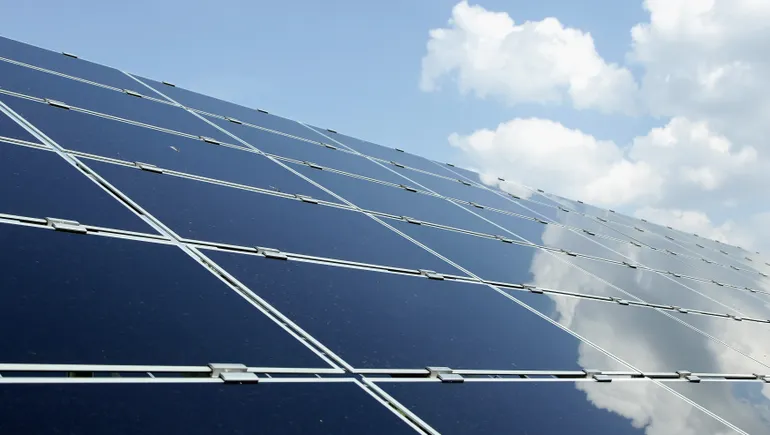
Amid record-breaking solar investment and installations in the United States, a series of technological breakthroughs are poised to transform photovoltaic power generation capacity, deployment scope, and lifespan. From cell structures to system integration, from materials science to recycling processes, a new generation of solar technologies is accelerating across multiple dimensions.
"When a good idea comes along, it seems to spread quickly across the industry," said Chris Deline, who leads the photovoltaic field performance group at the U.S. National Renewable Energy Laboratory (NREL). Over the past five years, the industry has fully transitioned from aluminum back surface field (Al-BSF) cells to passivated emitter rear contact (PERC) cells. Deline noted that emerging technologies in n-type silicon are poised to replicate this replacement path and gradually displace PERC.
Take tunnel oxide passivated contact (TOPCon) cells as an example; the industry is transitioning from p-type PERC to n-type TOPCon. N-type cells use chemicals such as phosphorus for negative doping, while p-type cells are positively doped—doping involves adding impurities to a semiconductor to enhance conductivity. In the early days of photovoltaic technology, when applications were limited to space domains like satellites, p-type cells gained an advantage because they performed more stably in space radiation and degradation environments, an advantage that carried over into the era of ground-mounted power plants. Although n-type cells are superior in efficiency and durability, they have only recently gained market traction.

"This will be a major transformation," Deline said. "Just as Moore's Law drives continuous processor speed improvements, photovoltaic efficiency will also keep climbing." In 2022, PERC still dominated the market, but experts predict it will follow the same path as Al-BSF. The German industry association VDMA predicted in an April report that TOPCon's market share will grow from about 10% in 2022 to 60% within the next decade, becoming the mainstream cell type after 2025.
"The industry widely believes that TOPCon will rapidly increase its market share and dominate crystalline silicon photovoltaic technology in the near future," said Markus Gloeckler, chief technology officer at First Solar.
In terms of cost, the average cost per kilowatt for solar construction across various panel types has dropped by thousands of dollars since 2013, falling to $1,561 per kilowatt in 2021, a 6% decrease—according to an October analysis by the U.S. Energy Information Administration (EIA).
Composition and Evolution of Solar Cells
Despite Gloeckler's optimism about TOPCon's prospects, First Solar remains committed to cadmium telluride (CdTe) thin-film technology, which is the most common panel type for utility-scale power plants, while crystalline silicon panels like TOPCon continue to hold overall dominance. The company plans to bring its proprietary copper reduction technology, CuRe, online in the second half of 2024. Gloeckler said the technology "is expected to have lower degradation rates" and "can compete well with TOPCon" in high-temperature, high-humidity environments.
Gloeckler also expressed optimism about the potential of perovskite solar cells, calling them "essentially thin-film semiconductors." Perovskite cells have recently achieved breakthroughs in efficiency, but commercial deployment remains challenging due to chemical stability issues. In contrast, perovskite is "relatively cheap," Deline said, "but precisely because it's easy to make, it's hard to keep stable."

This year, First Solar and its competitor Hanwha Qcells both invested in perovskite tandem cell technology. First Solar acquired Swedish startup Evolar (focused on tandem cells), while Qcells announced a $100 million investment to build a tandem cell production line. According to NREL, tandem cells "provide a path to higher module efficiency than single-junction designs." Multi-junction structures allow cells to surpass the Shockley-Queisser limit—a theoretical limit that restricts single-junction cells to absorbing no more than 30% of the solar energy striking them.
However, researchers are still pursuing higher efficiency in single-junction cells. NREL announced a single-junction efficiency breakthrough on October 25, achieving 27% efficiency using gallium arsenide cells. In a press release, the laboratory said researchers optimized the cell's top-layer doping and structure to minimize the negative impact of defects.
Bifacial power generation capability is another frontier innovation. A notable trend Deline observed is that "modules are getting bigger," which helps make bifacial gains easier to achieve. "Now you can buy 630-watt or 650-watt modules, simply because the modules are huge," he said. "In many cases, both the front and back use double glass," with the back using "transparent glass instead of a white polymer sheet," thereby enhancing bifacial gains.
Garrett Nilsen, deputy director of the U.S. Department of Energy's Solar Energy Technologies Office, said other innovation areas in photovoltaic manufacturing and deployment include different ingot and wafer types, slicing technologies, cell structures or module architectures, and cheaper, simpler, and more durable mounting systems. "This is a great time to be involved in solar technology," Deline said. "Innovation is coming fast and furious, and new investment is pouring in."
Expanding Deployment Spaces for Solar Panels
While battery technology rapidly evolves, researchers are also exploring how to expand installation scenarios. The U.S. Department of Energy (DOE) projects that 1 terawatt (TW) of solar capacity will need to be installed by 2035 to achieve decarbonization goals, which requires "more diverse siting configurations."
Floating solar is relatively common in Southeast Asia and Europe, but in the United States it has only been deployed on a small scale, said Juan Gallego-Calderon, a clean energy engineer at Idaho National Laboratory (INL). Existing projects are around 10 megawatts (MW) and are mostly located on artificial water bodies not subject to federal regulation. Gallego-Calderon is involved in an INL project aimed at accelerating the deployment of floating photovoltaics in reservoirs controlled by federal agencies such as the U.S. Army Corps of Engineers, the Bureau of Reclamation, and the Federal Energy Regulatory Commission (FERC). "These reservoirs haven't been deployed on simply because the regulations aren't in place yet," he said. "We're studying the regulatory and environmental pathways and developing techno-economic assessment tools that include environmental modeling."

The largest floating photovoltaic project in the United States is the 8.9 MW array at Canoe Brook Reservoir in Short Hills, New Jersey, owned and operated by utility company New Jersey Resources. Deploying floating photovoltaics on federal reservoirs helps avoid land-use conflicts (such as opposition to solar farms being "eyesores"), and building hybrid systems at hydroelectric reservoirs can reduce curtailment—as NREL found in a 2022 report.
"We're looking at a proposed pumped storage hydro facility, and they're working with companies to design a floating photovoltaic system installed on the upper reservoir to operate in conjunction with the pumped storage," Gallego-Calderon said. "They're preparing a license application to submit to FERC, and things are moving forward."
Is Sustainable Recycling Feasible?
INL is also collaborating with First Solar to develop more sustainable recycling processes for CdTe panels, participating in a project led by the University of Kansas. "About half of utility-scale solar projects use tellurium-based thin-film panels," said Daniel Ginosar, group leader of INL's chemical systems group. "Their lifespan is typically twenty years, after which efficiency begins to decline."
Supply chain considerations are equally important. As the United States deploys renewable energy at scale, the Biden administration has announced goals to reduce dependence on critical minerals from China, including tellurium. "We want to understand how to recover tellurium for use in new panels while reducing waste from decommissioned systems," Ginosar said. Currently, CdTe panel recycling "is not a complete process." Existing techniques include crushing panels into powder to break polymer bonds and attempting to leach out cadmium and tellurium. Researchers have proposed an alternative: using ultrasonic mixers to cause fluids like liquid butane to melt polymer bonds, making it easier to recover cadmium and tellurium.
Ginosar expects solar installations to grow "enormously" over the next 10 to 20 years, but in the short term, decommissioned panels will not be sufficient to supply materials for new panels. "But by 2050, those new panels will reach the end of their life, and that's when recycling will play a major role." The project currently focuses only on CdTe panels, but researchers plan to expand the approach to "all different types" of panels, including thin-film and silicon-based. "We're just getting started; the funding has just come through," he said. "In the short term, it's hard to solve the problem through recycling, but in the long term, we can achieve relative sustainability, effectively recover tellurium, and completely eliminate the need to mine it from China."