
Renewable Energy Outlook: Breaking Through Supply Chain and Project Bottlenecks, 2024 May Bring Returns
In 2023, U.S. solar added a record 33 gigawatts, and offshore wind delivered power to the grid for the first time. Despite challenges such as supply chains, tariffs, and interest rates, industry experts are optimistic about 2024, believing that investments from the Inflation Reduction Act will drive manufacturing reshoring, but transmission expansion and interconnection backlogs remain key bottlenecks.
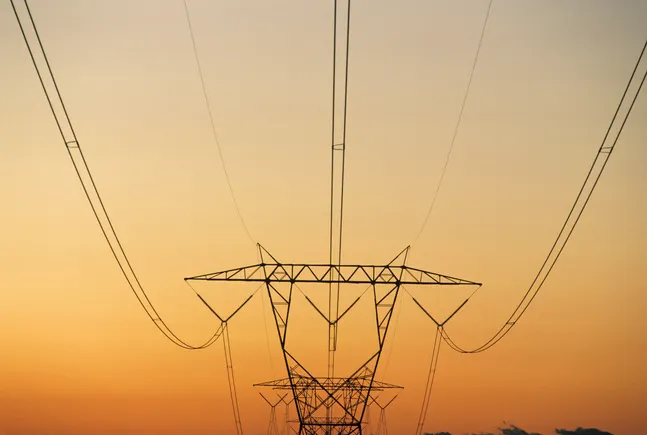
In 2023, the U.S. solar and offshore wind industries experienced rapid growth despite persistent challenges in the supply chain, regulatory environment, and interest rate hikes. Multiple offshore wind farms are nearing completion, with two already supplying power to the grid; meanwhile, the U.S. added a record 33 gigawatts of new solar capacity last year.
Two industry experts expect that, despite lingering challenges, the positive trends for these two renewable resources will continue this year. The Inflation Reduction Act and the massive clean energy investments it has spurred are a key source of this confidence.
"For all of us in the (solar) industry, this is landmark legislation because it provides a decade of certainty, which is quite different from the few years of certainty we had before," said Eric Pollock, Chief Commercial Officer at DSD Renewables.
Marlene Motyka, a principal at Deloitte and leader of its U.S. renewable energy practice, believes the obstacles facing renewables are "really just growing pains of an industry scaling up, rather than intractable problems that will hinder the industry's momentum."
This year, both industries will face more challenges. In June, President Biden's two-year pause on new tariffs for solar panels will expire. After the pause ends, the U.S. Commerce Department's August 18 ruling on circumvention of Chinese component tariffs by four Southeast Asian countries will impose new tariffs on solar imports from those countries.
Solar imports also continue to be constrained by the Uyghur Forced Labor Prevention Act. Facing these pressures, the solar industry has heavily invested in reshoring manufacturing, announcing multiple large factory projects last year.
Despite global module prices falling nearly 50% in 2023 and manufacturing capacity tripling from 2021 levels, the International Energy Agency noted in a January report that replacing imports with domestic modules will raise overall U.S. deployment costs.
"Looking at all the investment decisions made—the shift of module manufacturing and cell supply to the domestic market—these should be seen as optimistic signals. Once projects break ground and truly begin construction, my optimism will rise further."
Carl Newton
Vice President of Strategic Sourcing and Estimating at DSD Renewables
In the offshore wind industry, several developers will attempt to rebid contracts they exited in 2023 in upcoming state-level solicitations, while the domestic workforce and supply chain needed to support offshore wind farms and their ports are rapidly being built. As of this month, two utility-scale offshore wind farms are supplying power to the grid—a milestone in the U.S.
The arrival of utility-scale offshore wind and record growth in solar installations also mean that building new transmission lines and shortening interconnection queues are more important to the clean energy industry than ever.
Clean energy supporters hope the Federal Energy Regulatory Commission will finalize its proposed transmission planning and cost allocation rules next year. Acting Chairman Willie Phillips said in November that the rule is his "top" priority.
Offshore wind from scratch: ports, workforce, and vessels
Felisa Sanchez, an advisor in the maritime and finance practice group at law firm K&L Gates, said last year's numerous project delays and cancellations by developers may have been a "blessing in disguise" for the offshore wind industry.
"These cancellations now provide breathing room, freeing up port and vessel availability," she said. "Competition for these limited resources had been very intense."
Sanchez expects 2024 to "see the benefits of some of the 'waves' the industry has experienced over the past few months" and "give the supply chain a chance to catch up a bit."
Bureau of Ocean Energy Management Director Liz Klein said the industry's demand for specialized vessels, combined with post-pandemic global economic and supply chain difficulties, has posed many challenges—but she remains "very, very optimistic" about the coming year.
"While individual project timelines may have shifted, that doesn't represent failure, nor does it mean this type of clean energy isn't viable in the U.S.," she told Utility Dive. "It just shows these are massive and complex projects."
BOEM plans to hold four lease sales in 2024 and continue working with other agencies to advance floating offshore wind technology, which will be used for turbine installation in deep waters off the West Coast.
"As projects take root in the U.S., the industry will continue to gain experience on best construction practices," Klein said, including innovations in equipment and vessels for both floating and fixed offshore wind farms.
The development of vessels needed by the offshore wind industry has been constrained by the Jones Act—a 1920 law that prohibits foreign vessels from transporting cargo between U.S. domestic ports. As a result, the U.S. industry has had to adopt workarounds to advance projects while building its own fleet of wind turbine installation vessels.
Dominion Energy is building the first such vessel, named Charybdis, expected to be completed by the end of this year or early 2025, and will be used for Dominion's 2.6 GW Coastal Virginia Offshore Wind project.
Additionally, building the offshore wind workforce remains a "work in progress," Sanchez said. She sees developers, contractors, vessel owners, and port operators increasingly recruiting from high schools and universities and partnering with maritime academies to develop industry-specific training programs.
"The workforce needed to build these projects is enormous. I don't think any developer or contractor will tell you, 'Oh yes, we're very satisfied with our workforce situation for 2024.'"
Felisa Sanchez
Advisor in the Maritime and Finance Practice Group at K&L Gates
Although BOEM's first lease sale in the Gulf of Mexico last year saw a lukewarm response—only one of the three auctioned areas received a bid—Klein said the agency views the region as "critical" for offshore wind because the oil and gas industry has created a "ready-made talent pool, infrastructure, and equipment."
Klein said BOEM will focus in the future on "supporting project proposals and ensuring our permitting reviews are as efficient and effective as possible."
"I think one of the ways to demonstrate the success of this type of technology and clean energy is to have projects built and delivering power to the grid," she said. "We've already achieved some exciting milestones, and I expect more in 2024. I have never been more optimistic about the prospects for U.S. offshore wind."
Manufacturing reshoring drives localization of solar production
After billions of dollars in domestic solar manufacturing investments were announced last year, these investments are expected to materialize in 2024.
Domestic module manufacturer First Solar, South Korean energy company Q Cells, Indian module manufacturer Waaree Energies, and the North American subsidiary of Italian company Enel all plan to bring new U.S. factories online this year.
Despite lingering concerns about the direction of the solar supply chain after the tariff pause expires in June, Newton said the Commerce Department's final ruling on the matter has been "extremely helpful" for DSD Renewables, providing certainty.
"Tariffs, Customs and Border Protection issues, understanding the Uyghur Forced Labor Prevention Act—these are all relatively new to us," he said. "We're all gradually completing supply chain mapping; it's just another step in due diligence. That said, as long as you do your due diligence, there won't be problems."
Newton believes the impact of the Inflation Reduction Act is still "gradually unfolding," but the biggest effect he has seen so far is a boost in global optimism.
"When you see global companies of considerable size making investments at this level, you understand it's seen as a viable long-term industry," he said. "The momentum is there. Honestly, it seems unstoppable."
However, Newton added that he believes regulatory uncertainty is the biggest obstacle facing the solar market.
"That's more disruptive than anything else right now," he said. "As for equipment and material prices, they've remained fairly stable. Module prices have actually fallen quite a bit over the past six months."
Motyka expects the impact of IRA investments to become apparent this year.
"Many producers will reshore, and new producers will also enter the U.S. to take advantage of IRA tax credits and meet renewable developers' demand for domestic content bonuses," she said.
Deloitte believes these investments, combined with demand from state, federal, and corporate decarbonization goals, will "enable renewables to overcome near-term obstacles," Motyka said.
As solar installations rapidly increase nationwide, some conflict hotspots have emerged at the state level—especially regarding net metering for distributed solar.
Distributed solar advocates scored a victory in Virginia last September when the State Corporation Commission rejected Dominion Energy's interconnection parameters for certain net-metered projects, which the Virginia Distributed Solar Alliance argued posed "unreasonable" barriers to small-scale solar projects.
But a three-judge panel of California's First District Court of Appeal dismissed a challenge in December to the California Public Utilities Commission's latest update to net energy metering rules. The rules reduced compensation for rooftop solar customers exporting power to the grid and have been linked to layoffs at small solar companies statewide.
"The overall outlook is bleak," said Carlos Beccar, marketing director at Fresno solar company Energy Concepts Enterprises, referring to the state's rooftop solar industry. "2024 will be worse. Job losses could double."
Interconnection
Transmission construction and permitting reform remain key priorities for the entire renewable energy industry. Additionally, analysts say that without faster and better grid interconnection, many of the decarbonization benefits of clean energy could be lost.
In November, Jesse Jenkins, head of Princeton University's ZERO Lab, said the average annual growth rate of transmission capacity of 1% over the past decade needs to rise to 2.3% to avoid halving the IRA's potential emission reductions.
"When we consider the push from the IRA and the Infrastructure Investment and Jobs Act for renewables, it only intensifies the pressure on transmission bottlenecks," Motyka said. "This challenge won't ease significantly in the short term, but many parties are working on it, including RTOs, ISOs, and FERC."
Especially in California, wind and solar curtailment reached record highs last year. As of September, the Energy Information Administration found that the California Independent System Operator had curtailed more than 2.3 million megawatt-hours of wind and solar output in 2023.
Trade groups, clean energy organizations, and laboratories have continued to warn about the need for transmission construction over the past year. Charles Harper, senior policy director for the power sector at Evergreen Action, said in December he believes 2024 could be a significant year for transmission reform, following the expiration of FERC Commissioner James Danly's term on January 3.
Danly opposed FERC's proposed transmission planning and cost allocation rules, and Harper said the organization is now "very optimistic" about the chances of the rules and other transmission regulations passing this year.
"I don't think the pressure (for transmission reform) will go away," Motyka said. "It will only increase, and the push and discussion around 'the need to deploy new generation capacity as fossil fuel plants continue to retire' is growing stronger."
Correction:A previous version of this article incorrectly stated the timeline for the growth of solar module manufacturing capacity. That capacity has tripled since 2021.
