
Carrot and Stick: U.S. States Introduce Policies to Address 'NIMBY' Resistance in Renewable Energy Siting
To address local resistance in renewable energy project siting, multiple U.S. states are adopting 'carrot and stick' policies such as centralized permitting and financial incentives. Michigan's 'Renewable Energy Ready Communities Award' and New York's 'Host Community Benefit Program' have shown initial results, but Illinois' legislative move to strip local permitting authority has sparked controversy. Experts believe the most effective policies should incentivize local participation and limit malicious delays.
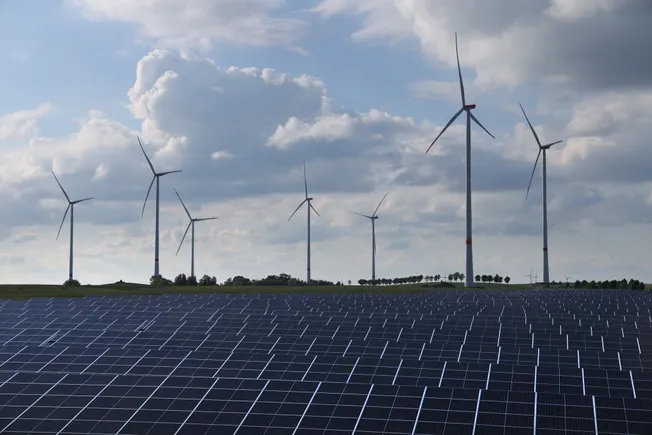
According to a February 2024 analysis by USA Today, at least 15% of counties in the United States have paused utility-scale renewable energy development due to bans, moratoriums, and overly strict zoning and land-use restrictions.
In states like Michigan, New York, and Illinois that have set 100% carbon-free electricity goals, lawmakers are responding by centralizing renewable energy approval authority at the state level, providing financial incentives for more permissive local ordinances, or both. Although programs like Michigan's "Renewable Ready Communities Award" are still new and have not yet produced observable impacts, the early success of two programs in New York has encouraged advocates of community-oriented approaches that include tangible economic benefits for municipalities and electricity users.
"There's no question that these policy combinations help developers gain public support," said Dan Spitzer, co-leader of the clean technology and renewable energy practice at the New York law firm Hodgson Russ.
Such efforts are expected to accelerate onshore wind and solar development, helping states and the federal government achieve clean electricity goals in the near term. But experts worry that if state policies are perceived as unfair by host communities, they could intensify local opposition to utility-scale renewables, trigger lawsuits, and ultimately slow the energy transition. They believe the most effective state policies should incentivize constructive local participation in siting and permitting processes, guide developers to treat host communities fairly, and limit opportunities for opponents to delay or kill mutually beneficial projects.
"Ørsted prefers to work directly with local governments, but local units often need or require a common framework to guide development, and they also need incentives from the state," said Hayes Framme, head of new markets and growth at Ørsted. The company has a 3-gigawatt onshore wind portfolio and nearly 700 megawatts of utility-scale solar and storage projects under construction.
Michigan's "carrot and stick" model
Over the past two years, multiple townships and counties in Michigan have imposed moratoriums on utility-scale solar development (and in at least one case, on all large-scale renewable development), citing concerns about negative impacts on rural landscapes, property values, soil and water quality, and the availability of prime farmland.
Sarah Mills, director of the University of Michigan's Center for Empowering Communities, said Michigan's Renewable Ready Communities Award (RRCA) program follows that model. The program was authorized last year as part of Michigan's landmark clean energy legislative package and will continue for at least two more years after repeal efforts failed to gather enough signatures to appear on the November ballot.
This $30 million pilot program offers communities that allow and actually host utility-scale renewable energy projects a $5,000 per megawatt incentive, or $2,500 per megawatt for communities that do only one of the two. According to a fact sheet from the Michigan Department of Environment, Great Lakes, and Energy (EGLE), to qualify for the incentive, communities must approve projects through local siting ordinances.
If a host community does not have a local siting ordinance "deemed sufficiently favorable to development," developers can use the state-level siting process, but the corresponding community benefit is lower, at $2,000 per megawatt.
Unlike the higher local benefits under the RRCA program, this $2,000 per megawatt payment comes out of the developer's own pocket. EGLE says that, as a result, the state-level process, while potentially less stringent than local ordinances, is costly for developers.
"The goal is to encourage developers and communities to resolve issues at the local level rather than going through the state process," Mills said.
According to Mills, RRCA is unique among state clean energy development programs in that it disburses some funds at the start of construction rather than waiting until the project is operational.
RRCA is also notable for its high incentive amounts and because funds "can be used for almost any community benefit," said Ian O'Leary, an EGLE department analyst and one of the program's co-managers and designers.
Projects eligible for RRCA must have at least 50 megawatts of capacity, so the minimum grant per project is $125,000 at the $2,500 per megawatt level and $250,000 at the $5,000 per megawatt level. O'Leary said that although some projects span multiple local government units, the program still provides substantial and potentially decisive funding for sparsely populated rural townships.
"Tax revenue from projects is often not enough to convince local governments to approve them," said Zona Martin, another RRCA co-manager and designer.
With support from EGLE, the Center for Empowering Communities' "Renewable Energy Academy" helps local governments proactively develop zoning ordinances compatible with Michigan's clean energy legislation, Martin said.
O'Leary said the RRCA program, the state-level approval backstop, and the Renewable Energy Academy are designed to work together to "create a watertight renewable energy system for Michigan."
This effort received a boost on July 22 when the U.S. Environmental Protection Agency awarded Michigan a $129.1 million grant to help expand RRCA and related emission reduction programs.
Although lengthy permitting timelines mean projects supported by RRCA and the state-level approval backstop may not break ground until next year, they have already had an impact on at least one major renewable energy developer.
Thanks to the new policies, "Michigan is now one of Ørsted's high-priority states," Framme said. "Without this policy, it's hard to see a viable path for developing projects in Michigan."
New York's electricity bill credits and 'bribery' controversy
In New York, years of opposition to utility-scale wind proposals in upstate communities have stemmed from concerns about landscape and farmland impacts, as well as misconceptions that projects only benefit downstate population centers, said Spitzer of Hodgson Russ. He added that recently, wealthy coastal residents have opposed onshore infrastructure serving the state's emerging offshore wind industry.
Similar to Michigan's RRCA program, New York's "Host Community Benefit Program" incentivizes local governments to support renewable energy development. Spitzer said a second, potentially more impactful New York program requires developers to detail in their project applications the public benefits they plan to provide to host communities, which helps convince skeptics of the value of local power generation.
According to a Hodgson Russ summary, the Host Community Benefit Program requires project owners to pay host utilities $500 per megawatt annually for solar projects or $1,000 per megawatt annually for wind projects larger than 25 megawatts, for the first 10 years of operation. These payments fund electricity bill credits for electricity users in host communities.
Since many host communities have hundreds or thousands of residents, "it's fair to say the benefit of bill credits gets diluted," Spitzer said.
Under the second program, developers have donated to local parks and library systems or funded upgrades to public buildings, Spitzer said. The 35-megawatt Steel Winds facility in Lackawanna, New York, on a former steel mill site, funded "a new community center, a business center... and a 110-acre greenway and bike path," according to a 2020 brochure from the New York State Energy Research and Development Authority.
All of this—plus the fact that revenue from large renewable facilities may be "almost entirely exempt from town taxes"—"falls within the broader definition of host benefits," Spitzer said.
But it doesn't always work. Under New York's state-level permitting process, host communities can agree to waive local siting and permitting rules as part of their community benefit agreements, potentially speeding up pre-construction reviews and locking in developer-paid benefits. In communities with deep opposition to renewable development, residents may resent the loss of local control, "view any benefit offer as a bribe," and hire lawyers to oppose projects, Spitzer said.
"Frankly, a lot of the resistance developers face is outright NIMBYism," he said. "States like New York with greater local autonomy are slower to achieve clean energy goals because host communities find ways not to cooperate."
A contrast in the Corn Belt
In 2021, Illinois became the first Midwestern state to commit to 100% carbon-free electricity generation. But here's the catch: that mandate did not include significant siting or permitting reforms, leaving its fate for the 2050 deadline in the hands of predominantly rural local governments whose political stances differ sharply from the Democratic-controlled Illinois legislature.
An Illinois law passed last year reset the dynamics in favor of developers by establishing state-level standards for utility-scale wind and solar projects that preempt stricter local ordinances and require local governments to approve proposals that meet state standards.
The new law is a "release valve" that provides state policy guidelines, which can ease the pressure local decision-makers might feel when considering wind and solar projects, said Chris Kunkle, senior director of government affairs at Apex Clean Energy.
The law creates a "stable, predictable permitting environment that helps Apex decide where we want to invest our limited time and resources," he said.
The new law also opened up counties in Illinois with rich wind resources that were previously effectively undevelopable due to restrictive ordinances. Apex never stopped exploring in the state, but after the 2023 law passed, the company "doubled down," Kunkle said.
"We feel very good about Illinois, to say the least," he said.
But in parts of rural Illinois, utility-scale renewables remain controversial. In March 2023, Piatt County officials rejected Apex's 300-megawatt Prosperity Wind project application, voiding a $10 million revenue-sharing agreement with Apex. Before approving the resubmitted application in October, several county board members said the new law forced them to vote for the project despite personal opposition. One board member said rejecting the project meant "gambling with 8% to 10% of our annual budget."
The state's decision to strip local authority "has created a lot of resentment," and it's unclear whether the Illinois law has already spurred new renewable development, said Brian Ross, vice president of renewable energy at the Great Plains Institute. Ross noted that Illinois' development queue is roughly comparable in size to neighboring Indiana's, even though Indiana's incentives—which are far more modest and not yet funded—are designed to encourage local permitting.
Under a new state law, Indiana's Commercial Solar and Wind Ready Community Development Center provides general information on renewable energy development and offers a certification program for communities that implement wind- and solar-friendly ordinances. According to the center's website, certified communities are eligible for incentive payments from the Indiana Office of Energy Development (OED) for operating projects, at a rate of $1 per megawatt-hour for 10 years.
But the program "is entirely voluntary, does not bypass any local permitting processes, and does not force local government units to do anything they don't want to do," said Greg Cook, communications manager at OED.
Despite the lack of funding, Indiana's program may help dispel misconceptions among rural communities about renewable energy siting, permitting, and development, said Tamara Ogle, a community development regional educator at Purdue Extension.
Ogle said negotiations between communities and developers can drag on for years, creating space for misinformation to breed and strengthening local opposition to proposed projects. Even without OED funding in the short term, certified communities may be better equipped to negotiate with developers over financial compensation, local employment and procurement, and other benefits, she said.
These conversations can benefit both sides, Framme said.
"Every one of our projects is different at the end of the community engagement process than it was at the beginning," he said. "We work to adjust project parameters based on concerns about landscape, construction schedules, traffic, soil conditions, and other issues."
Whether local renewable energy is seen as a prelude to deep decarbonization or primarily as an economic development engine, local, regional, and state governments should apply some of that creativity to new community benefit models, said Spitzer of Hodgson Russ.
These models could include projects that support agrivoltaics so that "[solar] facilities can keep farms," creating utilities with positive clean energy goals, or developing "energy districts" that can leverage tax-exempt bonds, Spitzer said.
"You can create a water district—why not an energy district?" he said.