
Former FERC Commissioner: White House Executive Order May Jeopardize Transmission Planning and Interconnection Reform
Former U.S. Federal Energy Regulatory Commission (FERC) commissioners warn that the executive order signed by the White House on February 18, requiring review of independent agency rulings, could delay critical implementation of transmission planning and interconnection reforms. Bipartisan former commissioners all stated that legal disputes will consume valuable time, affecting the U.S. power system's ability to respond to surging demand.
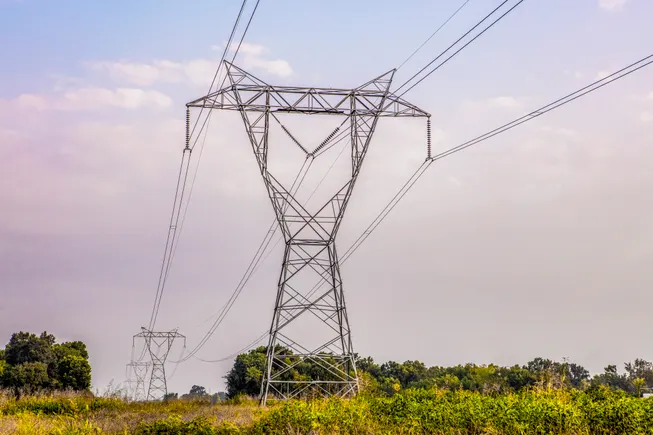
An executive order asserting White House jurisdiction over federal agencies could delay two key reforms at the Federal Energy Regulatory Commission (FERC), according to concerns raised by former commissioners from both parties.
Former Republican and Democratic commissioners noted that FERC Orders No. 1920/1920-A (reforming transmission planning) and No. 2023/2023-A (reforming interconnection rules) are critical at a time when the U.S. power system faces surging demand and an increase in extreme weather events.
However, they also believe that the executive order signed on February 18, which requires White House review of independent agency rulings, could spark courtroom battles over its legality.
How the executive order is applied will determine whether this bipartisan commission established by Congress serves "the public interest rather than special interests" — as stated by FERC Chairman Mark Christie, appointed by President Trump, at a February 21 press conference.
The White House did not respond to a request for comment on this report.
"This administration appears to be placing itself above the laws passed by Congress and the precedent of FERC independence established by the courts," said former Commissioner Nora Mead Brownell, appointed by President George W. Bush. "This is unhealthy, unreasonable, and unprecedented, and will lead to great uncertainty and some poor decisions."
These orders could have led to a stronger transmission system and smoother interconnection of new power sources to address the energy emergency declared by the President on January 20 — provided implementation is not hindered by legal disputes.
Planning a robust transmission system
FERC spokesperson Celeste Miller said Order No. 1920, issued in May, requires regional transmission operators to periodically update transmission plans to address long-term demand.
Key features include: requiring consideration of multiple transmission benefits, allocating costs to customers based on benefits, and expanding the role of state stakeholders. FERC staff presentations indicate that the seven economic and reliability benefits listed in Order No. 1920 enhance the potential value of regional transmission.
A key feature of Order No. 1920-A (a revised version of the original order, effective in January) is increased participation of state stakeholders. FERC staff presentations state that the order no longer requires consideration of the seven specific benefits in Order 1920 but instead requires consideration of "economic and reliability benefits," while retaining the right of first refusal (ROFR) for existing transmission operators on proposed projects from Order 1920.
In states that allow ROFR, "utilities can circumvent competitive bidding processes by developing transmission projects outside the regional planning process," said former FERC Chairman Richard Glick. Glick was appointed by President Trump and later designated chairman by President Biden. He added that the lack of a federal-level ROFR is a "perverse incentive" that could undermine more robust regional planning.
Chairman Christie's concurring opinion stated that the modifications in Order 1920-A give states "far more effective tools." He emphasized that the order allows states to "have sufficient flexibility and authority to protect their consumers from unfair or unnecessary costs" and "should and must inform the compliance process."
"Orders 1920 and 2023 are the two most important milestones in a long, incremental process," said former FERC Chairman James Hoecker, appointed by President Clinton. "But the concern now is that the compliance filing review process — where regulation truly takes effect — may not function effectively if FERC cannot operate independently of the administration."
Hoecker said the dispute could "take away valuable time from launching transmission planning and streamlining interconnection." He added that attempting to control "an independent agency with over a thousand pending cases and self-funded through fees" is particularly unnecessary.
"States can protect existing utilities or support regional interests, but only FERC can guide the compliance process toward competitive bidding for regional projects," said former Commissioner Brownell. "Utilities and their regulation need to move beyond protecting incumbents from competition to protecting consumers."
Stakeholders say the Trump executive order could similarly take away valuable time from implementing the interconnection reforms of Order 2023.


Streamlining the interconnection process
Generation projects awaiting transmission interconnection approval increased from 2,041 MW in 2023 to 2,598 MW in 2024, a 27% rise in one year. Order 2023 (which required compliance filings by May 16, 2024) aims to address worsening delays.
Under Order 2023, issued by FERC in July 2023, the cumbersome "first-come, first-served" interconnection application study process must shift to a more efficient "cluster study process." The order also imposes penalties on transmission operators that fail to complete studies on time and imposes stricter financial readiness, cost allocation, and site control requirements on interconnection applicants.
FERC's "explainer" document states that transmission operators must now consider advanced transmission technologies, allow co-location of resources at the same interconnection point, and use more granular data.
Order 2023-A, issued in May, adjusted deadlines, definitions of study readiness and site control, and cost allocation for system upgrades among generators at the same interconnection point. The order also details penalties for queue withdrawals and guidelines that could affect other projects.
Since then, PJM Interconnection's "Reliability Resource Initiative" and the Midcontinent Independent System Operator's "Fast Start Resource Adequacy Study" have both proposed controversial "jump-the-queue" interconnection plans to address reliability "emergencies" caused by surging power demand — as several commissioners have stated.
Commissioner Judy Chang's dissent on PJM's plan approval called it "the worst of both worlds," harming "open access principles while failing to guarantee solving PJM's reliability issues." Several former commissioners said this dissent demonstrates the immense value of independent FERC debate in addressing current "emergencies."
"One of FERC's roles as an independent agency is to define emergencies," said former Commissioner Brownell. Data center developers and critical community manufacturers may both want to interconnect generation, but both require careful FERC scrutiny, "because neither may be an emergency."
Former commissioners say the biggest threat of the executive order is its potential to affect FERC's freedom to exercise such independent review.

Impact of the executive order
Commissioners appointed by both Republican and Democratic presidents say disputes over the legality of the Trump executive order could delay implementation of Orders 1920 and 2023.
The executive order states that federal agencies must "submit draft regulations for White House review — independent agencies are no exception," and must "consult with the White House on priorities and strategic plans, which will set their performance standards."
But former FERC Chairman Joseph Kelliher, appointed by President George W. Bush, said the executive branch lacks "the expertise and understanding of laws such as the Federal Power Act and the Department of Energy Organization Act that guide FERC," and they are "unlikely to understand these issues" or be able to "review the large volume of significant regulatory actions in a timely manner."
Former Chairman Hoecker agreed. "In my recent interactions with rail and highway regulators regarding co-locating transmission lines within existing rights-of-way, it was clear how complex building transmission outside the energy industry is," but "FERC is a master of complex oversight and applying the law in a constructive manner."
Kelliher said the executive branch interpreting FERC orders without understanding the relevant laws would likely lead to time-consuming judicial review, "where courts often reaffirm precedent." He added that the executive order's "focus on accountability extends presidential power over independent agencies, but this is constrained by the Humphrey's Executor precedent."
Kelliher said the President cannot ignore the Supreme Court unless that precedent is overturned. The first independent agency — the Interstate Commerce Commission — was created by Congress in 1887 to ensure "merit-based regulatory decisions rather than politically based ones," and "FERC may be more inclined than any other independent agency toward merit-based decisions reflecting the record."
Kelliher said the Trump executive order would "politicize the decisions of regulatory agencies, and politically driven decisions often are not merit-based."
Former FERC Chairman Jon Wellinghoff (nominated by President George W. Bush and designated chairman by President Obama) said the executive order potentially hindering compliance filing review is a concern. But more importantly, legal disputes could hinder "diligent, ongoing oversight of FERC order implementation."
Wellinghoff said the review is less concerning because the White House is unlikely to delve into "the details of transmission planning, interconnection, and demand-side resources." The executive order requires independent agencies to submit proposed regulations for review, but "as Chairman Christie noted, major orders already undergo some form of review."
Hoecker and Glick agreed. Wellinghoff continued that the executive order may not have a significant impact on FERC. But he said, "there may be elements within the administration, from a non-independent executive political standpoint, attempting to impose actions on FERC that are contrary to the public interest."
"It is important that FERC has independent commissioners and acts in the public interest," because "they understand the complexities of a highly technical industry better than politicians," Wellinghoff said.
All former commissioners worry about the time consumed by legal issues. Former Commissioner Brownell said disputes over FERC independence could delay approval of compliance filings for Orders 1920 and 2023. "And the U.S. economy urgently needs the changes brought by the implementation of these orders right now."
Former Commissioner Allison Clements, a Trump nominee, agreed. "Any time wasted on legal or political review will further constrain this country's efforts to build a more reliable, more economical power system," Clements said. "The executive order is completely and obviously illegal, and the courts will not support it."
"The executive branch has every opportunity to influence public policy by working with Congress on legislation," Brownell said. "And it can carefully vet commissioners before appointment and replace them if necessary."
"Congress needs to give FERC the authority to act as the 'adult in the room' on issues like cost allocation and siting," Brownell added. Otherwise, the executive order "will have a chilling effect on the market, as investors are unlikely to invest hundreds of billions of dollars in sectors regulated by politically influenced, non-transparent decisions."