
EVs Approach 'Tipping Point' in 2023, Yet Tax Credit Ambiguities and Utility Interconnection Hurdles Loom
Electric vehicles are nearing a 'tipping point' in 2023, with sales surpassing 6% of new vehicles in Q3 2022. However, tax credit implementation details and utility interconnection challenges could slow momentum. Experts weigh in on federal funding, charging network rollout, and grid readiness.
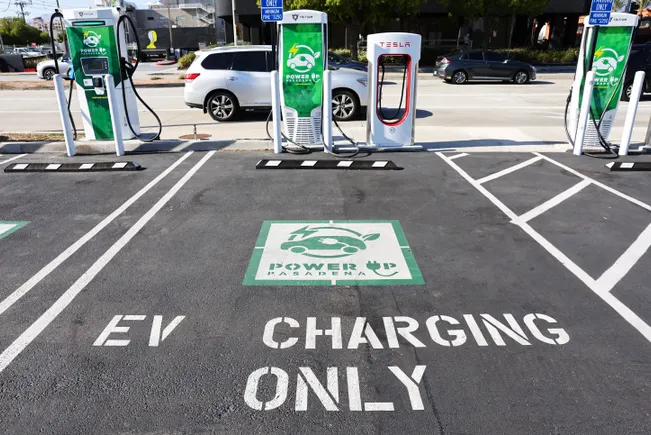
Electric vehicles (EVs) accounted for more than 5% of new vehicle sales in the United States last year, and industry experts anticipate continued rapid growth in transportation electrification. Federal investments are poised to support a national charging network and incentivize consumers to choose from dozens of new models that automakers are introducing.
EVs as a share of new vehicle sales have climbed from roughly 2% in 2020 to more than 6% in the third quarter of 2022.
“There's an incredible amount of opportunity and momentum,” said Ben Prochazka, executive director of the Electrification Coalition. The group advocates for policies to accelerate plug-in vehicle adoption and views the bipartisan infrastructure law of 2021 and last year’s Inflation Reduction Act (IRA) as key catalysts for the industry.
Among other investments, the infrastructure law allocated $7.5 billion for a national network of 500,000 electric vehicle chargers, while the IRA extended federal tax credits for vehicle purchases.
EVs appear “on the verge of a tipping point,” Prochazka said. “But I do think we have challenges,” including resolving the specifics of how federal incentives will be structured.
“The transition takes time,” said Joe Britton, founder and former executive director of the Zero Emission Transportation Association. The group’s members include utilities, charging companies, Tesla, Lucid, Sunrun, and other technology firms.
EV sales in the U.S. could reach 10% this year, Britton projected, though he does not expect sales to sustain such a rapid growth rate.
President Joe Biden has set a goal for half of all new passenger vehicle sales in the U.S. to be electric by 2030. Experts characterize the target as ambitious, with success hinging on easing supply chain constraints and the implementation of federal incentives.
Stephen Engblom, senior managing director at commercial real estate firm CBRE, said he is “optimistic” the president’s goal can be achieved if challenges in siting charging stations are addressed and the grid can accommodate new demand. “You have to have the energy and you have to have the real estate,” he noted.
Building out the EV charging network “is actually a real estate challenge,” Engblom said, requiring collaboration among automotive and charging companies, utilities, and commercial real estate owners. “I think, inherently, real estate will be the biggest challenge, and I would say that that's where I would watch over the next year as these partnerships work themselves out.”
In New York City, utility Consolidated Edison (ConEd) has observed “tremendous growth, just in the last several months,” said Raghusimha Sudhakara, director of E-mobility & Demonstrations.
The transition to electric vehicles is “something we think about every day,” Sudhakara said. “So far it’s been very smooth,” with ConEd able to meet every new service request for electric chargers. However, the utility is also proactively planning grid upgrades in areas with large fleets that may seek electrification.
The Edison Electric Institute, representing investor-owned utilities, projects 26.4 million EVs on U.S. roads by 2030, with annual sales of nearly 5.6 million vehicles—about 32% of the light-duty market.
“In the last year we doubled sales, from 3% to 6%,” Britton said. “Obviously I don't know that we can keep doubling every year, but we're going to see a ton of growth. ... I think [in 2023] we’ll probably sell 1.5 million units.”
Industry observers identify several key factors for accelerating EV adoption in the coming year: the details of vehicle tax credit implementation, the rollout of $5 billion in funds under the National Electric Vehicle Infrastructure (NEVI) formula program, and addressing potential utility bottlenecks in electrifying charging stations.
Vehicle Credit Rules
The Inflation Reduction Act included $369 billion for clean energy investments, including revived tax credits for EVs. However, the new credit is complex: it is divided into segments, and eligibility depends on where the vehicle was assembled and the percentage of critical minerals extracted or processed in the U.S.
“I think the changes to the tax credit right now are probably challenging for the average consumer to figure out and understand what vehicles are eligible,” Prochazka said. “With any new policy like this, that has nuance that consumers have to try and sift through, it’s going to take a little bit of time.”
Uncertainty surrounds which vehicles qualify, hinging on mineral content and domestic assembly requirements. The U.S. Department of the Treasury and the Internal Revenue Service issued clarifying information in December for new vehicle purchases, and Prochazka said proposed guidance on sourcing provisions for the clean vehicles credit is expected in March, along with a notice of proposed rulemaking.
The implementation details will be “a challenge for everybody,” Britton said. “We're all going to be struggling, in the short term, to figure out who's eligible, are they attainable standards and what benchmarks do we use. There's a ton of implementation that we're going to be working on.”
Charging Network Funds Roll Out
Another major factor this year is the disbursement of billions of dollars to states for developing a national charging network. To access the first $5 billion, states, the District of Columbia, and Puerto Rico were required to submit charging plans; the Federal Highway Administration announced in September that all plans have been approved.
The first tranche of funding has been distributed to states, Prochazka said, setting the stage for developers to propose charging solutions. States are already drafting requests for proposals to develop new stations “so that they can get the companies ready and contracted to be able to build out the infrastructure network,” he added.
“I think that's going to be also really important for consumers, to start to see that infrastructure developing and the stories associated with that infrastructure developing,” Prochazka said. “But it's not going to happen overnight. It's going to take a lot of effort.”
“How quickly the states move, I think some of that will be determined by their sophistication and experience doing this. But with this bipartisan infrastructure bill money, we’re probably building charging going gangbusters for the next three to five years,” said Britton.
Issues in Utility Connections
Beyond vehicle sales and charger development, utility interconnection presents challenges—and delays are already evident. “With network upgrade queues backing up into the 2030s,” utilities may look to solar and energy storage options to serve charging stations in some areas, Jeffrey Douglass, markets and research manager at Invinity Energy Systems, said in an email. The company develops utility-scale storage.
Managing power loads from transportation electrification will help in “maintaining grid stability and accelerating the world’s transition to net zero,” he said.
Electricity demand from EV adoption is unlikely to cause generation or capacity constraints, said Britton, though substation upgrades may be necessary in some regions.
“Some of the biggest limitations in the market will be limits on the utility grids,” said CBRE’s Engblom. “Upgrading the grid to be able to handle all of this new high-speed charging is going to be a big challenge.”
Charging company EVgo typically takes 4-8 weeks to construct a new charging station, CEO Cathy Zoi said during the company’s third-quarter earnings call in November. However, the end-to-end process—from station conception to energizing stalls—now takes about 18 months, she said, up from roughly 12 months due to utility-side delays.
There is a “utility work backlog associated with transformer shortages,” Zoi said. “When we're building the configurations that we're building now, which are ultrafast 350-kW chargers with more stalls, that almost always requires a transformer upgrade.”
The utility sector warned federal lawmakers last year that a shortage of distribution transformers is depleting replacement stockpiles and delaying or canceling some electrification projects.
“Persistent utility labor shortages and transformer supply chain constraints exacerbate utility work backlogs at the front and back end of the charger development process,” Zoi said. “We expect utility-related delays will continue to be an issue as power companies gear up for transportation electrification and work to make power systems resilient to the effects of climate change.”
In ConEd’s territory, about 2,300 level 2 chargers and 140 DC fast chargers (DCFC) were installed by the end of last year, said Sudhakara. The utility expects its Power Ready make-ready program to boost those numbers quickly, reaching 18,500 level 2 chargers and more than 450 DCFC by 2025. To meet state EV adoption goals, ConEd projects 400,000 chargers in its territory by 2035.
“With the current growth we are experiencing, we’re providing service relatively smoothly,” he said. “But it would be helpful to work out a construct where we reinforce the grid, build out areas where there are high levels of fleets.”
ConEd’s queue of chargers requesting service already includes more than 1,000 DCFCs, said Sudhakara.
“The timing for utilities to meet the demand is challenging,” Prochazka said, particularly for utilities that may lack preauthorizations from regulators for necessary system buildouts. Streamlined permitting and proactive approvals can help utilities “clear the deck a little faster,” he said.