
2025 Data Center Cooling Technology Outlook: Two-Phase Liquid Cooling Goes Mainstream, Hybrid Cooling and Retrofit Markets Advance in Parallel
Data center electricity consumption is projected to account for 44% of U.S. electricity load growth by 2028 and 9% of national power supply by 2030, with cooling accounting for up to 40% of that consumption. In 2025, two-phase liquid cooling technology will move from pilot projects to large-scale implementation, hybrid cooling architectures will become the mainstream for new builds, the retrofit market for existing facilities will slowly heat up, and cold northern regions will gain more site selection favor due to their natural cooling advantages.
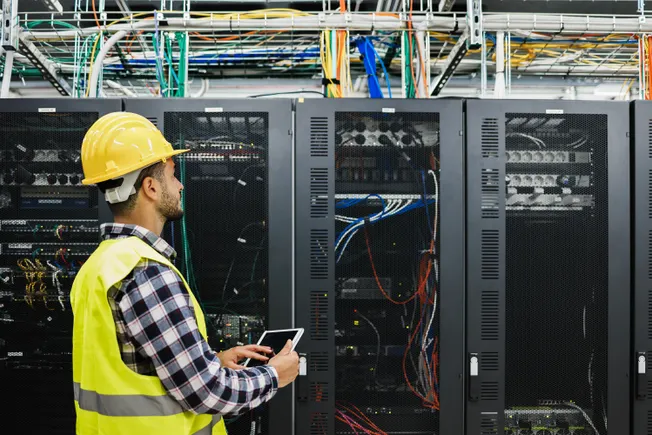
Data centers could account for a growing share of U.S. electricity load growth by 202844%, consumingup to 9% of the nation's electricity supply by 2030, raising concerns about their impact on electricity availability and costs. The U.S. National Renewable Energy Laboratory (NREL) notes thatup to 40% of data center electricity consumption is used for cooling, making improved cooling efficiency a key strategy for reducing overall energy consumption. Cooling systems are also a core element of data center design, directly influencing how facilities are developed, built, and retrofitted.
In the second half of 2024, several companies made significant announcements related to data center cooling systems. These systems protect high-performance processors and servers that support the advanced computing required for artificial intelligence. In December, Microsoft and Schneider Electric each released efficient liquid cooling system designs to supportincreasingly powerful AI chips. Microsoft's water-based design uses a closed loop, eliminating waste from evaporation; whileSchneider Electric's data center reference designuses a non-water refrigerant. Earlier,Vertiv and Compass Datacentersshowcased their "first-of-its-kind" hybrid liquid-air cooling system, with plans to deploy it in early 2025.
Below are insights from data center cooling experts on trends for 2025 and beyond.
Two-phase liquid cooling will enter mainstream implementation
According to AFCOM's 2024 State of the Data Center Industry Report,most data center professionals are dissatisfied with existing cooling solutions. Of those, 35% said they regularly adjust due to insufficient cooling capacity, and 20% said they are actively seeking new scalable systems.
Several experts predict that data center developers and operators will increasingly turn to two-phase direct-to-chip (DTC) cooling technology to improve cooling performance. These systems switch a working fluid—typically a non-water refrigerant—between liquid and vapor states, a process that "plays a critical role in heat removal," according toAccelsius, a designer of direct-to-chip liquid cooling systems.
Accelsius CEO Josh Claman said in an interview that 2025 will be the "year of implementation" for two-phase systems, and as the industry becomes more familiar with the technology, advanced data centers with higher computing demands are more likely to adopt two-phase cooling.
Traditional air cooling hits its physical limits at server rack power densities of around 70 kilowatts—a level that is already the benchmark for today's most advanced AI training facilities, said Sarah Renaud, vice president of advisory services at ENCOR Advisors. With future rack densities set to be even higher, "two-phase is the way forward," Renaud said. "It can handle higher power densities and heat fluxes, making it better suited for AI workloads."
Hybrid cooling will expand, but supply chain risks loom
According to research jointly released in March 2024 by Chemours, Syska Hennessy Group, and cooling system designer LiquidStack, two-phase immersion cooling has a lower10-year total cost of ownershipthan direct-to-chip cooling or single-phase immersion cooling. However, its high upfront costs, the long service life of traditional cooling systems, and the varied cooling needs within data centers mean that two-phase technology will coexist with other technologies for some time.
"Almost no new data center will be entirely air-cooled or entirely liquid-cooled, because not all applications need intensive liquid cooling—think of rarely accessed archived data versus generative AI," Renaud said. "For those lower-demand racks, air cooling is more cost-effective."
Nick Schweissguth, director of product and partner enablement at LiquidStack, said Microsoft's closed-loop water cooling system "seems to align with an incremental strategy" that meets near-term needs while "allowing its infrastructure to easily transition to advanced cooling technologies like direct-to-chip two-phase when the time is right."
But Schweissguth warned that data center operators' hybrid cooling plans could be complicated by supply chain issues, which could be worsened by anticipated tariffs from the Trump administration. He specifically pointed to direct-to-chip coolant distribution units (CDUs)—used to keep processors submerged in fluid—as being particularly at risk.
With CDU demand surging in 2025, "companies vying for the direct-to-chip market will ultimately be defined by their ability to scale production and build strong relationships with suppliers," Schweissguth said.
Building and system design will evolve to support 24/7 operation
Steven Carlini, vice president of innovation and data centers at Schneider Electric, said operators' expectations for the most advanced AI data centers exceed those of any previous generation of facilities. Early facilities might have average workloads of only 30% to 40% of total processing capacity, whereas AI facilities typically run at 100% capacity for weeks or even months while training models, requiring more robust and redundant designs.
"This eliminates variability, but you have to make sure the cooling system design can support that," he said.
Carlini described a near future where higher rack power densities require heavier cooling infrastructure, adding physical burdens to data center design. For example, his team recently worked on designs involving "enormous" pipes, "large steel cages covering superclusters," or two-story layouts with the first floor built directly on a concrete slab to bear the extra weight. "All that water has to go somewhere," he said.

'Slow but steady' retrofit activity
Accelsius's Claman said retrofitting operating data centers to accommodate more powerful processors is a huge technical and logistical challenge, leading some to believe new construction is easier than retrofitting. But he noted that new buildings consume significantly more resources, which could affect corporate sustainability goals. Additionally, existing data centers often have more stable power supplies—"that's why they're located where they are, and they're not easy to move."
According to JLL's 2025Global Data Center Outlook, most of the asset value in operating data centers is concentrated in power supply and infrastructure, such as electrical, plumbing, and other technical systems. Given the difficulty of securing power for new developments, these assets are especially valuable. Therefore, initiatives like retrofitting existing data centers for liquid cooling will "become a viable solution and an opportunity to enhance asset value," the JLL outlook said.
Renaud noted that Meta isconverting existing data centers to liquid cooling, "because they say they have to"; and colocation giant Equinix announced in December 2023 that it wouldextend liquid cooling to its 100 data center facilities。
Claman predicts retrofits will proceed "slowly but steadily," with a "more balanced discussion" around their benefits. Schneider Electric is also betting on this trend, recently partnering with Nvidia to releasethree retrofit reference designsto help operators improve performance without redesigning facilities.
Carlini said the rapid pace of computing power improvements means that data centers at the cutting edge today may soon fall behind, further intensifying the challenge of designing facilities with both air and liquid cooling infrastructure. "Ten years ago, you would design for more capacity than you needed and then scale up gradually, but now you don't know what power density to build for," he said.
Northern climate facilities may gain an advantage
According to Carlini, air still handles 20% to 30% of the cooling load even in newer data centers. This is prompting efficiency-focused developers to locate more facilities in the "attic"—the industry's informal term for colder northern regions, Renaud and Claman said.
"The market often talks about 'free cooling zones,'" Claman said, referring to regions like the northern United States, Northern Europe, and Canada. In colder climates, energy consumption for air cooling systems can be reduced by up to 95%, Renaud said. "We're seeing a trend toward hybrid colocation strategies: infrequently accessed data can be stored in more remote, colder locations," while high-traffic facilities continue to operate in warmer, more established data center hubs like Northern Virginia.
Cold climate sites also have less need for water-intensive evaporative cooling systems—common in warm, dry regions and a source of concern over data centers' environmental impact, Claman said. He predicts the industry will shift toward closed-loop systems that can leverage seasonal free cooling. "There's a lot of scrutiny around draining aquifers to cool data centers," he said.