
Santee Cooper Plans to Sell Unfinished Nuclear Reactors: What Comes Next?
South Carolina utility Santee Cooper launched a bidding process in January to seek potential buyers to acquire and complete the two unfinished AP1000 reactors at the V.C. Summer Nuclear Station. The project, halted since 2017, has already seen $9 billion invested. Experts note that if the bidding succeeds, the new units could be completed within 5 to 8 years, but face multiple challenges including equipment condition, financing, and supply chain issues.
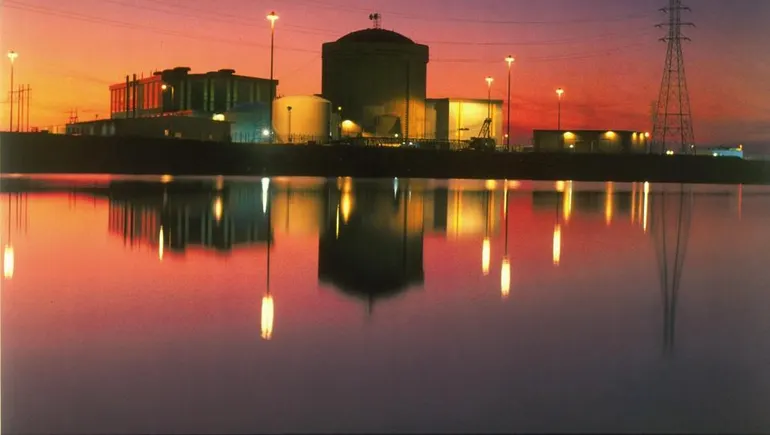
In January, Santee Cooper, a South Carolina utility company,took its first public step, launching a process that could last several years, aimed at completing construction of the two unfinished reactors at its Virgil C. Summer nuclear plant, or finding an "alternative use" for them.
The CEO of Santee Cooper citedan anticipated surge in electricity demand—from "advanced manufacturing investments, AI-driven data center demand, and the tech industry's zero-carbon goals"—to emphasize the potential of VC Summer Units 2 and 3 to "produce reliable, carbon-free electricity on a significantly shortened timeline" compared to new nuclear plants.
Santee Cooper did not take on the responsibility of completing these two 1,117-megawatt AP1000 reactors (which have beenmothballed since July 2017), but instead hired investment bank Centerview Partners to lead a request for proposals (RFP) to parties interested in acquiring the project. The proposal deadline is May 5.
Experts told Utility Dive that it is uncertain whether the RFP process will yield a viable completion plan. If it does, the new units could be completed and operational within 5 to 8 years, provided a comprehensive site audit is conducted.
What happened at VC Summer—and who might take over?
Santee Cooper and co-owner South Carolina Electric & Gas (SCE&G) began construction of VC Summer Units 2 and 3 in 2013. Four years later, after spending $9 billion, they agreed to terminate the project due to slower-than-expected progress, escalating cost estimates, and the bankruptcy of the main contractor, Westinghouse Electric.
The disaster led to the entire membership of the South Carolina Public Service Commission beingremoved from officeand nearly caused the collapse of SCE&G's parent company, SCANA, which was acquired by Dominion Energy in 2019. Two executives each from SCANA and Westinghouse were latercriminally charged。
The U.S. Nuclear Regulatory Commission in 2019approvedthe project co-owners' request to terminate their combined operating license.
Although South Carolina ratepayers are still paying for the construction costs incurred in the 2010s, interest among policymakers in completing the project has grown as the state's population and manufacturing boom. In his January State of the State address, Republican Governor Henry McMaster mentionedproposed reformsto accelerate the development of new natural gas and nuclear generation in South Carolina, andsaid the project could"spark a national nuclear renaissance."
"Restarting these two reactors would not only help meet our state's future electricity needs, but would also... stimulate investment and construction of new nuclear generation across the country," he said.
According to a member of the state nuclear advisory committee who toured the site last year, the abandoned construction site is "actually in pretty good shape." Santee Cooper CEO Jimmy Staton told state lawmakers in January that the utility had sent seven confidentiality agreements to companies interested in the project.
Serious RFP responses could come from groups led by "financial-type organizations" or large companies that are "willing to put up a lot of money upfront to restart construction," said Eugene Grecheck, principal of Grecheck Consulting and a former president of the American Nuclear Society.
But given the project's troubled history, bilateral offtake agreements like the20-year, 835-MW power purchase agreement between Microsoft and Constellation Energy(for the restarted Crane Clean Energy Center) are unlikely, said Juliann Edwards, chief development officer at The Nuclear Company, which aims to bring 6 GW of new nuclear capacity online within the next decade. Edwards described The Nuclear Company as a "bystander" in the VC Summer RFP process.
"I don't see a world where a ratepayer or [local] large industrial user wouldn't benefit from the electricity," Edwards said. She noted that power-hungry companies like steelmaker Nucor have a long-standing andgrowing presence。
Possible operating models
The pool of potential license holders and eventual operators is small and may include large utilities with nuclear operating experience in the region—such as Duke Energy, Dominion Energy, and Southern Company, Edwards said.
Dominion Energy operates and owns two-thirds of VC Summer Unit 1. But Dominion currently has "no contractual or legal involvement in whatever might happen with [Units 2 and 3]," Grecheck said.
A future owner of the unfinished units might adopt an operating model similar to that of theNuclear Management Company, a now-defunct operating company formed around 2000 by a consortium of five utilities to run six nuclear plants in the upper Midwest, Grecheck said. NMC operated these plants on a "cash-for-services" basis but did not own the facilities or their output, thereby reducing its financial risk, he said.
In any case, the ownership group and license holder would need to take on significant risk to move the VC Summer project toward operation, or find "creative ways" to mitigate that risk, Grecheck said.
"Federal financing or loan guarantees would make [this] more acceptable," he said.
The U.S. Department of Energy is expected toreprioritizearound reliable energy resources like natural gas, geothermal, and nuclear, experts say, but the DOE's Loan Programs Office—with hundreds of billions of dollars authorized but unspent on hand—has beeneffectively silent since the final week of the Biden administration. The DOE did not respond to a request for comment.
What would it take to complete VC Summer Units 2 and 3?
Regardless of federal financing, the state nuclear advisory committee's November report that the site is in better-than-expected condition "is a very important step" that boosts public confidence in the project's viability, said Craig Stover, senior project manager for advanced nuclear technology programs at the Electric Power Research Institute.
Although its condition is unclear, the fact that workers completed the switchyard serving the new units before abandoning the project could also be a positive factor, Stover said. However, any potential owner would need to conduct a more thorough inspection of the site, equipment, and associated quality assurance documents to determine how much remediation is needed, he added.
Such inspections could bring unexpected bad news, Grecheck said. He cited the decades-long saga of the Tennessee Valley Authority's (TVA) unfinished Bellefonte nuclear plant in Alabama, a roughly 2,500-MW facility abandoned in 1988 with its two units estimated to be 90% and 58% complete, respectively. But after "subsequent asset recovery activities and more recent inspections of remaining equipment," TVA in 2009 revised its completion estimates down to55% and 35%。
TVAsoldthe Bellefonte site in 2016 to a group led by a local real estate developer that intended to complete construction, but it backed out of the deal two years later and in 2021withdrew its construction permit, likely shelving the project permanently.
Determining equipment condition after a long period of inactivity is difficult, especially without comprehensive maintenance records, Grecheck said. This contrasts sharply with the "known quantities" involved in theongoing efforts to restartthe prematurely retired reactors at Palisades, Duane Arnold, and Three Mile Island, all of which operated reliably for decades, he said.
In some respects, the aspects of the project that were never started may be less risky, said Kate Fowler, global nuclear leader for Marsh's Global Specialty Energy and Power division, a commercial insurance company.
"In that case, you're just bringing in new equipment, and the challenge is the supply chain," she said. "But new equipment might be easier to manage than proving existing equipment can be restarted."
From an insurance perspective, the VC Summer project "might not look much different from an ordinary construction process," although any insurer would want to conduct its own very thorough due diligence, Fowler said.
TVAcompleted Watts Bar Unit 2in 2016, after a 22-year hiatus from 1985 to 2007, and with further design modifications in the early 2010s following the Fukushima Daiichi accident in Japan, demonstrating that—unlike Bellefonte—successfully resuming construction of a mothballed fission plant in the U.S. is possible, Fowler said.
Still, it won't be quick or easy. Until more information about the site's condition is released, none of the experts interviewed by Utility Dive were willing to guess the cost of completing VC Summer Units 2 and 3. As for the project duration, Grecheck said it could be done in five years or less, provided a capable project management team efficiently advances licensing, workforce development, and procurement in parallel, while Stover predicted seven to eight years. Edwards and Fowler declined to estimate a completion date.
"I encourage all participants... to be fact-based after thorough review," Edwards said.
All agreed that the VC Summer project would benefit from lessons learned at Georgia Power's nearby Plant Vogtle, where thousands of workers—many of whom still live in the area—recently completed construction of the first two operating AP1000 reactors in the U.S.
"When you compare a project like this, with so many parts essentially complete, it does look faster than starting from scratch," Stover said.