
Are tariffs good or bad for the U.S. energy storage industry? Experts say it's complicated
The Trump administration's aggressive trade policies are impacting the United States' booming energy storage industry. Analysts and corporate insiders point out that without clarity on long-term import tariffs, industry challenges may continue to deepen over the next year or two until global supply chains rebalance. Despite short-term turbulence, the industry remains optimistic about its prospects, with some expecting protectionist policies to boost U.S. battery manufacturing in the long run and potentially open space for lithium-ion alternative technologies.
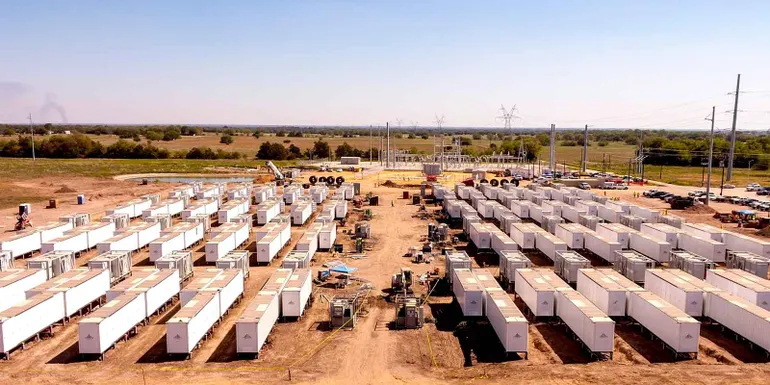
U.S. President Donald Trump's confrontational and chaotic trade policies have begun to weigh on the country's booming energy storage industry—stock analysts are turning cautious on equipment manufacturers that rely on imports, and project developers are delaying investment decisions. Analysts and company insiders say that without clearer signals on long-term import tariff policy, the challenges facing the industry could deepen over the next year or two before global supply chains have a chance to rebalance.
"We are in a world that is very different from last month," said Ravi Manghani, senior director of strategic sourcing at Anza Renewables.
The most significant impact of the "Liberation Day" tariffs may be a sharp contraction in commercial energy storage development in key markets such as Texas, Manghani said. Trump has since rolled back those tariffs for most countries, but has maintained three-digit rates on Chinese imports. While project developers with signed offtake agreements can choose to renegotiate prices with customers, commercial developers planning to break ground in 2025 may simply wait until next year—and hope the issue is resolved by then. According to him, this is already happening sporadically.
Despite short-term turmoil, and the fact that global supply chains mean even most U.S.-based manufacturers need to source inputs from overseas, energy storage industry insiders told Utility Dive they remain optimistic about the sector's prospects. Some expect protectionist policies to boost U.S. battery manufacturing in the long term and—perhaps—open a door for alternatives to lithium-ion technology.
"We are watching a movie we have never seen before"
According to the Peterson Institute for International Economics, the average U.S. tariff on Chinese imports now stands at 124.1%, six times higher than at the start of Trump's second term.
BloombergNEF energy storage analyst Isshu Kikuma said that rate is enough to push the cost of deploying a four-hour lithium-ion battery energy storage system in the U.S. above 2023 levels.
"We have not yet updated our installation forecasts, but we expect a sharp drop in near-term annual additions, especially after 2025, due to higher-than-expected costs and looming policy uncertainty," Kikuma said.
Although some stationary storage developers are already rushing to complete construction in 2025 to beat the scheduled 17.5% increase in existing Section 301 tariffs next year, "many projects in the pipeline will be severely affected," putting longer-duration developers into a "wait-and-see" mode, he added.
The willingness of battery supply chain companies to absorb import tariffs has effectively disappeared, forcing buyers to make difficult choices, Manghani said: absorb the costs themselves, delay deliveries until—hopefully—prices fall, or attempt to renegotiate offtake agreements to reflect higher energy storage system costs.
Whether offtakers are willing to cooperate is another question. Manghani said that in a rapidly changing environment, both parties may prefer to delay projects by several months rather than renegotiate terms. Developers and customers had a similar precedent during pandemic-induced supply chain strains—when electrical equipment prices rose and lead times lengthened—but the scale of this tariff shock is unprecedented, he added.
"We are watching a movie we have never seen before," Manghani said.
Stationary storage deployments typically require a 12-to-18-month planning cycle, so projects with firm supply contracts already signed for 2025 delivery were likely negotiated last year, and their bottom lines may not be severely impacted, said Kelcy Pegler, CEO of FlexGen. But if current uncertainty persists, that will change.
"It's difficult to sign contracts in a tariff environment of over 100%," Pegler said. His company, which offers an energy management system not tied to specific equipment vendors, has been working with customers to find alternative sourcing options.
For commercial developers with tight timelines and no offtake agreements to renegotiate, project economics "could be completely overwhelmed," potentially freezing this segment, which accounts for 25% to 30% of the U.S. stationary storage market, Manghani said. This would disproportionately hit the Electric Reliability Council of Texas (ERCOT) region, which is dominated by commercial projects, he added.
An ERCOT storage freeze could amplify the potential impact of a series of pro-fossil-fuel, anti-renewable bills in the Texas legislature this spring. For example, S.B. 388 would require that for every new megawatt of wind or solar capacity added to the ERCOT grid, one new megawatt of "dispatchable" generation—excluding batteries—be added.
Planning amid uncertainty
Trump says tariffs are key to revitalizing U.S. manufacturing, although experts expect companies across industries to hold off on large-scale manufacturing reshoring plans amid ongoing uncertainty.
The generous 45X manufacturing tax credit in the Inflation Reduction Act has driven billions of dollars in U.S. battery supply chain investment, particularly in downstream segments such as cell and module assembly.
But Evelina Stoikou, senior energy analyst at BloombergNEF and head of the firm's battery technology and supply chain research, noted that U.S. lithium-ion battery cell factory construction can take up to three years, so much of the capacity announced after the IRA's passage in August 2022 has yet to come online. And the U.S. has very limited production capacity for inputs such as anode and cathode active materials, which Stoikou said are among the most costly components of a battery cell.
Therefore, while sustained protectionist policies are likely to push U.S. energy storage buyers toward American-assembled batteries, tariffs on key inputs mean these locally produced alternatives will also be more expensive, Stoikou said.
The U.S. does have abundant raw materials for lithium-ion batteries, including a vast lithium deposit in inland Southern California and potentially even richer deposits beneath the south-central U.S.—which ExxonMobil plans to mine later this decade. Canada also has abundant mineral resources, making it particularly well-suited to be a future "upstream powerhouse," Manghani said.
But because mineral extraction and processing are complex, capital-intensive businesses with payback periods spanning decades, they require a level of long-term certainty that does not currently exist, he added. The bottom line: the latest tariffs are unlikely to spur mining investments that have not already started.
This raises the question of whether tariffs can boost existing U.S. mining operations—one of the stated goals of the administration. For example, an active mine in Wyoming produces tens of millions of tons of soda ash annually, a key precursor for sodium-ion batteries—which advocates hope will eventually outcompete lithium-ion on cost. The U.S. also produces ample iron and phosphorus inputs for lithium iron phosphate (LFP) batteries—the preferred chemistry for stationary storage—as well as sodium-based equivalents.
"You could supply the entire sodium-ion battery industry entirely from domestic sources without needing to approve a single new mine," said Cam Dales, co-founder of U.S. sodium-ion battery startup Peak Energy.
The bottleneck currently lies further down the supply chain.
"While we have all the minerals, we don't have any intermediate processing or component manufacturing capability, which means we are currently completely dependent on imports," Dales said.
A coherent U.S. energy security policy should acknowledge the reality of China's dominance in lithium-ion and use tariffs to nurture a domestic sodium-ion supply chain—which Dales said could get off the ground by 2030.
"If there were a transitional arrangement with lower tariff rates on materials and components, gradually increasing over several years as domestic U.S. sources develop, this tariff system would be perfect for American battery companies," he said.
Who will benefit?
Until and unless that happens, Kikuma said U.S. energy storage buyers will seek to reduce their dependence on China and source more from South Korea, Japan, and Southeast Asian countries like Vietnam—which, according to reports, offered to cut tariffs on U.S. imports to zero shortly after Trump's April 2 tariff announcement.
Manghani added that Indonesia, given its abundant precursor reserves and processing capabilities, could eventually become an upstream supplier to U.S. battery manufacturers and buyers, as could resource-rich countries in the Middle East and Latin America.
In the U.S., the biggest beneficiaries of the trade war may be existing manufacturers with spare capacity. This includes Viridi, a small Buffalo-based producer that manufactures modular, "fail-safe" battery systems that are reportedly far less prone to thermal runaway than comparable products.
"We have the ability to scale up to nearly a gigawatt of annual capacity, and current commitments are far below that, so we can deliver as demand grows," said CEO Jon M. Williams. In April, Viridi announced it had acquired a Northern California production facility from Moxion—a lithium-ion battery supplier that filed for bankruptcy last August.
"Tariffs aren't all bad—depending on the outcome, they could actually tilt the U.S. economy toward renewable manufacturing... but I think no one who is truly honest can predict the outcome of these policies over the next 6, 12, or 18 months," he added.