
After Federal Clean Energy Grants Canceled, Tribal Nations Regroup to Explore Alternative Financing Paths
The Trump administration canceled clean energy grants such as Solar for All, involving over $500 million for tribal lands. Organizations like the Tribal Renewable Energy Coalition are turning to loans, philanthropy, and private capital to continue projects. The coalition launched the Weaver platform and the Pathways To Trust course to help tribes finance and build partnerships. Despite funding disruptions and project stalls, tribes still seek to shape their energy future through self-determination and regulatory capacity.
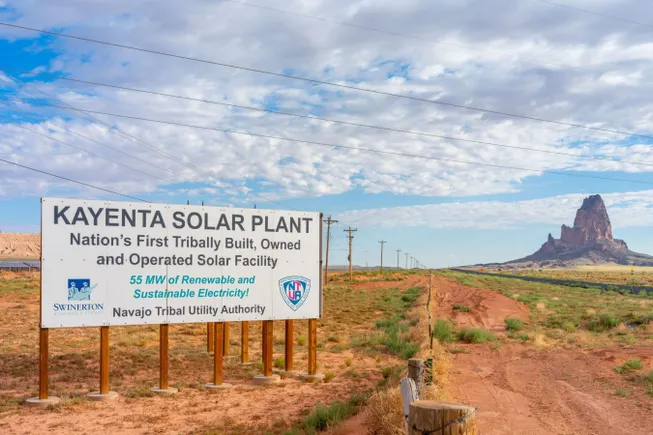
Tribal nations seeking to build clean energy projects are exploring new financing avenues after the Trump administration cut clean energy grants such as Solar for All. The Solar for All program had reserved more than $500 million for solar development on tribal lands.
The Tribal Renewable Energy Coalition, made up of 14 tribes, had previously received more than $135 million from the now-canceled Solar for All grants. Coalition CEO Cody Two Bears said during a November conference call that the coalition will continue to use the solar project plans already developed, but will seek funding sources such as loans and philanthropy.
"I think that's the positive side we got out of Solar for All — we had over a year to plan, and now we have projects ready for tribes to start putting these funds to use," Two Bears said. "I think that's our plan moving forward."
After the Trump administration took office and began canceling grants tied to the Inflation Reduction Act, "the large utility-scale projects we were moving forward on suddenly became very difficult to finance," said Chéri Smith, CEO of the Tribal Clean Energy Coalition. "That said, opportunities still exist."
Earlier this year, the coalition launched a suite of project financing and planning tools called the Weaver Platform, and is helping tribes "use that tool to build their capital structure" while "engaging with all types of investor networks to try to fund projects with private money rather than public money," Smith said.
Smith noted that the Trump administration's grant clawbacks have pulled a significant amount of federal clean energy funding from tribes. She mentioned that the coalition's grant-writing team secured $484 million in grants for 46 tribes in 2024.
That was "really exciting," she said, "and the Native Power and Lighting Fund was supposed to bridge the gap between those funds and the total cost of the projects. However, 85% to 90% of it has been clawed back."
An EPA spokesperson said that this year the agency's "base budget includes nearly $300 million to support tribes through direct grants, technical assistance, training, and more, all within our statutory authority. The Trump EPA will continue to work with states, tribes, and communities to support projects that advance the agency's core mission of protecting human health and the environment."
Our goal is very simple: we will not let any tribal project die in our hands due to frozen funds.
— Chéri Smith, CEO of the Tribal Clean Energy Coalition
While third-party capital is a strong substitute for federal funding, connecting those investors with tribal nations to finance projects is often not easy, said Clara Pratte, founder of solar company Navajo Power, during a November conference call.
"There is money in the capital markets, and there is an appetite to invest, but that money comes with many misunderstandings or misreadings about how tribes operate," she said. "As developers and practitioners, our job is to help the market clear those misconceptions and make them feel comfortable investing."
But Pratte said the investment appetite exists because vast amounts of land in the Great Plains and further west "are under tribal control and tribal authority. So if these markets don't study how to develop on these lands, that would be a dereliction of duty, and we must clear up misconceptions and make investment comfortable."
 Brandon Bell via Getty Images
"From a developer's perspective, Indian Country is essentially full of blank canvases," said Todd Halvorsen, head of energy finance and structuring at the Tribal Clean Energy Coalition. "The credit risk that the financial community perceives is not really the issue. We should be able to bring together enough good people, raise the capital needed to build these systems, provide reliable power, and let these projects generate cash flow."
The Tribal Clean Energy Coalition and the Solar Energy Industries Association launched a course in October for clean energy developers and service providers called "The Path to Trust," which "addresses common knowledge gaps that often derail cross-cultural collaboration and provides participants with practical tools to build mutually beneficial partnerships," SEIA said in a press release.
However, one cultural difference between tribes and outside developers — the specific details of laws and regulations on tribal lands — is also an opportunity for tribes to shape their energy future, said Claudio Clini, policy analyst at the Tribal Clean Energy Coalition, during a November conference call.
"We've been having discussions with tribes about issues like rolling back federal environmental safeguards in favor of tribal laws and regulations, where applicable," Clini said. "In this way, we can work toward a future of self-determination where tribes fully exercise the full force of their regulatory capacity and jurisdiction."
Reassembling projects
The $220 million Tribal Energy Resilience and Sovereignty Project aims to build a network of nested microgrids in northern California, benefiting multiple tribes. The project lost an $88 million grant after the Trump administration canceled the Department of Energy's Grid Resilience Innovation Program.
These microgrids will be supported by batteries and solar power, providing greater reliability to the tribes they serve, which sometimes experience power outages lasting up to 20 consecutive days, Halvorsen said.
We know that energy demand will only continue to grow in the coming years. Our appetite for energy will not disappear. As for tribal communities, we must be participants in this world.
— Clara Pratte, founder of Navajo Power
The Tribal Clean Energy Coalition has been working to replace lost federal funding through partnerships, philanthropy, and other sources.
"It took about six months to go from extremely discouraging meetings (with low morale) to slowly shifting toward 'maybe we can do this, maybe we can reassemble it,'" said Halvorsen, whose team is coordinating the project's capital raising and financial structure. "We are talking to the vast majority of impact investors in this space and building community — not just in supply chain and development talent, but also in the financial world, whether public or private."
Although tribal nations are working hard to save many ongoing projects, the disruption caused by the sudden loss of funding is enormous. Pratte said that losing not only the projects themselves but also the associated jobs is "truly devastating for many communities."
"It creates a ripple effect — hotels, construction communities, utilities, all of that suddenly takes a big hit," she said.
"Government changes and policy shifts have certainly had a profound impact on tribes," Smith said. While several coalitions are suing the Trump administration over the cancellation of Solar for All funds, the coalition chose not to litigate but instead to help tribes "preserve the value of the work they've already done," she said.
However, Clini said in November that the coalition is continuing to work with the Federal Energy Regulatory Commission to secure an exemption for tribes from the $5 million commercial readiness deposit required to remain in the interconnection queue. The coalition has argued to FERC that tribal interconnection requests are not speculative and that the deposit is impossible for most tribes to pay.
 Brandon Bell via Getty Images
Even before President Donald Trump won reelection and began rescinding IRA funds, the coalition anticipated the possibility and launched a program called "Solar for All TRIBES," designed "to ensure that the six funded tribal coalitions would not lose momentum due to political shifts," Smith said.
"We are triaging stalled projects and stranded engineering work every day, and we see it as our duty to protect that progress," she said. "Our goal is very simple: we will not let any tribal project die in our hands due to frozen funds."
Benefits of alternatives
Halvorsen said that even before Solar for All funds were rescinded, he was concerned the program might have problems.
"I saw many flaws and was already thinking about how to do it better. What would be the alternative to this program?" he said. "I was already worried about unfriendly government challenges and the possibility that some funds could be frozen or clawed back."
He was particularly concerned about the requirement that Solar for All projects guarantee a 20% savings on end-user electricity bills — a requirement he believes makes little sense for projects on tribal lands.
Scale is critical to making these projects financially viable, because any deployment of renewable energy has many intermediate costs.
— Todd Halvorsen, head of energy finance and structuring at the Tribal Clean Energy Coalition
"Those calculations themselves can be very difficult to complete, so there is a lot of room for challenges," he said. "When there are so many communities at the end of power lines that can't get reliable electricity, why is a 20% savings the most critical thing?"
Halvorsen said he sees a mindset shift from grant-funded projects to third-party financed projects, where tribes "retain ownership from the start" and can leverage the IRA's direct pay mechanism — which allows tax-exempt tribal nations to benefit from the legislation's tax credits — as an underwriting mechanism to "bring in construction and term financing."
With many of the IRA's clean energy tax credits set to expire under the One Big Beautiful Bill Act, and tribes being tax-exempt entities, "structuring these projects in a way that makes sense for all parties, with tribal ownership, is truly critical," Pratte said.
After OBBBA passed, "I think we have to figure out where to find capital and where to continue doing good work, because we know energy demand will only continue to grow in the coming years," Pratte said. "Our appetite for energy will not disappear. As for tribal communities, we must be participants in this world."
One of the coalition's goals is to apply "all the good, bad, and ugly lessons learned" from the residential and commercial solar industry to tribal lands, to "develop, finance, build, and operate projects from the start with tribal developers and tribal asset owners at the core of the project," Halvorsen said.
"The more similar projects you can accomplish per dollar spent, the more efficient the whole program becomes," he said. "Scale is critical to making these projects financially viable, because any deployment of renewable energy has many intermediate costs — whether it's a single residential project, a hundred residential projects, a 100-kilowatt project, or a 100-megawatt project."
Halvorsen said that as tribal nations have accepted the formal cancellation of Solar for All and other federal clean energy funding, they have been able to shift to new ways of thinking about how to finance these projects.
"Indian Country has an aversion to debt, so the focus has always been: if the federal government has free money, we go there first, and then we consider taking on any form of liability through debt financing," he said. "But now we're increasingly hearing, 'Oh, yeah, that's how we do it at the casino. Why can't we do it for our clean energy plants? These plants will become economic engines — potentially even more than the casino.'"
These conversations happening now are "perhaps perfectly timed, for whatever reason," Halvorsen said. "I am very encouraged that we will see the first large-scale residential solar project portfolios developed and built in 2026."
Editor's note: This story has been updated to include comments from an EPA spokesperson.