
As U.S. Load Grows, Distributed Energy Resources Usher in Opportunities for Large-Scale Development
U.S. electricity demand is projected to grow by about 128 gigawatts over the next five years, and traditional large-scale grid investments may lead to stranded assets. Distributed energy resources, particularly community-scale solar and storage ranging from 1 to 10 megawatts, can be interconnected within months to relieve local grid pressure. Jigar Shah, former director of the U.S. Department of Energy's Loan Programs Office, notes that states need to legislate for grid data transparency and streamlined interconnection processes, and proposes four principles to achieve large-scale deployment within 18 months while protecting consumer interests.
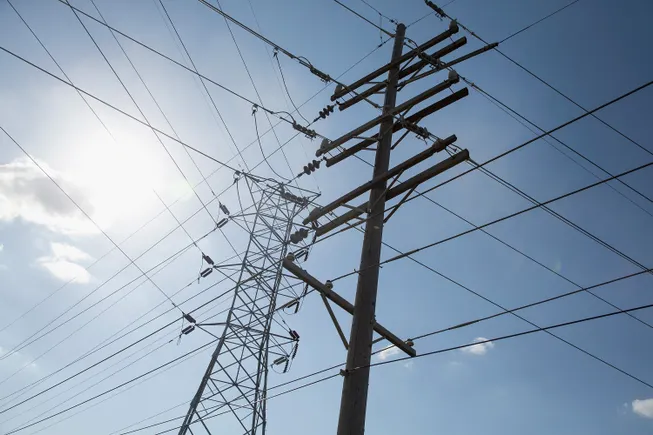
The United States is facing a new wave of electricity demand growth, and states that stick to the traditional approach of meeting peak loads as they have over the past few decades may miss a golden opportunity. According to forecasts, U.S. electricity demand is expected to increase by about128 gigawattsover the next five years, one of the largest increases in decades. If states continue to follow the old approach—meeting just 50 hours of peak load through massive capital expenditures—customers will be forced to pay for an underutilized grid. New generation and transmission infrastructure are certainly necessary, but in the short term, the smartest path is to unlock the potential of the existing system.

Distributed energy resources (DERs) are the key to breaking this deadlock, especially community-scale solar and storage projects, typically ranging from 1 megawatt to 10 megawatts. If strategically deployed on the distribution system, these resources can provide flexible capacity near load growth points, and can connect to the grid far faster than large transmission-side generators, which often face years of supply chain delays. However, unlocking this value cannot rely on setting goals alone; it also requires procurement mechanisms that incentivize utilities to act quickly and enforce strict cost and availability standards on developers.
Although customer-side resources play an important role, the biggest near-term opportunity lies in the distribution system itself. Front-of-the-meter community-scale storage—utility-side assets rather than customer-owned—can be precisely deployed at substations and feeders (the distribution lines that supply power to communities) where relief is most needed. This precise deployment must be coordinated with utility planning, so utilities must open up their data.
Author Jigar Shah has worked to deploy clean energy at scale as an entrepreneur, investor, and director of the U.S. Department of Energy's Loan Programs Office. He emphasizes: "This is not about ideology; it's about results." Utilities must be able to rely on these assets, sometimes dispatching them directly. But to add capacity quickly, affordably, and reliably,utilities must be transparent about where installations will be located—that is the core demand.
The urgency is especially acute in regions like PJM Interconnection (covering the mid-Atlantic and Midwest), where customers are already feeling the consequences of congestion and a slow system. The interconnection wait time for transmission-side generators isabout eight years on average, a striking mismatch with the high rate increases and emergency load demands facing the region. In contrast, distribution-side assetscan be interconnected within monthsand are closer to actual load growth points. Even a small improvement in grid utilization can control distribution costs—and distribution costs are the single largest factor driving up customer electricity bills.
The industry is gradually shifting toward this faster, more flexible model. At the 2026 CERAWeek conference, more than 30 major players—including utilities, independent system operators, hyperscale data centers, and technology suppliers—supported a new initiative led by the Electric Power Research Institute (EPRI)aimed at standardizing the definition and application of "flexibility" to accelerate "time to power." This reflects a growing industry recognition that current planning processes rely too heavily on worst-case assumptions, and that smarter use of existing assets can unlock capacity far faster than new construction.
However, industry consensus alone is not enough. States need to pass legislation requiring higher grid utilization, unlocking utility data, and pushing the transition from pilots to full-scale deployment. Community-scale front-of-the-meter storage and solar projects are localized and modular, and can be built within 6 to 18 months. With sound project design, developers are ready to deliver tens of gigawatts of efficient, affordable capacity that matches the pace and geographic distribution of load growth.
Evidence already showsthis path can reduce costs. U.S. Department of Energy analysis shows that virtual power plants can provide reliability at significantly lower cost than traditional options, and if deployed nationwide,could save up to $10 billion annually. Massachusetts estimates that optimally deployingabout 1,800 megawatts of distributed storage and solar could yield $2.3 billionin customer savings. Similar analyses show Ohio also has billions of dollars in potential, whilenationalmodeling indicates that deploying storage and solar to shift up to 20% of peak demand could cumulatively save up to $170 billion.
So the question is not whether distributed capacity should scale—it may be the only option capable of addressing current demand within the next 18 months. The key is whether states know how to design projects to establish cost discipline and truly protect customers.
Achieving this requires genuine market building: start fast, learn fast, remain flexible, and protect ratepayers. The community solar industry has spent 15 years building the expertise, financing structures, and local relationships needed for large-scale deployment. States should expand the scope of this industry to include distributed battery storage and ensure all parties are held accountable for reducing costs.
The following four principles should guide this effort:
First, require utilities to share data and identify grid needs.
If a state needs distribution-side capacity, it should specify where it is needed and remove barriers for developers to access sites and deliver projects quickly.
Second, benchmark costs and risks across ownership models.
The core question is not just how much it costs, but who bears construction, performance, and technology risks, and whether that allocation delivers the best outcome for customers.
Third, apply consistent interconnection and operational standards to all projects.
If utilities can identify constrained lines, they should also be able to streamline the interconnection process so projects can move forward faster without sacrificing reliability.
Fourth, maintain strong commission oversight and transparency.
State regulators need clear, ongoing visibility into costs, performance, and the actual grid value delivered, not just promises.
None of this is opposed to long-term transmission construction—that work is critical and must continue. But states cannot afford to wait for new transmission lines while the load crisis deepens. The best near-term answer is to deploy distributed storage into the grid they have already paid for, and through competitive, transparent programs, give utilities a real role, offer third-party developers a fair chance, and deliver measurable value to customers.
States that seize this opportunity will achieve faster scaling, lower costs, and build more durable energy markets. The tools are ready, developers are ready, and what is needed now is the policy will to drive action.