
PSEG plans to participate in PJM bilateral contract process to provide power supply solutions for large loads
PSEG's unregulated generation unit is exploring supplying power to data centers through PJM Interconnection's backup reliability program and has submitted multiple supply proposals during the bilateral contract phase. PJM intends to meet large load demand through a one-time capacity auction and a bilateral contract matching process, with the first batch of bilateral agreements potentially announced in August.
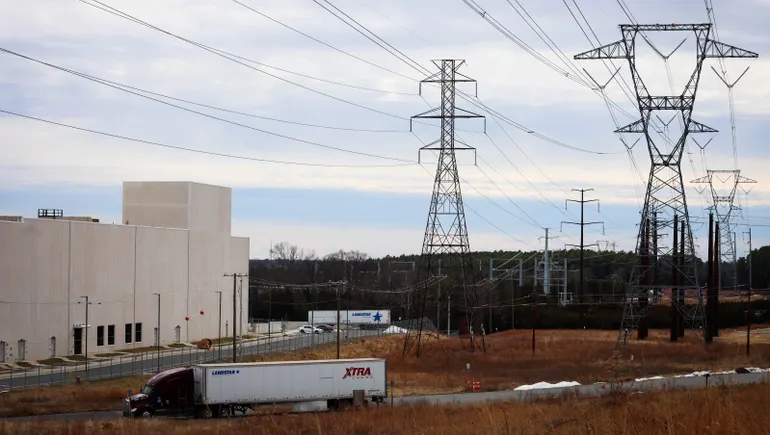
The unregulated power generation unit of Public Service Enterprise Group (PSEG) is exploring opportunities to supply power to data centers through PJM Interconnection's backup reliability program. Company executives revealed this move during an earnings call on Tuesday (August 4).
PJM has proposed a two-phase process to address large load demand: one is a one-time capacity auction scheduled to start on September 30; the other is an already-operating process that matches power suppliers with planned large loads, which will ultimately lead to long-term bilateral contracts.
The first batch of bilateral agreements may be announced in August, but the entire process could extend into next spring.
According to PSEG Chairman, President, and CEO Ralph LaRossa, PSEG Power, the unregulated subsidiary of PSEG, has submitted multiple power supply proposals in New Jersey and other PJM regions during the bilateral contract phase of the PJM initiative.
"As PJM advances this (backup reliability auction) mechanism, opportunities for long-term (power purchase agreement)-type or utility-like agreements increase, and we see potential opportunities emerging," LaRossa said.
LaRossa declined to provide more details, saying PJM's plan is still evolving, including its load forecast.
For example, PJM said on Tuesday that it lowered its 2031 load forecast for the northern Illinois region by 1.3 gigawatts and its 2034 forecast by 3.3 gigawatts, based on a reduction in Commonwealth Edison's data center pipeline. This change could affect transmission facility development within PJM.
PSEG Power is also continuing discussions with potential customers who "value our existing nuclear generation capacity, future nuclear uprates, and other generation opportunities," LaRossa said.
As of the beginning of this year, PSEG Power had approximately 3,760 megawatts of nuclear generation capacity in New Jersey and Pennsylvania.
Key data at a glance
The following data comes from PSEG's second-quarter 2026 earnings presentation materials:
- $334 million: PSEG's second-quarter net income, lower than the $585 million in the same period last year, mainly due to changes in mark-to-market positions.
- 1%: The weather-adjusted increase in electricity sales over the past 12 months for Public Service Electric and Gas, PSEG's New Jersey subsidiary.
- $40 million: The estimated loss to continuing operations earnings if PSE&G loses its 0.5% return on equity adder due to losing PJM membership.
New Jersey utility business model reform draws attention
PSEG executives are "encouraged" by a report released last month by the New Jersey Bureau of Public Utilities (BPU) that explores potential changes to the state's utility business model, LaRossa said.
The report highlights several "promising regulatory frameworks," including multi-year rate plans, performance-based rates, and earnings sharing mechanisms, LaRossa said.
The options listed in the report can "further promote alignment and transparency among the utility business model, state energy policy goals, and affordability," he said.
The BPU has entered the second phase of the review process, which is expected to focus on cost discipline, financing modernization, incentives and shared savings, and performance-based rate setting, LaRossa said.
Capital expenditure guidance and growth outlook
Looking ahead, PSEG maintains its previously announced five-year capital expenditure guidance for 2026 to 2030 of $24 billion to $28 billion, with more than 90% directed to regulated businesses, primarily for replacing aging infrastructure. The Newark, New Jersey-based company stated this in its earnings presentation.
However, PSEG sees opportunities for additional spending.
"We continue to pursue nuclear revenue opportunities, competitive transmission projects, and incremental utility infrastructure projects, including incremental system investments to connect solar and battery storage resources to the grid to meet new demand, which could provide upside to our growth outlook through 2030," said Daniel Cregg, PSEG Executive Vice President and Chief Financial Officer.
Excluding one-time items, PSEG expects its operating earnings to grow 6% to 8% annually through 2030.