
In wildfire-prone areas, every household should become a microgrid node
The United States is facing a severe wildfire season, and traditional underground cable solutions are costly and time-consuming. This article argues that household and community microgrids can ensure power supply more quickly and economically, citing practical cases from Colorado, Oregon, Texas, and elsewhere, and calls on regulators to reassess investment priorities.
Cameron Brooks is the executive director of Think Microgrid, a 501(c)(6) advocacy organization representing the microgrid industry.

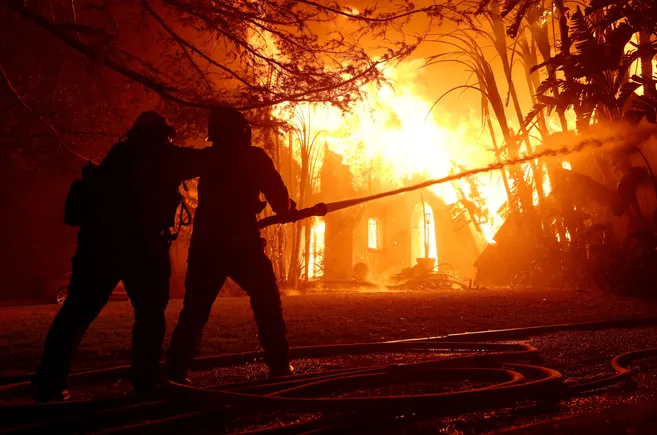
Across the country, this year is shaping up to be a particularly dangerous and destructive wildfire season. In my home state of Colorado, we have already seen more than two dozen "red flag warning" days so far this year.
One of the worst springsdroughtson record has dried out parts of the land. By mid-April, there were alreadydozens of active fires. In Georgia and Florida,eight separate fireshave destroyed buildings and forced evacuations. Experts predict that nationwide this year,5.5 to 8 million acresof land will burn, with the highest risk in the Southwest, Rockies, Great Basin, and Northwest.
Many communities are frustrated with how utilities manage the grid under wildfire threat. In the West, there is collective anxiety whenever the wind picks up. There are growing calls to "underground the lines." Underground cables have their place, but they are not the only answer, nor the complete answer. We have faster, cheaper, higher-quality options that can make communities resilient today, not years from now. Microgrids include on-site physically interconnected resources (providing backup power) and can manage their own demand (acting as virtual power plants). In a wildfire context, this means that if certain lines need to be de-energized, customers are not affected because they can operate safely in isolation from the grid.
The hidden costs of undergrounding
Burying power lines makes intuitive sense. Underground lines can stay operational and are less likely to start fires. But as a resilience strategy, undergrounding falls short because it is expensive and slow. Notably, undergrounding is also the solution that yields the greatest profits for regulated utilities.
Why? Because the economics of the regulated utility industry are upside down, creating incentives misaligned with customer interests. Investor-owned utilities make money when you invest. Who pays for undergrounding? Utility customers. This is roughly equivalent to a bank funding a home renovation and adding it to your mortgage—whether you asked for it or not. Rate increases approved by utility commissions are not much different.
Take Xcel Energy's latest wildfire mitigation plan in Colorado. State regulators approved a $200 million budget to bury 50 miles of power lines—an upfront cost of about $4 million per mile. But that is just the initial capital outlay. When financing costs spread over 25 to 30 years are included, ratepayers will pay much more.
What else could we do with that money? It could equip7,500 to 15,000 homeswith battery systems providing 24 to 48 hours of backup power, keeping them online during public safety power shutoffs. These batteries could also be paired with solar and smart controllers to help customers manage energy demand and save money (especially for those on time-of-use rates). When the grid needs flexibility, the same batteries could be called upon to provide capacity, generating further savings.
In other words, they could become microgrids capable of responding to changing grid conditions and operating independently when needed, leveraging private and community capital to further stretch ratepayer dollars. The U.S. Department of Energy agrees. They have proposed a 2035 grid vision where30% to 50%of electricity comes from grid-edge and microgrid "building blocks."
Unfortunately, these are not the solutions utilities are proposing. At Think Microgrid, we are tracking regulatory activity at utility commissions nationwide. Overall, utility plans rely heavily on public safety power shutoffs—outages that can collectively cost customers and businesses millions of dollars. On the legislative side, we see proposals to limit utility financial liability, as well as wildfire plans dominated by expensive capital solutions like undergrounding.
Beyond a single solution
Of course, some lines should be buried. But in the rush to put everything underground, we may overlook solutions that can protect communities immediately and build long-term resilience.
Undergrounding projects take years or even decades to complete. Meanwhile, as fire season approaches, communities face outages today. We have alternatives that work now: home-level and community-level microgrids. The costs of batteries, solar, fuel cells, and controllers continue to fall, while undergrounding costs rise.
Our public leaders face difficult decisions, and complex systems often limit what is practically feasible. But that does not absolve them of the responsibility to demand that the best options be on the table. When utilities present wildfire mitigation plans, our leaders should ask sharper questions about cost-effectiveness, timelines, and how much protection each dollar buys.
The economics increasingly favor distributed solutions. This technology exists today and will only get better over the coming decades. Instead of burying money in the ground, we should invest in solutions that protect communities today.
What would this look like from a regulatory perspective?
Oregon is becoming the first state to establish acomprehensive regulatory frameworkfor private and community microgrids, followingrecent legislationdirecting this, so that the resilience value of microgrid solutions costing less than undergrounding or other distribution upgrades is compensated. Many states, includingMichiganandMaine, have opened dockets exploring innovative approaches to address resilience and storm costs.Texas finalized rules last monthfor deploying behind-the-meter backup power at critical facilities such as hospitals, emergency response centers, shelters, and water infrastructure. And in Colorado,legislators permanently extendedthe state's "Community Resilience Microgrid" grant program, which supports electric cooperatives and municipal utilities in purchasing microgrid resources for eligible rural communities.
Across the country, more and more people are actively engaging in policy development and implementing practical solutions. At Think Microgrid,we are tracking as much of this activity as possibleand are eager to work with policy leaders, community decision-makers, academia, and industry to highlight such microgrid solutions. We should not wait decades and endure periodic outages to address wildfire protection. Better options do exist, but only if we demand and shape them.