
Electricity Bill Burden Sparks Protest: NV Energy Executive Interrupted by Demonstrators at Industry Conference
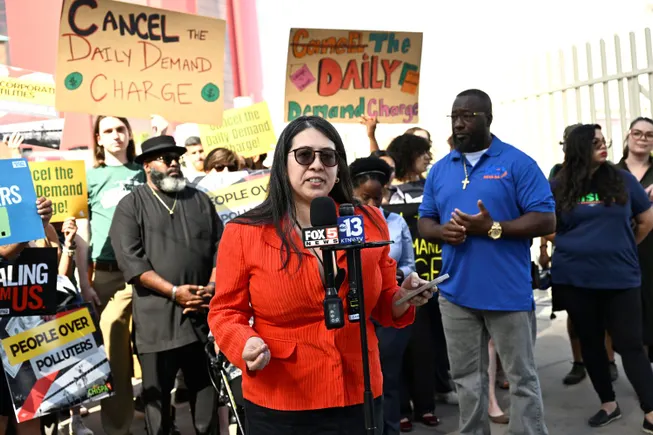
On Wednesday, at the 2026 Edison Electric Institute conference held in Las Vegas, protesters chanting slogans about electricity bill burden interrupted a speech by NV Energy President and CEO Brandon Barkhuff. After being escorted out by security, the protesters gathered outside the hotel, demanding the cancellation of the daily demand charge set to take effect on January 1, 2027, and calling for clean energy action and lower high electricity bills. The incident highlights public anger over energy costs, putting pressure on utilities and their regulators.
Key Takeaways
- On Wednesday, during the Edison Electric Institute's 2026 conference, protesters chanting slogans about electricity affordability interrupted a speech by NV Energy President and CEO Brandon Barkhuff, who was addressing about 1,000 utility executives and power industry stakeholders. The event took place at the Fontainebleau Hotel in Las Vegas.
- After being escorted out by security, the protesters spoke to the media outside the hotel, demanding the cancellation of the daily demand charge for NV Energy customers scheduled to take effect on January 1, 2027, while also calling for action on clean energy and high electricity bills.
- The confrontation shows that energy costs have sparked strong public discontent, putting greater pressure on utilities and their regulators.
Deep Dive
Utilities have made affordability a cornerstone of their public messaging as they prepare to invest more than $1 trillion over the next five years to meet surging demand—much of it from large data center loads.
In Nevada, the Public Utilities Commission unanimously approved in September a demand charge and new rate design for NV Energy customers in the southern part of the state. The commission also approved changes to the utility's net metering design, which solar advocates say will weaken customer protections and hinder Nevada's clean energy goals.

"In Las Vegas—one of the fastest-warming cities in the U.S.—you cannot survive without electricity," said protest organizer Leslie Vega. Vega, a climate equity policy researcher at the Nevada Progressive Leadership Alliance, said she lost a relative to heatstroke and views the demand charge as a rationing of air conditioning use.
"We're not just asking for lower rates. We're asking for survival," she said.
NV Energy issued a statement after the protest, saying there is "misinformation and confusion" about the daily demand charge.
"The daily demand (charge) will lower bills for most of our southern Nevada customers," the statement said. "We understand energy costs are an important issue for customers, which is why the daily demand (charge) is critical to stop subsidies that shift costs to other customers."
Demand charges are tied to a customer's peak electricity usage, and NV Energy's daily demand charge is based on the energy consumed during a customer's 15-minute peak usage period each day. The utility expects the demand charge to add about 49 cents per day to a typical customer's bill, but says that under the new structure, most southern Nevada customers' monthly bills will be the same or slightly lower than before.
Regulators and the utility say consumers worried about bill spikes from the charge can shift their electricity usage, but advocates argue this is unrealistic, especially for cooling. According to the Las Vegas Review-Journal, temperatures in Las Vegas reached 103 degrees Fahrenheit on Wednesday, and the city is experiencing its longest stretch of 100-degree-plus heat this year.
"It's impossible not to run the air conditioning during peak hours," Vega said. Outside the hotel, she joined dozens of protesters from the United Taxpayers Alliance.
The alliance demanded the elimination of the demand charge—which Vega called an "economic threat to Nevadans" who do not understand how the charge will affect their bills and cannot cope with it—along with other demands.
"We're asking for lower rates for low-income communities, more solar and green energy use, and a move away from fossil fuels," she said. "We may not be economists or engineers, but I want to remind the Public Utilities Commission that approved NV Energy's daily demand charge: their own staff economists and engineers recommended they oppose this daily demand charge."
Vega said the alliance will continue to lobby elected officials.
The Edison Electric Institute represents investor-owned utilities and organized the conference where Barkhuff spoke. In a statement, an institute spokesperson said EEI understands "people are frustrated with energy bills" and shares those concerns.
"That's why we're here—to do everything we can to lower customer bills and serve communities," the spokesperson said.
Correction: NV Energy's new demand charge is part of a broader rate redesign that the utility expects to remain revenue neutral.