
US Department of Energy Plans to Adjust Biden-Era Distribution Transformer Efficiency Rules, Utilities Express Concerns
The Trump administration is considering revising distribution transformer efficiency rules approved during the Biden era, which were originally set to take effect in 2029 and require greater use of amorphous steel. Utilities and manufacturers generally support the original rules but worry about supply chain issues, suggesting extending the compliance period rather than repealing them. Steel giant Cleveland-Cliffs supports the revision to protect its GOES product market.
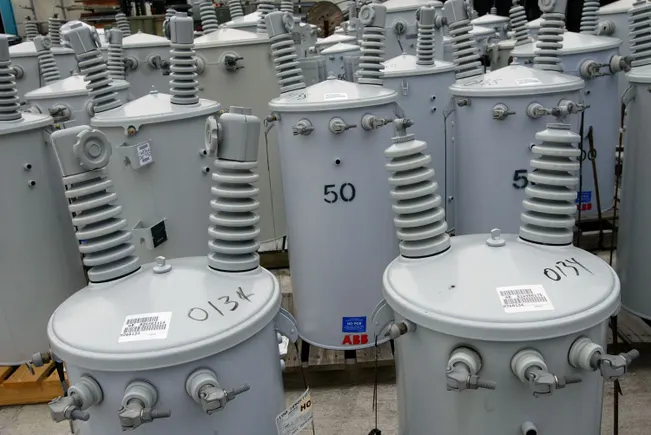
The Trump administration is considering revising a distribution transformer energy efficiency rule that won broad industry approval two years ago, raising new concerns among utilities and other power industry stakeholders about bottlenecks in grid expansion.
The new rule, originally set to take effect in 2029, adjusted transformer energy efficiency targets, requiring key grid equipment to use more amorphous electrical steel while retaining the currently most commonly used grain-oriented electrical steel (GOES).
The U.S. Department of Energy's (DOE) 2024 rule change ultimately adopted a compromise, allowing the use of both GOES and amorphous steel to ensure manufacturers could meet growing demand for grid equipment. When the rule was finalized, lead times for new distribution transformers had already reached 18 months or more, and the industry worried that a rapid restructuring of manufacturing and steel supply chains would worsen the situation.
At the time, stakeholders praised the rule for balancing energy efficiency gains with market realities.
However, the Trump administration's DOE, adopting a broad deregulatory approach, has sought to rescind multiple rules established during the Biden administration and "permanently terminate appliance and equipment mandates."
In June, the DOE issued a request for information on potential changes to the distribution transformer rule, with particular attention to the national security implications of new requirements, including "domestic manufacturing capacity, supply chain resilience, and the availability and cost of critical materials."
Although Trump has opposed energy consumption limits on light bulbs, washing machines, furnaces, and other appliances, transformers are a niche product.
"We don't know of anyone who asked for this," Andrew deLaski, executive director of the Appliance Standards Awareness Project, told Utility Dive in an email. The organization supports the 2024 transformer rule and other stricter energy efficiency requirements established during the Biden administration.
The Edison Electric Institute (EEI), which represents investor-owned electric utilities, supported the 2024 rule and told the DOE in comments filed July 15 that rather than rescinding the change, its members would benefit more from an extended compliance period, given that supply chain issues and rising costs have intensified over the past two years.
The organization said: "Compliance flexibility would preserve energy efficiency gains while providing additional time for the DOE, industry, and the electrical steel supply chain to adjust investments to the realities of the current operating environment." The industry has invested over the past two years to meet the new efficiency requirements, and "a full rescission would strand those investments, deter future investment, and undermine ongoing collaboration across the value chain."
The American Public Power Association, in comments filed July 9, said it "does not advocate for any modifications to the final rule," but added that the federal government "should continue to monitor the supply chain, particularly developments in amorphous steel, to help ensure the April 2029 transition does not lead to more constraints."
The National Rural Electric Cooperative Association said in comments filed July 14 that the 2024 rule "struck the right balance."
Most manufacturers still appear to support the changes made by the Biden administration.
The National Electrical Manufacturers Association, representing grid equipment manufacturers, said in comments filed July 15 that it "urges the DOE to avoid actions that would undermine the certainty established by the 2024 rule... The change established a framework that provides certainty and balances energy efficiency goals with manufacturing and supply chain realities."
Electric Research and Manufacturing Cooperative, a U.S. distribution transformer manufacturer, said the 2024 rule is "a reasonable, balanced, and achievable path to improve energy efficiency while enhancing the stability of the U.S. transformer supply chain."
However, at least one major stakeholder supports the DOE's reconsideration. Cleveland-Cliffs, the second-largest U.S. steelmaker, said on July 15 that it supports the DOE modifying the 2024 rule it previously backed. The company is the only North American producer of GOES for distribution transformers.
In an April 2024 statement, Cleveland-Cliffs had praised the then-new rule, saying it would ensure its ability to continue producing GOES and potentially increase demand for its products.
Now, the steelmaker suggests the DOE "undertake a rulemaking to amend the 2024 rule to preserve the use of GOES in all types of covered distribution transformers," either by continuing the current 2016 standards "indefinitely" or adopting different energy efficiency standards.
Cleveland-Cliffs wrote that the 2024 efficiency standards "would weaken the domestic supply chain and discourage further investment in domestic GOES capacity. The rule would also increase U.S. reliance on imported materials for transformers... This mandate would raise transformer production costs, increase dependence on foreign supplies, and raise energy costs, all in exchange for negligible efficiency gains."