
Texas Approves Co-location of AI Data Center with Wind Farm, with Load Curtailment Conditions
Last week, the Texas Public Utility Commission approved a net metering arrangement allowing a 260 MW AI data center to co-locate with a wind farm of roughly equivalent capacity, but denied the developer's request for exemption from load curtailment requirements. The decision requires the data center to curtail its full load within 30 minutes during grid emergencies and prohibits it from participating in paid demand response. This case is seen as one of the first major tests of Texas's SB 6 law and may set a precedent for future co-location projects.
At a Glance
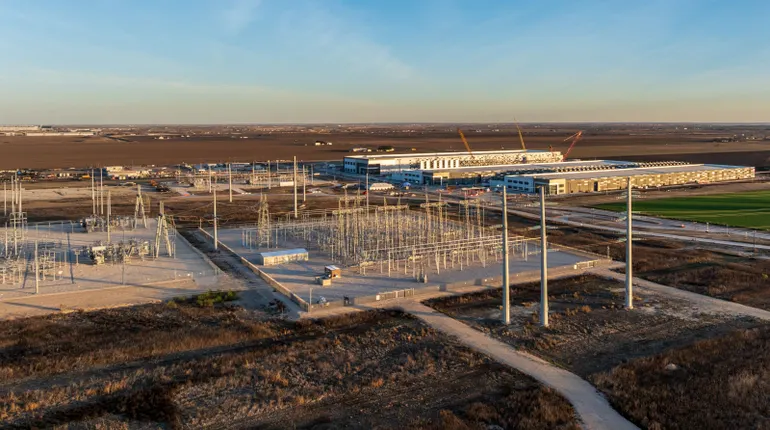
- The Public Utility Commission of Texas last week approved a net metering arrangement allowing a 260 MW AI data center to co-locate with a wind farm of similar capacity. The case could provide a template for other co-located loads in the Lone Star State.
- The data center is the second such facility planned at the site. The developer argued that because the total load of the two data centers, about 525 MW, already exceeds the capacity of the generation resource at 265.5 MW, it should not be subject to the same curtailment requirements as the first data center.
- The commission rejected that argument. Under the July 23 order, the data center must be able to shed its full load within 30 minutes during a grid emergency, if necessary via physical circuit breakers. Additionally, the data center is prohibited from participating in paid demand response programs related to the arrangement.
Deep Dive
The case is one of the first major tests of Texas Senate Bill 6 (SB 6), which took effect last year and established new rules for large loads within the Electric Reliability Council of Texas (ERCOT) footprint, including giving the grid operator authority to disconnect data centers during emergencies.
Rather than creating a special exemption for the project, the commission largely adopted the reliability conditions proposed by ERCOT. The order allows the co-location arrangement to proceed while setting operational requirements for future behind-the-meter projects.
Chris Talley, co-founder of GridTracker, wrote in a LinkedIn post after the decision was released that the order is not a "death blow" to the co-location model within ERCOT. He said: "It just means this architecture now essentially requires full backup capacity."
In a follow-up message to Utility Dive, Talley clarified that by "full backup" he means resources capable of carrying the load for a significant period off-grid, not just for brief interruptions. He cautioned that this is an "untested assumption" and pointed to the co-location project being pursued by Amazon and Vistra next to Comanche Peak nuclear plant, southwest of Fort Worth, as a case to watch. "How ERCOT and the commission handle that arrangement will be highly indicative," Talley said.
The decision requires the data center to be more flexible than traditional industrial loads. The order states that ERCOT should provide 60 minutes' notice "when feasible," while allowing operators to voluntarily commit to a faster 10-minute response.
By prohibiting the project from being compensated for shedding load during grid emergencies, the order distinguishes mandatory emergency curtailment from voluntary grid services. The ruling treats rapid shutdown capability as a reliability requirement for operating behind a generation facility.
Crusoe, the developer of the AI data center, and Ensign, the large-load customer planning to operate the site, argued that forcing the entire site offline is disproportionate and that additional curtailment requirements are unnecessary after the reliability conditions previously imposed on the co-located wind project. The commission largely adopted the administrative law judge's recommendation, including revisions by Chairman Thomas Gleeson, concluding that allowing the second load to remain online while the first is curtailed would undermine the goal of ensuring generation capacity is available to the grid during emergencies.
The case also drew comments from Texas Competitive Power Advocates and natural gas producer BKV, which argued the proposed framework could hinder future co-location projects. PUCT staff contended these parties lacked standing under the applicable regulations, and the commission's final order did not address their arguments.