
How AI Is Being Integrated into Energy Development Workflows
Data centers drove about half of the growth in U.S. electricity demand last year, with power consumption expected to hit new records in 2026, but infrastructure still lags by years. Energy development teams face pressure from expanding project pipelines and compressed timelines, while AI adoption in the industry is only 13.6%. Although energy development is region-specific, AI can still create value in site selection, project screening, tracking, and community sentiment research. This article analyzes practical AI use cases and recommends starting with highly repetitive workflows.
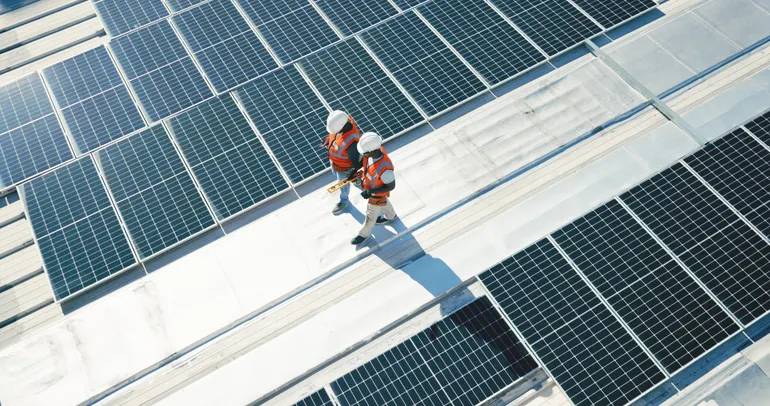
According toa Fortune report, data centers drove about half of U.S. electricity demand growth last year, and electricity consumption is expected to set another record in 2026, but the infrastructure to meet this demand still lags years behind.
Energy development teams feel this acutely. A pipeline that once carried 20 active projects now needs 80 to achieve the same conversion rate. Project timelines have been compressed, but staffing has not increased accordingly.
Other industries facing such pressure have turned to artificial intelligence, but the energy and utilities sector has been slow to act, with AI adoption rates at just13.6%, among the lowest of major industries.
This hesitation is not without reason. Energy development is regionally specific: rules that apply to MISO may not apply to PJM; permitting timelines vary by county; interconnection queue processes lack standardization. AI trained on generic data cannot automatically account for these differences, which in this industry can determine a project's success or failure.
The uniqueness of energy development does not eliminate AI's usefulness; it simply requires that its role be precise. Leading teams have identified which workflows AI can effectively accelerate and which still depend on people who understand the nuances.
Where AI is creating real value today
Site selection and project origination
The first step in any development workflow is screening sites worth advancing. Traditionally, analysts manually pull parcel data, cross-reference zoning maps, and estimate grid distances—building a site list often takes days, and that's before a single site has been evaluated.
AI-assisted site selection can operate at different scales: define development criteria (acreage, voltage requirements, transmission distance, land use types), and within minutes you get a ranked list of sites. The output is a priority list based on feasibility signals.
The key to its effectiveness lies in the underlying data. The quality of AI site selection depends on the data it draws from—proprietary, regularly maintained data layers reflecting current grid infrastructure, zoning classifications, and parcel ownership—that's what separates useful output from noise.
Site screening and prioritization
For teams with an existing pipeline, the challenge is often the opposite: too many sites and not enough bandwidth to evaluate them. Inbound opportunities, broker submissions, and origination activities can generate hundreds of candidates. Reviewing them manually means slow decisions and missed opportunities.
AI-powered screeningcan automatically apply screening criteria. A list of 500 sites can become a focused shortlist in the time it used to take just to set up a spreadsheet. The result is faster decisions by cutting through the noise before human intervention.
Project tracking
Once a site moves into the advancement phase, coordination demands increase. Permitting timelines vary by jurisdiction and change frequently. Tracking what's been submitted, what's pending, and what's at risk requires constant attention across multiple workflows.
AI-assisted project management can centralize these efforts: organizing permit documents, flagging upcoming deadlines, and building project timelines that reflect actual progress. Items that once slipped through spreadsheets are now surfaced before they become problems.
Community sentiment research
Technical site criteria are only part of what determines whether a project gets built. Community dynamics and political context have become equally important at the local approval stage.
According toHeatmap News reportsthat community support for data center projects is at historic lows.Political support for renewable energy projectsis divided along party lines and varies by district. Development teams that once focused primarily on technical due diligence now spend significant time on stakeholder research and community engagement strategy before projects are submitted to approving bodies.
AI cangenerate research and due diligence reports to support these conversationsat a speed far beyond what human teams can achieve. Once you have the information and a strategic plan, you can take action.
Where to start
For teams not yet using AI, the right entry point should be the highest-volume, most repetitive workflow, not the most complex. Site screening and triage are natural starting points: criteria are defined, outputs are easy to evaluate, and time savings are immediate.
More impactful applications—automated due diligence, AI-supported submission workflows, community research—can follow once teams have practical knowledge of how to evaluate AI outputs and their gaps.
AI compresses research and screening work. Decisions, relationships, and local judgment remain in your hands. Getting started means identifying which workflows can be handed off while keeping a close watch on the parts that still require human involvement.
Want to see these workflows in action with real examples? Join our live event on June 30 at 3:00 PM ET, where Director of Development Tony Wagler and Head of Product Kyle Baranko will demonstrate AI development workflows and show where human review remains essential.