
Distribution Networks: Unexpected Game-Changers in the Affordability Puzzle
This article explores how distribution networks, through distributed capacity procurement (such as Xcel Energy's Capacity*Connect program), become key platforms for improving grid utilization, reducing electricity bills, and promoting economic growth.
Pier LaFarge is the CEO of Sparkfund, a utility service company.
Over the past century, to meet the demands of economic growth, U.S. utilities and regulators built the power grid to peak capacity—enough to handle the 50 to 100 hours of highest demand each year. In many ways, this was a historic infrastructure achievement: the U.S. grid provides some of the cheapest and most abundant electricity in the world, operating nearly 100% of the time, and in many states, its cost accounts for less than 3% to 4% of GDP, yet it underpins the rest of the economy. Few highly regulated public-purpose institutions can match its scale and economic value.
However, today's load growth driven by advanced manufacturing, electric vehicles, cloud computing, and new demands from artificial intelligence means we need to expand the grid faster than we have in the past 100 years to support the modern economy. Rapid growth will put significant pressure on electricity prices, and utilities must adopt new tools to turn affordability challenges into economic opportunities, preventing people from having to choose between groceries and electricity bills.
The good news is that grid growth can benefit everyone. If managed properly, investments in emerging technologies like batteries and demand response, as well as upgrades to existing lines, can help sell more electricity over the existing grid, spreading the fixed costs of already-paid-for lines across more sales, thereby lowering electricity prices for everyone.
This is where the distribution network becomes an unexpected hero—as a platform for new capacity growth while improving affordability and reliability.
Getting More Value from the Existing Distribution Network
How? By investing in batteries, load flexibility, grid-enhancing technologies, and other distributed solutions, we can unlock more than 200 gigawatts of additional capacity from the existing grid—an estimate from a recent Brattle Group study.
Another Brattle Group study found that a 10% improvement in annual system utilization—selling more electricity over already-paid-for lines—could reduce electricity prices by up to 4.8%, save consumers $110 billion to $170 billion over the next decade, increase utility earnings by 23% (incentivizing further investment in infrastructure), and bring new load online years sooner (powering factories and computing facilities faster).
For a long time, the distribution network has been a passive delivery network and a cost center, requiring continuous investment to replace aging infrastructure and accommodate increasing amounts of intermittent renewable energy. In fact, over the past two decades, the distribution network has become a major driver of rising electricity costs in many parts of the U.S., contributing to nearly one-third of the nationwide increase in electricity rates.
To make the distribution system a platform for new capacity growth, improve grid utilization, and help lower electricity prices, we must deploy the right assets in the right way. Not all distributed resources are designed to operate as utility infrastructure.
Creating Distribution System Value Requires True Distribution System Assets
Many distributed resources are designed to create value for individual customers—such as saving on electricity bills, backup power, resilience—and these assets are sometimes used to benefit the larger system. But to become true distribution infrastructure, utilities need resources that are operated 100% for the benefit of the system. They must be able to visualize, plan, certify, dispatch, and rely on these assets just as they would on a capacity bank, transformer, or voltage regulator.
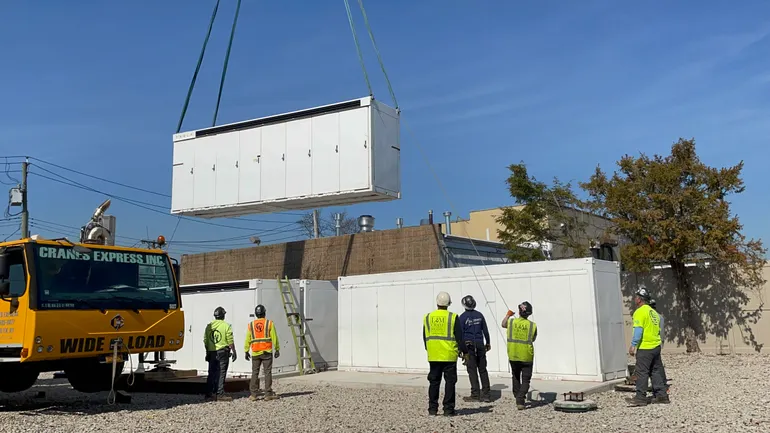
Xcel Energy's Capacity*Connect program exemplifies this utility-led approach to distributed capacity infrastructure, where capacity is operated entirely for the benefit of the grid and all customers. Through distributed capacity procurement, the utility is strategically deploying up to 200 megawatts of front-of-the-meter distributed batteries in Minnesota, with individual units ranging from 1 to 3 megawatts, to enhance grid reliability and meet growing electricity demand. These batteries will serve as dedicated distribution equipment, committed to improving the entire system.
Batteries are electronic time machines: they charge when the system has ample power and discharge when demand is highest, where the grid needs it most. In distributed capacity procurement, the utility determines where front-of-the-meter batteries are deployed, works with deployment partners and a local supplier ecosystem, and then integrates these assets into operations as certified capacity. Because distributed batteries can be scaled incrementally, utilities can add capacity precisely as load grows, leveraging the existing grid.
As the first utility-owned and operated battery deployment approved by a state public utility commission, Capacity*Connect sets a precedent, proving that distributed batteries are the next generation of distribution infrastructure.
Utility Ownership Ensures Distributed Battery Benefits Are Shared
Leveraging the regulated utility model to deploy distributed batteries ensures that grid infrastructure investments benefit the public, not just those who can afford it. Every dollar of grid value generated by utility-owned batteries, beyond their regulated return, is returned to all customers in the region.
In Minnesota, the Capacity*Connect program is expected to recover its costs and generate a surplus, saving residential customers an average of 17 cents per month over 20 years. Each community organization and local business hosting a battery site also receives a monthly site fee. This is a 20-year monthly annuity from the utility, giving communities a tangible stake in the wealth created by local infrastructure growth. The program's first confirmed site is a church, receiving thousands of dollars each month to support community outreach work.
Despite common misconceptions, utility ownership does not preclude competition. Competitive market price discovery and innovation are embedded in every utility-led asset procurement. For example, more than 80% of the value in distributed capacity procurement is achieved through competitive bidding, including local and regional suppliers and contractors. This drives well-paying jobs, local economic growth, and workforce development, which is why Capacity*Connect has support from local unions, engineering-procurement-construction firms, and consumer advocacy and workforce development organizations.
Regulated utility ownership of public infrastructure creates a powerful framework for shared benefits. Extending this model to new types of distribution equipment—such as batteries—is not revolutionary; it is how the regulated utility system was designed to operate from the start.
From Pilots to Scale
The era of distributed capacity has arrived. The distribution network has become a new platform for capacity growth and grid utilization improvement, rather than a cost center driving up electricity prices. We can expand the grid while lowering electricity prices and enhancing reliability. The technology scales economically, the economic benefits are significant, and regulators in Minnesota have set a precedent for public interest approval. Scaled deployment of distributed capacity is how utilities should respond to current load growth: faster, cheaper, more abundant, and more reliable, benefiting all users.
Correction: This article has been updated to correct the spelling of Pier LaFarge's name and clarify the description of Sparkfund.

