
Energy storage track heats up: multiple emerging technologies accelerate entry
To achieve the 2035 power decarbonization goal, the United States is accelerating deployment of long-duration energy storage technologies beyond lithium-ion batteries. Since 2019, global long-duration energy storage projects have attracted over $58 billion in investment. Emerging solutions such as zinc-based, iron-air, hydrogen, and gravity storage are making progress in regulatory pilots and commercialization, but supply chains, infrastructure, and scalability remain key challenges.
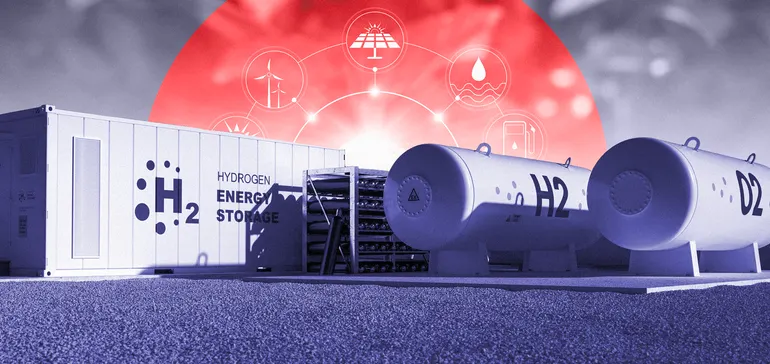
To achieve the 2035 power sector decarbonization goal proposed by the Biden administration, relying solely on lithium-ion batteries is far from sufficient; a diverse range of energy storage technologies is needed. Currently, multiple companies are bringing new technological solutions to market to fill this gap.
Experts point out that lithium-ion batteries can provide 4 to 8 hours of storage capacity, but as the share of renewable energy in the grid continues to rise, the system needs technologies with longer durations and different characteristics to simulate a "baseload" generation mix.
According to a report by Wood Mackenzie late last year, since 2019, global long-duration energy storage projects have attracted over $58 billion in public and private investment, corresponding to approximately 57 GW of long-duration energy storage capacity. Meanwhile, the U.S. Department of Energy is focusing on supporting the commercialization of this market.
"When we think about the net-zero path, the ecosystem needs a variety of different technologies to truly reach the goal," said Marlene Motyka, U.S. renewable energy leader at Deloitte.
This includes lithium-ion batteries as well as what she calls "medium" duration storage, such as iron-air batteries or zinc-based batteries. Additionally, the system requires storage solutions with extremely long durations—even seasonal—such as hydrogen-based storage, which can support for several consecutive months.
Multiple companies are bringing these technologies to market, and utility regulators have shown interest. In May, the California Public Utilities Commission approved Pacific Gas & Electric to advance an 8.5 MW microgrid project developed by Energy Vault at a substation in Northern California vulnerable to wildfire outages, using a hybrid battery and hydrogen fuel cell system. According to PG&E filings, the system is expected to generate up to 293 MWh of electricity within 48 hours.
Energy Vault is also developing gravity energy storage solutions that store and release energy by mechanically lifting and lowering composite blocks made from soil and waste materials. In August, the company announced it had signed its first license and royalty agreement for the technology with an undisclosed U.S. renewable energy developer.
In September, Dominion Energy applied to Virginia regulators for approval of an energy storage project that will test two new technologies—Form Energy's iron-air battery (claimed to provide 100 hours of electricity storage) and Eos Energy's zinc hybrid battery (capable of storing 3 to 12 hours of electricity).
Looking ahead to the next decade, Motyka said the grid will need a combination of multiple energy storage solutions, varying by each state's generation mix and load characteristics. However, certain technologies may stand out due to advantages such as lack of geographic constraints.
Craig Rizzo, managing director of Deloitte Consulting's Energy, Resources & Industrials practice, noted that the long-term robustness of the technology supply chain is also an important factor in scalability. Other considerations include the environmental footprint of the technology and its supply chain, as well as the reliability of the asset itself.
"It must be compared to the reliability of the resources it replaces in the current grid—for example, natural gas generation. It must operate reliably when needed," Rizzo added.
Utility Dive examined four types of technologies at the forefront of the energy storage sector and spoke with some commercialized companies to present a clearer picture of the emerging storage landscape. Each section ends with an overview detailing key players, how the technology works, current and future projects, etc., but it is not an exhaustive review of each technology.
Zinc-based batteries
Zinc-based batteries have several characteristics that distinguish them from lithium-ion batteries, including longer storage durations and the non-flammable nature of aqueous systems, said Andy Meserve, vice president of business development at Eos. He added that the system has a very low degradation rate and a service life exceeding 20 years—aligning with the 20- to 30-year lifespan of many renewable energy plants.
"Another key feature is our extremely wide operating temperature range—no heating or air conditioning required," Meserve added, unlike lithium-ion batteries.
Meserve noted that these batteries can meet various needs in the electricity market, especially in energy shifting or arbitrage—storing when renewable energy is abundant and dispatching later, or charging during low electricity prices and discharging during high prices. Additionally, they can be coupled with renewables or other resources to play a role in microgrids.
Like other energy storage technology developers, Eos is currently focused on scaling up manufacturing capabilities. Earlier this year, the company received a conditional loan guarantee of up to $398.6 million from the U.S. Department of Energy to expand its zinc energy storage system production plant.
Zinc-based storage does have its advantages. Deloitte's Motyka said the technology is flexible in scale and zinc is abundant as a raw material. However, on the other hand, its duration is limited. Zinc-based batteries currently provide up to 12 hours of duration and can be extended longer.
"You can keep building modular units and connecting them—but at some point, it may no longer be reasonable due to volume issues," she said.
Zinc-based battery overview
How it works:This technology stores energy through zinc deposition. Zinc-based batteries contain graphite felt and conductive plastic; zinc attaches to the graphite and conductive plastic during charging and is released during discharging.
Key players:Eos Energy Storage
Capacity range:Not applicable
Duration range:3-12 hours, extendable to longer
U.S. operational projects:None
Global projects in development:As of November 7, the company's project pipeline reached $11.6 billion, exceeding 43 GWh, with $10 billion in active proposals and $1.5 billion in signed letters of intent. As of September 30, backlog orders were $539 million, corresponding to over 2 GWh.
Iron-air batteries
Form Energy's iron-air battery system consists of modules about the size of a washer-dryer combo, with battery cells containing iron and air electrodes. The company says one advantage of the technology is its use of safe, inexpensive, and readily available active materials.
Additionally, its multi-day duration of about 100 hours makes it an excellent grid reliability resource, said Mateo Jaramillo, CEO of Form Energy. While hour-scale durations are also important, the grid will need "100-hour-scale" storage to handle longer weather events.
Although the primary current use of iron-air batteries is as a reliability resource, Form Energy's modeling shows the battery can be used year-round. Utilities and others can also use it to balance energy supply and demand between weeks.
Jaramillo said the key challenge for Form Energy in scaling up is building manufacturing capacity—essentially becoming "a manufacturing company."
"We are building that function very quickly and aggressively, but it is new, and anything new carries risk," Jaramillo said.
Deloitte's Motyka said the technology offers great flexibility and can be dispatched to support the concept of baseload generation.
"They claim it's cheaper than lithium-ion and has longer duration," Rizzo agreed. "Of course, it sounds good on paper. The key is real-world operational validation."
Iron-air battery overview
How it works:The battery uses a "reversible rusting" process. During discharge, iron is converted to rust; during charging, an electric current reduces the rust back to iron.
Key players:Form Energy
Capacity range:Can scale from 5-10 MW demonstration projects to large projects of hundreds of MW
Duration range:Up to 100 hours
U.S. operational projects:None
U.S. projects in development:A 5 MW/500 MWh system with Dominion Energy (Virginia), expected online in 2026; 10 MW/1000 MWh systems with Xcel Energy at Sherburne County Generating Station in Becker, Minnesota, and Comanche Generating Station in Pueblo, Colorado, both expected in 2025; a 15 MW/1500 MWh system with Georgia Power (Georgia), expected in 2026; a 10 MW/1000 MWh system supported by the New York State Energy Research and Development Authority, expected in 2026; and a 1.5 MW/150 MWh pilot with Great River Energy (Minnesota), expected online by the end of 2024.
Hydrogen storage
In late 2022, Pacific Gas & Electric submitted a proposal to California regulators to deploy a hybrid battery storage and hydrogen fuel cell system developed by Energy Vault in a small Northern California town prone to frequent outages due to wildfire risk. The utility has historically used diesel generators to meet this need, but switching to green hydrogen and batteries can provide cleaner backup power during outages. The microgrid is expected to be operational in 2024.
Hydrogen-based storage enables the power sector to produce green hydrogen using renewable energy and electrolyzer systems, then store it on demand until it is converted back to electricity through fuel cells. The PG&E microgrid has a duration of 48 hours and could potentially be extended to 96 hours—but hydrogen can enable longer or even seasonal storage.
The PG&E system uses Energy Vault's "H-Vault" platform, designed for durations from 24 hours to seasonal storage. Systems can be deployed starting at 1 MW and offer standard configurations of 24, 50, and 100 hours, as well as any custom scale. Marco Terruzzin, chief commercial and product officer at Energy Vault, said that with support from the Inflation Reduction Act, the cost of a 100-hour duration system is comparable to diesel generator sets. Energy Vault has other hydrogen storage projects in its pipeline but has not publicly disclosed them.
Terruzzin said the passage of the Inflation Reduction Act has driven the development of this technology in the U.S., partly because asset owners using hydrogen as a storage medium can receive investment tax credits.
Motyka noted that hydrogen can be stored for months and used on demand, which could be very important for future policymakers balancing the grid.
Meanwhile, a major challenge for hydrogen-based storage in large-scale deployment is the supporting infrastructure.
"The infrastructure for the entire hydrogen ecosystem—production, suitable storage locations, and the ability to call upon it—still requires a lot of work," she said.
In October, the U.S. Department of Energy announced the selection of seven regional hydrogen hubs, with a total of $7 billion in funding, expected to jointly produce 3 million metric tons of hydrogen annually. Motyka said the announcement is a positive step in the right direction.
Hydrogen storage overview
How it works:Uses renewable energy and electrolyzer systems to produce green hydrogen, stored until needed and then converted back to electricity.
Key players:Energy Vault
Capacity range:1 MW and above
Duration range:4 hours to seasonal or longer
U.S. operational projects:None
U.S. projects in development:8.5 MW hybrid battery storage and hydrogen fuel cell system with PG&E
Gravity energy storage
The concept of using gravity for energy storage is long-standing, such as pumped hydro—but using moving masses is a relatively newer concept that Energy Vault is pursuing.
This technology stores and releases energy by mechanically lifting and lowering composite blocks made from soil and waste materials. Energy Vault says the technology does not depend on specific terrain, offers flexible durations (4 to 24 hours), and has a lifespan of up to 35 years.
The company is currently building a 25 MW/100 MWh system on the outskirts of Shanghai, adjacent to a wind farm. Additionally, it is deploying an 18 MW/36 MWh gravity system with Enel Green Power in Snyder, Texas, expected to be operational in the fourth quarter of 2024.
Terruzzin said companies interested in gravity energy storage typically need at least 6 hours of duration.
"That doesn't mean gravity can't be used for 4 hours—but the market is very interested in gravity storage for 6 hours and above," he said.
Deloitte's Rizzo believes that, from some perspectives, using simple mechanical devices for energy storage makes sense.
"It has a low environmental footprint, no supply chain issues, and is scalable—both small and large scale," he noted.
Importantly, unlike resources such as hydrogen, gravity storage does not rely on years or decades of future research.
"It's available now. Will we move beyond lifting and lowering heavy objects in the future? Of course, but as a transitional solution to fill the current gap, I think it deserves close attention," he said.
Gravity energy storage overview
How it works:Gravity energy storage stores energy as potential energy by lifting heavy composite blocks. When the blocks descend, they drive generators to produce electricity.
Key players:Energy Vault
Capacity range:Over 50 MW, no upper limit
Duration range:4-24 hours
U.S. operational projects:None
U.S. projects in development:18 MW/36 MWh system in Snyder, Texas