
Is Time-of-Use Pricing Not Enough? BGE and Other Utilities Expand Active Charge Management to Handle Surging EV Load
Industry analysts and utility executives generally agree that without effective management, transportation electrification could become the most disruptive new electricity demand on the power system. A 2023 study by the National Renewable Energy Laboratory (NREL) shows that EV owners prefer charging at home, but as of 2021, annual investment in the nation's distribution systems had already exceeded $60 billion. Recent research indicates that time-of-use (TOU) rates are insufficient to address secondary peaks caused by charging, making active charge management a necessary complement. Companies like BGE have received approval to expand related pilot programs to serve 30,000 EV owners.
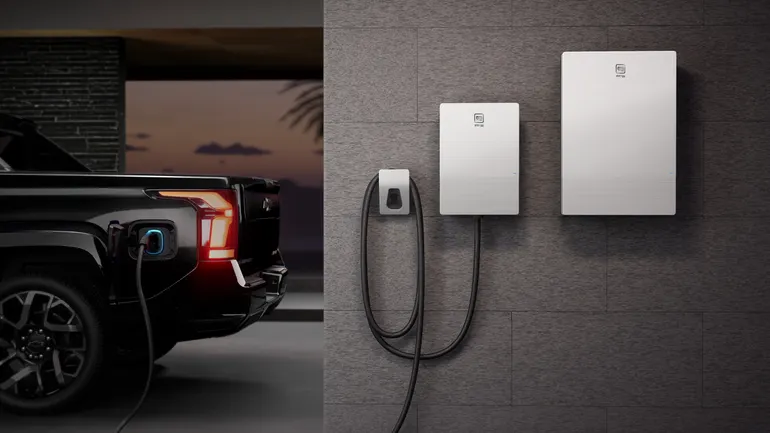
If not effectively managed, transportation electrification could become the most disruptive new electricity demand on the power system—a judgment widely shared by industry analysts and utility executives.
According to a 2023 study by the U.S. National Renewable Energy Laboratory (NREL), although home charging takes longer, electric vehicle owners still prefer to charge at home due to its low cost and convenience. However, to keep pace with the growth in EV charging and other customer demand, NREL noted in a 2024 research report that as of 2021, U.S. utilities had already invested more than $60 billion annually in distribution systems.
Pacific Gas and Electric (PG&E) CEO Patti Poppe acknowledged at the RE+ 2024 clean energy conference in September that this investment is necessary to "optimize, visualize, and control" new distribution system resources. But she emphasized that revenue from increased electricity sales would "offset infrastructure investments" and "reduce electricity bills for all customers by 2% to 3%."
According to a report just released by the Smart Electric Power Alliance (SEPA), using active charge management rather than time-of-use (TOU) rates to shift charging to off-peak hours can save an additional $300 per vehicle annually. Brittany Blair, co-author of the report and SEPA's senior analyst for research and industry, said, "It's becoming increasingly clear that TOU rates are no longer sufficient," and that they are "creating secondary peaks that cause congestion on the distribution system." She added that "active charge management" implemented by utilities and third parties would be necessary to "unlock the full potential of EVs and reduce impacts on the distribution system."
Pilot projects have proven that active charge management works, and utilities in Maryland and other states are moving to scale up related programs. But key questions remain: Will state regulators and stakeholders recognize the value proposition of distribution system modernization investments? And how can customers be willing to hand over control of charging to utilities or third parties?

The "rebound peak" challenge
According to a report released in October 2024 by the Edison Electric Institute (EEI), the trade association for investor-owned utilities, the number of electric vehicles on U.S. roads could reach 78.5 million by 2035, up from 4.5 million in 2023.
A report just released by the Electric Power Research Institute (EPRI) concludes that while TOU rates can shift residential and commercial electricity use away from peak demand periods, they are less effective at managing EV charging. The research confirms that charging behavior often begins immediately after the discounted rate starts, creating what many call a secondary peak or "rebound peak."
Chanel Parson, director of clean energy and demand response at Southern California Edison (SCE), said TOU rates "definitely help" because they limit system strain during the "primary peak" period. But she acknowledged that a secondary peak occurs immediately after the peak period ends.
Parson noted that if utilities are allowed to "coordinate flexible loads to prevent local distribution system congestion," this secondary peak could be managed to "emerge gradually." She added that if "customers have incentives to participate, whether from the utility or third-party aggregators," utility-managed charging could spread charging behavior across the off-peak hours of TOU rates.
Kay Aikin, founder and chief product officer of consulting firm Dynamic Grid, said one approach to "matching distribution system investment with EV growth" could be to use new accelerated computing capabilities to transmit electricity market price information to local substations. She added that this "substation intelligence," while not yet widely tested, could manage charging through "charging price signals with preset owner parameters," thereby "eliminating direct utility control."
Another approach is the smart electrical panel—an energy management system that cuts off charging when EV charging could overload the home's rated electrical load. So explains Stephen Kane, director of residential builder services at SPAN. But he acknowledged that if multiple homes in a community charge EVs simultaneously, the total load at the feeder or transformer level could still become a problem. Kane said, "Utilities must be responsible for system-level load."
Today, many stakeholders realize that a proven solution is active management of charging by utilities or third parties.

Active charge management solutions
Analysts and utility executives agree that with more than 3 million EVs on U.S. roads, managed charging pilot projects need to be scaled up before infrastructure upgrade costs begin to rise.
SEPA's Blair said, as documented in the SEPA report, "utilities have conducted enough active charge management pilots to understand their value and effectiveness." Garrett Fitzgerald, SEPA's senior director of electrification and co-author of the report, said utilities do not need full control over charging. He said many utilities are beginning to recognize that third-party aggregators with distributed energy resource management systems (DERMS) at the distribution system level can effectively execute signals from utility control rooms.
According to the SEPA report, a 2021 study by Arizona's Salt River Project, PG&E's ChargeForward California program, and National Grid's Charge Smart program in New York are examples of utilities making such progress.
Fitzgerald said, "Much of the value we are quantifying and designing customer compensation for comes from reducing system-level peak energy costs." But "the value varies by customer, and managed charging can be optimized to focus on those customers who need to change their charging behavior, rather than changing the behavior of all customers."
Kellen Schefter, EEI's senior director of electric transportation, agreed, saying utilities recognize that active management can minimize EV charging costs and maximize its benefits, thereby putting downward pressure on rates for all customers and improving system reliability. Schefter continued, noting that a January 2024 study by Synapse Energy Economics showed "managed charging program revenues have exceeded costs" and provided guidance on the "art of program design." He said, "Programs designed to change individual customer behavior may also need TOU rates, upfront bill credits at enrollment, or ongoing monthly or annual incentives to sustain participation."
Schefter said the EV advocacy coalition ChargeScape found that Duke Energy Carolinas' EV Complete home charging program and Xcel Energy Colorado's Charging Perks pilot used very different incentive approaches, yet both achieved good participation. Schefter added, "Solutions may need to offer different options to meet different customer needs." But he said, "programs can now be scaled cost-effectively," as demonstrated by Baltimore Gas and Electric's (BGE) just-approved program serving up to 30,000 EV owners.
BGE program sets a benchmark
BGE's passive TOU-based charging pilot led to its active "Smart Charge Management" (SCM) program with third-party aggregator WeaveGrid. Stephanie Leach, BGE's director of strategic projects, told attendees at the September 10 RE+ event, "EV charging load is now a major concern for almost all large utilities, because even in areas with low EV adoption, some high-adoption communities may exceed local system capacity." She added that WeaveGrid uses BGE's rate and system demand information to optimize charging at the grid edge based on owner-preset preferences.
Leach also said, "We are still conducting a benefit-cost analysis by modeling the costs of distribution system upgrades with and without managed charging." Analysts generally agree that the cost of serving current and future EV charging demand could be high. But stakeholders also acknowledge that building the distribution system to support active charge management also requires significant investment.

The management approach to managed charging
Grid modernization regulatory proceedings and rate cases have shown that implementing and deploying managed charging programs and technologies could put upward pressure on rates. Parson said SCE "is developing a large-scale managed charging program that will include TOU rates, upfront cash incentives, and other incentives to cover equipment costs." She added that to meet California's 2045 net-zero goals, more than 80% of expected electricity demand growth will require utilities to deploy DERMS, system-level hardware and software, and grid-edge technologies. To avoid passing costs on to non-EV owners, SCE is considering "grant funding and industry partnerships."
Mathias Bell, WeaveGrid's vice president of market development, said BGE's SCM pilot will expand to 30,000 EV owners by 2027, but this will defer or minimize the distribution system capital investments needed to handle EV charging load. Bell said the pilot demonstrated a benefit-cost ratio of 1.58 under "testing in specific Maryland jurisdictions," "indicating benefits exceed program costs." He also said, "92% of charging load managed through SCM complied with the charging schedules set by BGE and WeaveGrid." Bell revealed that WeaveGrid is also working with Portland General Electric in Oregon, Pacific Gas and Electric in California, Xcel Energy in Colorado, DTE in Detroit, and Georgia Power and Alabama Power under Southern Company on active EV charge management.
Erika Diamond, senior vice president of customer solutions at grid-edge DERMS provider EnergyHub, agreed that active charge management is ready for scale. She said, "Managed charging has complexities," because utility control rooms expect both "effective load shifting" and "customer satisfaction." But she noted that a full utility control room DERMS takes time to design and implement, while "grid-edge DERMS can be deployed in weeks," which is why utility-aggregator partnerships are increasing.
Monika Jovic, product marketing manager for digital grid at Schneider Electric, confirmed in a July webinar that integrating DERMS into a utility control room could take six to nine months. Jovic said grid-edge DERMS, deployed and managed by third-party aggregators, can manage flexible distributed resources like EV charging "to replace traditional resources." Diamond said EnergyHub "has programs involving over 100,000 devices" and "works with utility planning, operations, and demand-side management teams." Its grid-edge DERMS integrates utility control room information with its situational awareness at the distribution system level "to balance supply and demand and match load profiles."
Diamond continued, "Most utilities and aggregators have not yet quantified" the "full range" of energy, capacity, and ancillary service value of managed charging beyond peak shaving. Determining this full value "may require an evolution in the value paradigm for distributed resources."
Correction:A previous version of this article had an incorrect abbreviation for Baltimore Gas and Electric; the correct abbreviation is BGE.