
Transformer Supply Bottleneck Threatens Grid Stability: The Dilemma of Modernizing the U.S. Power System Amid Load Growth
The modernization process of the U.S. power system is impeded by transformer supply bottlenecks. Load growth, extreme weather, and supply chain disruptions have extended lead times to three years, and while manufacturers invest in expanding production, short-term pressures remain.
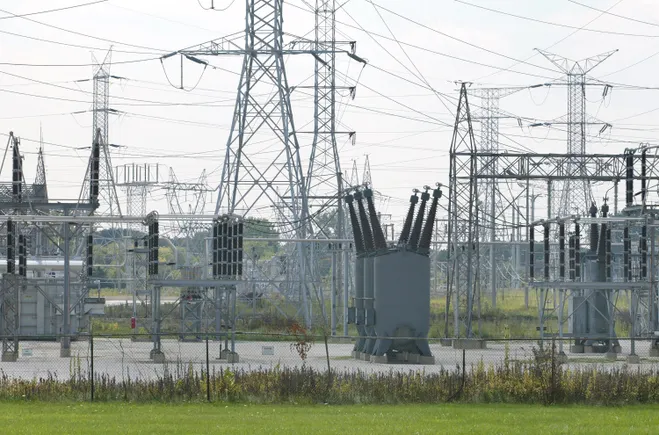
The modernization of the U.S. electric power system is being hindered by the slow supply of critical new power transformers. Advanced computing and economy-wide electrification are expected to drive electricity demand up nearly 16% by 2030, requiring more and larger transformers—according to a December study by the U.S. National Renewable Energy Laboratory (NREL). This demand is particularly prominent when extreme weather events, such as Los Angeles wildfires and East Coast hurricanes, require the rebuilding of distribution systems.
However, global supply chain disruptions continue to delay the acquisition of transformers, which are crucial for stabilizing voltage and efficiency in the power system.
"Ordering a new transformer today can take up to three years for delivery," said Peter Ferrell, Director of Government Relations at the National Electrical Manufacturers Association (NEMA). "Five years ago, the wait time was only four to six weeks."
Manufacturers point out that accelerating transformer acquisition requires time and investment. "In the short term, large investment areas will face pain, with projects already delayed by one to two years," said Jeffrey DeSain, General Manager of Schneider Electric's North America transformer business. "Supply chains and manufacturers need multiple investment de-risking solutions to catch up with demand."
Manufacturers and analysts believe that the pressure of load growth on existing infrastructure could last for several years, or even more than a decade. Meanwhile, transformer supply solutions, such as standardizing transformer designs or organizing and funding reserve supplies, require cooperation from policymakers, and whether they can be implemented remains uncertain, many say.
Over 80,000 transformer types
The various transformers that step up and step down voltage in the power system have different lead times. Doug Wolken, Head of Transformer Marketing and Sales for Hitachi Energy North America, noted that in wind and solar projects, small pad-mounted transformers step up voltage to medium or large transformers at the production site substation; large transformers at natural gas, nuclear, and hydroelectric plants step up voltage to the transmission system.
At distribution substations, large pad-mounted transformers step down voltage from the transmission system to medium or small pad-mounted transformers; small pole-mounted or pad-mounted distribution transformers step down voltage for homes and businesses. Wolken added.
The U.S. system had 60 million to 80 million distribution transformers at the end of 2024, and demand by 2050 "could increase by up to 260% compared to 2021 levels," NREL reported. The laboratory stated that about 55% of residential transformers are near the end of their useful life, with many exceeding 40 years.
According to a 2024 National Infrastructure Advisory Council (NIAC) industry stakeholder report, there are more than 80,000 transformer types in the U.S. power system. A Wood Mackenzie (WoodMac) April report showed that lead times for large power transformers range from 80 to 120 weeks; specialty electrical steel, which is crucial for reducing transformer losses, remains expensive and difficult to source domestically.
The slowdown varies among manufacturers. Hitachi Energy's Wolken said that lead times for pad-mounted distribution transformers "are two to three times what they were before the pandemic," and "lead times for transmission-level transformers are now three to six years, with specialty transformers taking the longest."
Andrew Padula, spokesperson for utility Puget Sound Energy, confirmed that lead times for some equipment have extended. Ben Boucher, Senior Analyst for Supply Chain Data and Analytics at WoodMac, said, "Realistically, these extended lead times will not improve in the short term" because the causes are intensifying.
 Image source: NREL authorized
Drivers of transformer demand growth
Manufacturers and analysts say that sustained load growth, aging system infrastructure, and increasingly severe extreme weather events are driving transformer demand. Kevin Coss, spokesperson for Xcel Energy, said the current shortage began with manufacturing shutdowns during the COVID-19 pandemic and global supply chain slowdowns; many factors continue to push up transformer demand.
"We are approaching an unprecedented period of transformer demand," said Killian McKenna, Senior Researcher at NREL and Manager of the Distribution Edge Group, and author of the transformer supply study. Electricity demand growth is stressing infrastructure nearing the end of its life, with sources including "renewables, data centers, building and vehicle electrification, such as EV charging stations and heat pumps." McKenna added.
Extreme weather events such as hurricanes and wildfires further cause transformer losses in distribution systems. McKenna said replacement needs exceed utility inventories to handle routine failures and new customer requests. After Hurricanes Helene and Milton, Duke Energy needed to replace approximately 16,000 transformers—according to its November earnings report. WoodMac's Boucher noted this exceeds the annual demand of other utilities.
Rebuilding in Los Angeles has not truly begun—according to city officials. As of February 2, Southern California Edison employees, contractors, and mutual assistance partners had installed nearly 400 transformers in the Eaton and Palisades fire areas, utility spokesperson Jeffrey Monford reported.
"Bitcoin mining, AI training and quantum computing, the reshoring of U.S. manufacturing, and system modernization plans will bring enormous new electricity use," said NEMA's Ferrell. Demand "is skyrocketing exponentially when the manufacturing base and supply chain are only sized for a market designed five years ago."
A boom in virtual power plants composed of distributed system resources could relieve system stress—developers say. But significant new loads from EV charging or electric heat pumps may require larger or more distribution transformers, said Schneider Electric's DeSain, NREL's McKenna, and others.
After a delayed response to growing demand in 2022-23, manufacturers announced $600 million in new transformer capacity investments in 2024, said WoodMac's Boucher. Schneider Electric "is investing hundreds of millions of dollars in capacity expansion," DeSain added. Hitachi Energy North America is investing $500 million in transformer manufacturing capacity (through 2027), Wolken said; this is part of a $1.5 billion global investment in transformer production, based on demand expected to last at least 10 years.
But manufacturers and analysts say these investments may not be enough to meet demand, and other innovative solutions have been proposed.
 Image source: NREL authorized
Solutions to the transformer shortage
Of the seven solutions described in the NIAC report, three have been adopted by manufacturers, utilities, and other stakeholders. Scott Aaronson, Senior Vice President of Safety and Preparedness at the Edison Electric Institute (EEI), said that more accurate demand forecasting and long-term agreements between power companies, manufacturers, and suppliers of raw materials like electrical steel are already in practice.
Utility resilience planning for extreme weather events has led to "storm stockpiles"—internal supplies of distribution system infrastructure. Aaronson said, "Large utilities may have access to large power transformers and more than 10,000 distribution transformers through mutual assistance networks."
Xcel's Coss said that integrated planning has enabled predicting when and where transformer demand will occur and working with manufacturers to secure supply. "Until recently, few utilities, manufacturers, and supply chain partners formed strategic alliances, but five-year plans and long-term agreements are becoming the norm," said Schneider Electric's DeSain. "A multi-year perspective and choosing more standard designs, materials, and electronic components can reduce risk."
"Replacing aging infrastructure could be a huge opportunity or a missed one," said NREL's McKenna. "Near-term decisions that fail to anticipate future load growth and resilience needs will carry high labor costs," but building for long-term demand can make it a one-time cost.
The NIAC report calls for federal policy and funding to support expanding transformer production, which will be submitted to Congress in 2025, as part of the just-released Moran-Cortez Masto bill. "Extending the federal 45X domestic manufacturing tax credit would support more U.S. transformer production," said NEMA's Ferrell, adding that "state or federal workforce growth programs may be the best policy option, since automating the manufacturing of so many unique types of transformers and components is unrealistic."
The NIAC report also proposes establishing a virtual transformer reserve with the U.S. government as the buyer of last resort. "The reserve is not a physical inventory, but a way to retain spare manufacturing capacity," said NEMA's Ferrell. "It would be a commitment to certainty in maintaining mid- to long-term manufacturing capacity, but it is unclear how the required federal investment would be determined, who would provide it, and how the reserve would be managed." However, Aaronson said the risk is small because current demand growth appears to be long-term.
The most significant proposal in the NIAC report may be standardizing transformer designs. "Standardization would make equipment sharing easier and produce more transformers faster to meet growing demand," said EEI's Aaronson. But due to the many transformer types, "it may not significantly shorten production times," said NEMA's Ferrell. Utilities could agree on standard specifications, "but it would be difficult because the operational needs of a new utility in Southern California differ greatly from those of an old utility in Maine."
Schneider Electric's DeSain and Hitachi Energy's Wolken agreed. The U.S. power system "is one of the most unique machines in the world, with transformers designed and manufactured for very specific local distribution system complexities, making standardization a real challenge," Wolken said. On average, there may be more than 200 different designs per 1,000 distribution transformers. Wolken said, "But under utility leadership, some areas may achieve a degree of standardization."
Even reducing the variety of transformers from 80,000 to 60,000 "could make the manufacturing process somewhat more efficient," said EEI's Aaronson. Standardization may seem complex, said WoodMac's Boucher. But when severe weather events occur, utilities "accept whatever transformers they can get, which shows that standardized specifications and designs are realistic and could be key to resolving the current shortage," he added.